Ethereum News: $356M ETH Whale Moves After 4 Years. Why Oct 7 Matters?

Ethereum News: ETH Moves, MetaMask Staking Exit and New Security Funds
The latest Ethereum News centers on a large ETH transfer, a staking security incident, and new funding for compiler safety. A wallet tied to an early Ethereum ICO participant moved 133,298 ETH, worth about $356 million.
MetaMask Staking began exiting validators after an infrastructure breach. The Ethereum Foundation also backed Vyper compiler verification. Each story matters to holders, stakers, and developers.
Ethereum News Today: Key Developments at a Glance
Here is a quick summary of the main stories before we look at each one. Market figures are from the supplied report and reflect data published on October 1, 2026.
| Development | Key detail |
| ETH whale transfer | 133,298 coins worth approximately $356 million |
| Early Ethereum ICO | Reported purchase cost of around $0.31 per coins |
| MetaMask Staking | Precautionary exit of affected validators operated through Lido |
| Vyper compiler security | Ethereum Foundation pledged $100,000 |
| ETH market data | Price near $2,695.58, up 0.3% over 24 hours |
Ethereum Whale Moves 133,298 ETH Worth $356 Million
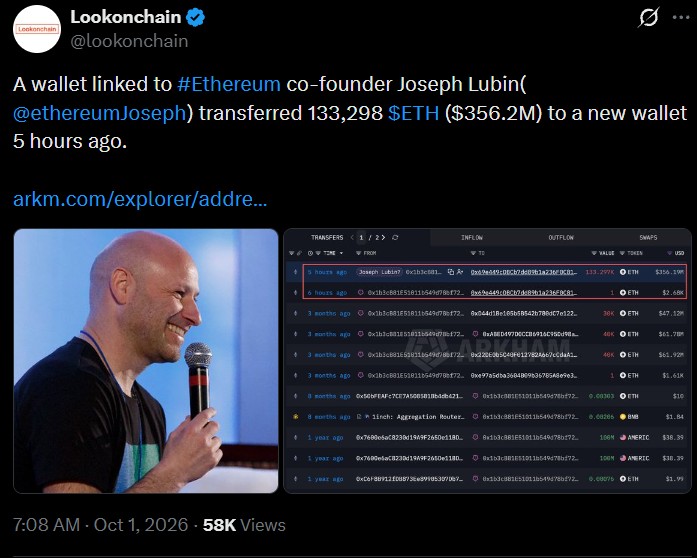
A wallet moved 133,298 coins to a new address about five hours before the reports appeared. The transfer was valued at roughly $356 million. The receiving address begins with 0x69e and ends with 27e93.
The reports differ on who owns the wallet. Lookonchain and The Block said it was linked to Ethereum co-founder and Consensys CEO Joseph Lubin. Consensys declined to comment. Separate monitoring attributed the transfer to an early ICO whale. These reports appear to describe the same transaction. Still, the wallet attribution should be verified before anyone treats the owner as confirmed.
A move to a new address does not prove a sale. Large holders often shift funds for custody, security, or internal reasons.
Source: Lookonchain Post
Why the Early Ethereum ICO Wallet Is Drawing Attention
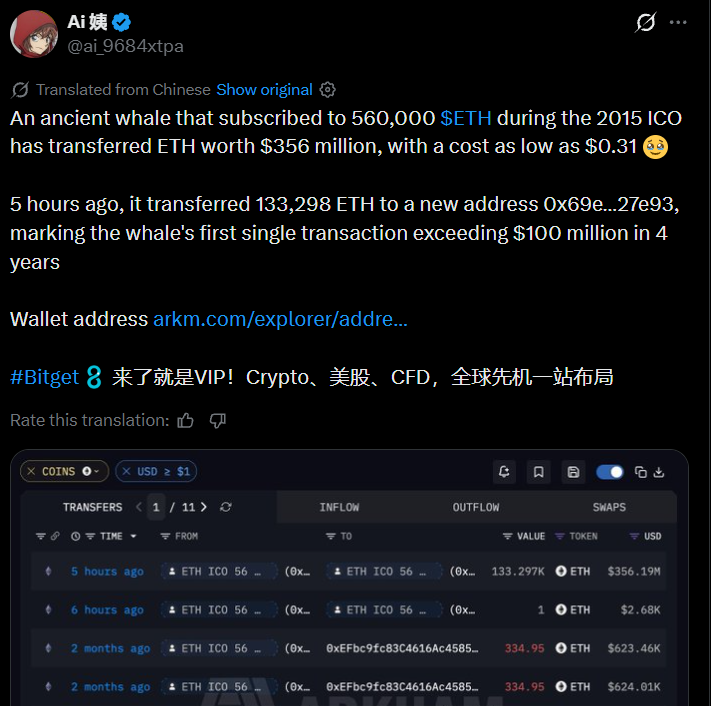
According to the monitoring report, the wallet subscribed to 560,000 tokens during the 2015 Ethereum ICO. Its cost was about $0.31 per tokens. That is a tiny fraction of today's price near $2,695.58.
The report also says this is the first single transfer above $100 million from the address in about four years. That long gap explains the interest.
Traders may watch for later movements, deposits to exchange-linked addresses, and any verified statements from the parties involved. Those are observable facts. Any claim about selling intentions is speculation until the owner says otherwise.
Source: X
MetaMask Staking Exits Lido Validators After Security Incident
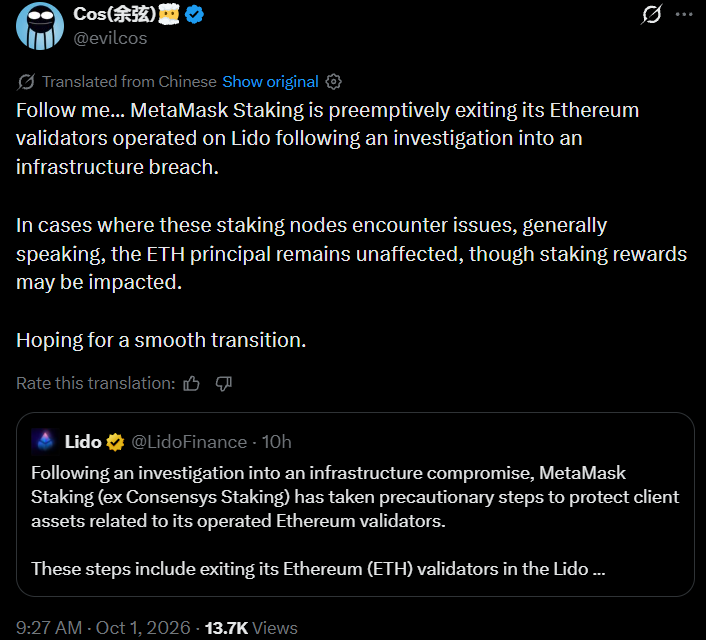
MetaMask security incident affecting part of its infrastructure. At the time of its statement, it found no immediate threat to MetaMask wallets. As a precaution, it is exiting affected validators within its non-custodial staking operations.
Lido, the protocol that uses these validators, shared more detail. The exits have begun, and the final validators should exit by the end of October 7, 2026. The process may lead to foregone rewards and possible downtime penalties. ETH should return to the protocol gradually through exit, withdrawal, and re-entry, which could take up to 45 days because of the long entry queue.
Lido said stETH holders do not need to act. It also noted a reserve fund of over 6,750 stETH. The researcher said the ETH principal is generally unaffected in such cases, though rewards may suffer. The supplied statements do not show any loss of staked principal. You can read the Lido disclosure for full details.
Source: Evilcos
Ethereum Foundation Funds Vyper Compiler Verification
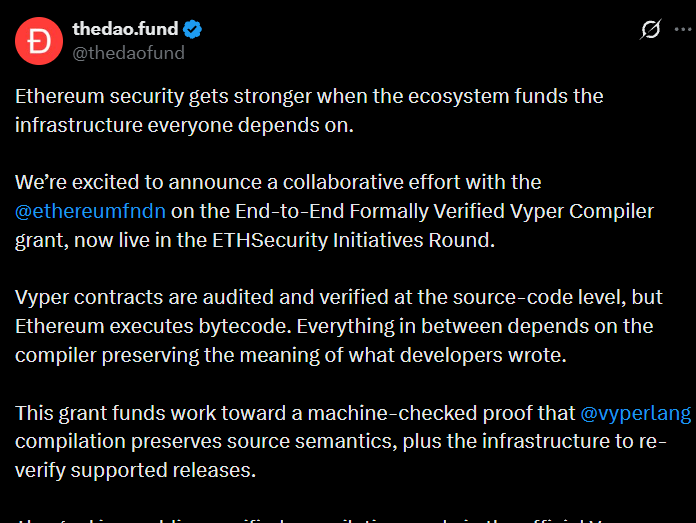
On September 30, 2026, the DAO Security Fund announced a collaboration with the Ethereum Foundation. It backs a grant for end-to-end formal verification of the Vyper compiler. The project is part of the ETHSecurity Initiatives Round.
Here is why it matters. Developers write smart contracts as source code, but Ethereum runs bytecode. A compiler turns one into the other. If the compiler changes the meaning along the way, audits of the source code could miss problems.
The project aims to prove, with machine-checked proofs, that compilation keeps the source meaning intact. It also plans tools to re-verify supported releases and a public verified compilation mode in the official Vyper compiler. The Ethereum Foundation pledged $100,000. The DAO Security Fund holds about $250 million, built from unclaimed ETH from the 2016 DAO hack, and focuses on security. Supporters can visit the initiative page.
Source: The DAO Fund
Ethereum News Timeline: Key Dates and Developments
-
2015, Ethereum ICO: The early ETH allocation in the whale reports dates to this period.
-
2016, The DAO incident: Unclaimed tokens from the crypto hack news later formed The DAO Security Fund.
-
September 30, 2026, Vyper funding: The fund announced the project with a $100,000 pledge.
-
October 1, 2026, transfer and staking update: Reports covered the 133,298 ETH move and MetaMask's validator exits.
-
By October 7, 2026, expected exits: Lido expects the last affected validators to exit. Full withdrawal and re-entry may take longer.
What These Ethereum Developments Mean for ETH Holders
Traders can keep watching large wallets, but a single transfer is not a signal on its own. Stakers should follow Lido's updates as exits continue. Developers gain from stronger compiler security.
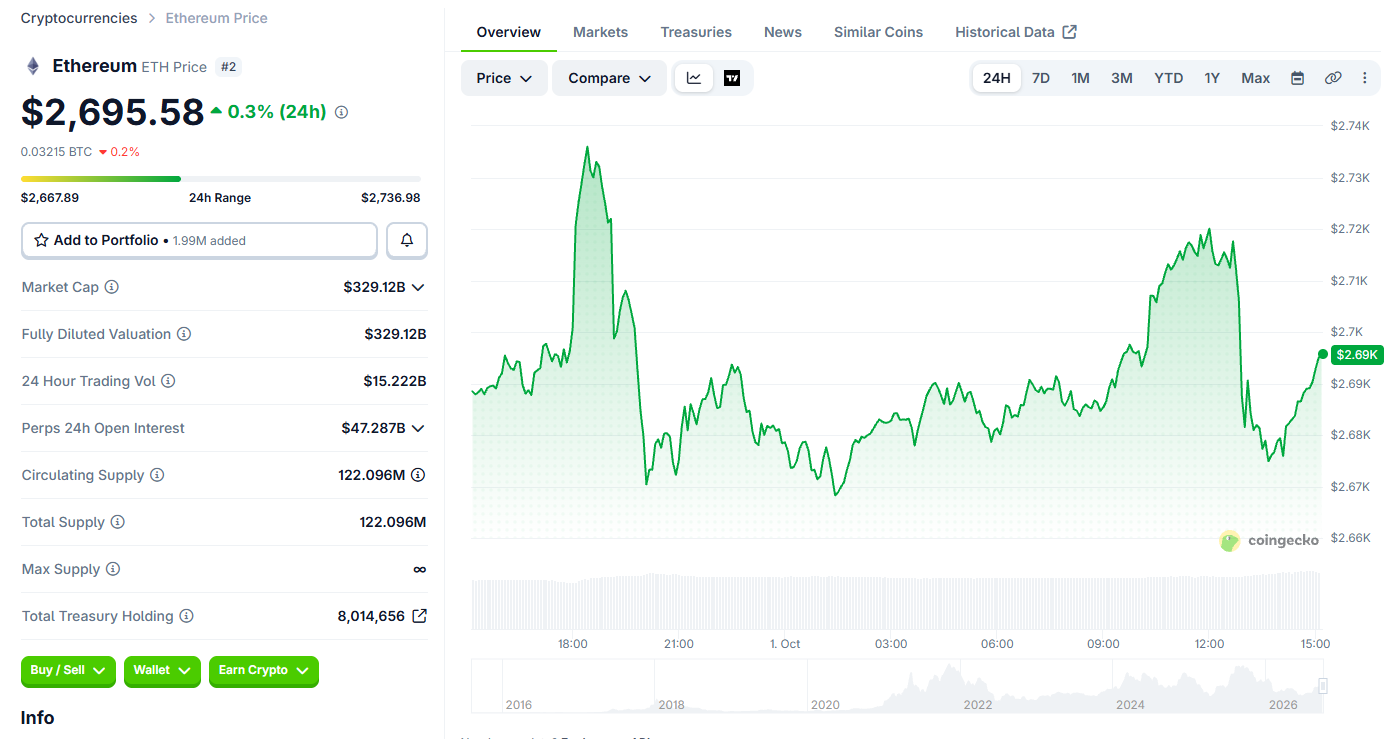
ETH price today traded near $2,695.58, up 0.3% in 24 hours, with about $15.22 billion in volume and a market cap near $329.12 billion. One snapshot does not show a trend. In short, this Ethereum News mixes a notable wallet move, a contained security response, and long-term security investment. None of it guarantees a bullish or bearish outcome.
Source: Coingecko Data
Conclusion
Ethereum News shows three different sides of the network. A large 133,298 ETH transfer is worth watching, but a move to a new address does not prove a sale. MetaMask's validator exits show how quickly staking operators respond to security risks, and Lido says stETH holders need no action.
The Vyper verification grant adds long-term protection for smart contracts. None of this guarantees a bullish or bearish outcome. This article is for informational purposes only and is not financial advice.
Disclaimer: This article is for informational purposes only and is not financial or investment advice. Crypto assets are volatile and risky. Do your own research before making any decisions.