Fed Rate Hike Odds Surge After CPI Shock: What It Means for Crypto

Traders walked into Friday, September 11 expecting a quiet number. What landed instead was a mixed signal that flipped the entire conversation around a Fed rate hike in one morning. Within minutes of the release, bond desks repriced, crypto charts turned red, then green, and everyone from retail traders to Fed officials started talking about the same thing: is a hike coming on September 16, and what happens after it?
Here's the full picture, number by number, and what it actually means for your portfolio.
Key takeaways:
August CPI rose 0.4% for the month and 3.4% over the year, with gasoline doing most of the damage.
Fed rate hike odds for the September 16 meeting jumped to roughly 87.3%, based on market pricing tools, as the Fed weighs one-off oil costs against sticky core inflation.
Bitcoin and Ethereum swung on the news, with the total crypto market near $2.74 trillion, even as long-term Fed rate cuts look unlikely before 2026 ends.
Why Did CPI Data Push Fed Rate Hike Odds Higher?
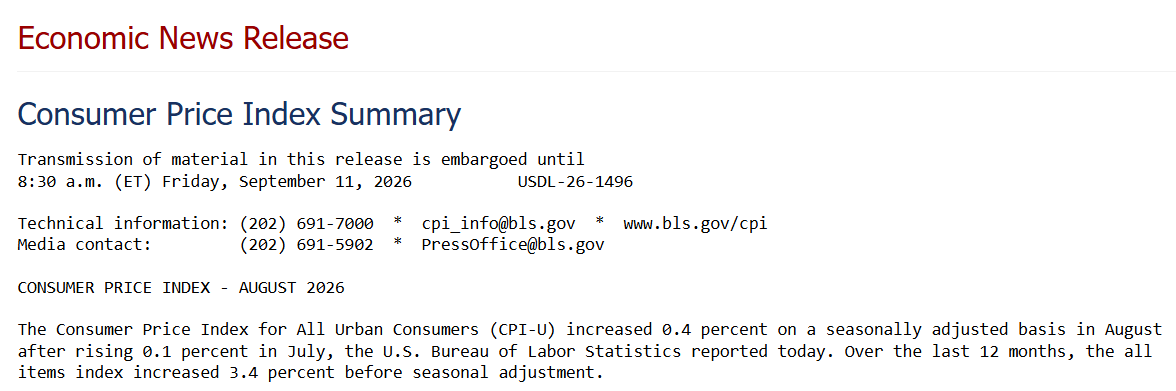
The US Bureau of Labor Statistics confirmed on September 11 that the Consumer Price Index for All Urban Consumers rose 0.4% in August on a seasonally adjusted basis, after a smaller 0.1% rise in July. Over the past 12 months, all items index increased 3.4%, as expected by major economists.
Core CPI news, which strips out food and energy, rose 0.3% for the month, a touch hotter than the 0.2% economists expected, though its yearly pace eased to 2.4%, the lowest annual core reading since March 2021.
What the August CPI Report Actually Showed
CPI Component | Monthly Change | Notes |
Headline CPI | +0.4% | 3.4% year-over-year |
Core CPI | +0.3% | 2.4% year-over-year, lowest since March 2021 |
Gasoline | +3.9% | Drove over a third of the monthly increase |
Energy (overall) | +2.1% | Main upside pressure |
Shelter | +0.3% | Up from 0.1% in July |
Food | +0.1% | Food away from home rose 0.3% |
Why Core CPI Matters More Than Headline Numbers
Here's the twist that makes this print so hard to trade. As per Crypto Rover X post, the Fed leans on core CPI as its real inflation gauge because it strips out oil price swings that come and go with world events. Core inflation actually cooled to its lowest annual pace since March 2021. But gasoline alone drove more than a third of the monthly headline gain, which leaves the Fed with an awkward choice.
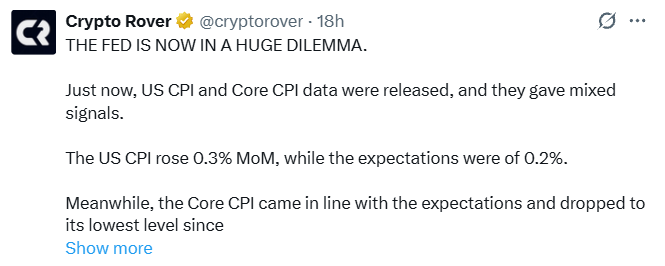
Raise rates when the pressure is coming almost entirely from one input, oil, or hold steady and risk having to deliver bigger hikes later if energy costs keep climbing. Economist Peter Schiff put it bluntly in a post the same morning, arguing that if the Fed doesn't hike now, it's proof the 2% inflation target isn't really a target at all.
Fed Rate Hike Probability Jumps to 87.3%
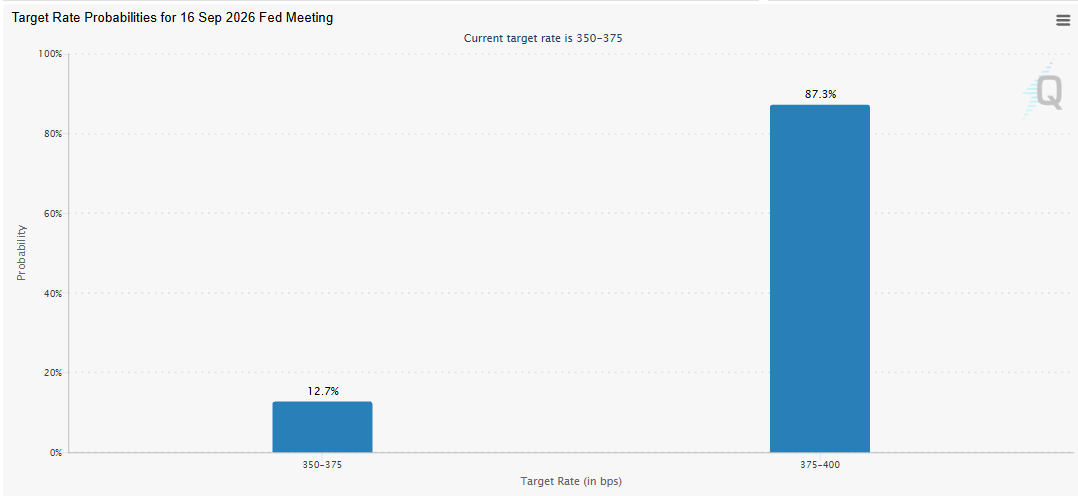
Following the release, market pricing tools showed the probability of a 25 basis point Fed rate hike at the September 16 meeting climbing to roughly 87.3%, while the chance of no move fell to around 12.7%. That would take the federal funds rate up from its current 3.50%–3.75% range, where it has sat since December 2025.
A hike on September 16 would carry real weight. Almost nobody inside the Fed believes one 25 basis point move alone fixes inflation, so a hike now likely signals officials think current interest rates are still too low.
Some commentary, including from former Fed Vice Chair Richard Clarida, has floated the idea that one hike rarely arrives alone, with markets now pricing closer to three total moves by next June instead of the two expected earlier.
Bitcoin Price Today and Ethereum Price Today: How Crypto Reacted
So why is the crypto market up today after inflation data that arguably supports higher rates? Sentiment swung fast. Per CoinGecko, the global crypto market cap sits at $2.74 trillion, up 0.6% over 24 hours, with $106 billion in trading volume. Bitcoin dominance is 56.7% and Ethereum's is 11.2%.
Bitcoin price today is changing hands around $77,240 and Ethereum around $2,511, with both coins swinging green as traders digested the mixed CPI and PPI data together rather than reacting to headline inflation alone.
When Will the Fed Cut Rates Again?
Don't expect Fed rate cuts anytime soon.
Prediction market data from Polymarket puts the odds of no Fed rate cut through 2026 at 93%. That lines up with the broader mood: officials are more focused on whether they need to hike further, not when they'll ease. Anyone holding crypto or rate-sensitive assets should plan around higher-for-longer, not a quick pivot.
Expert Opinion: Market analysts note that this CPI print puts the Fed in a genuinely split position rather than a clear-cut one. The gap between a hot headline number driven by gasoline and a cooling core reading gives policymakers room to argue either side at the September meeting. Analysts caution that crypto's short-term bounce should not be read as confirmation that tighter policy is off the table, since a rate hike and further hikes into 2027 remain live possibilities based on current market pricing.
YMYL Disclaimer: This content covers financial and economic data for informational purposes only and does not constitute financial, investment, trading, or legal advice. Interest rate decisions, inflation data, and cryptocurrency prices change rapidly and carry real financial risk. Always verify current figures with primary sources such as the Federal Reserve and the Bureau of Labor Statistics, and consult a licensed financial advisor before making investment decisions.









