Crypto Scam Alert: GIWA Mainnet Not Live, Fake Chain Drained 766 ETH


Fake GIWA Mainnet Scam Explained: Fake 9134 Network Drained 766 ETH
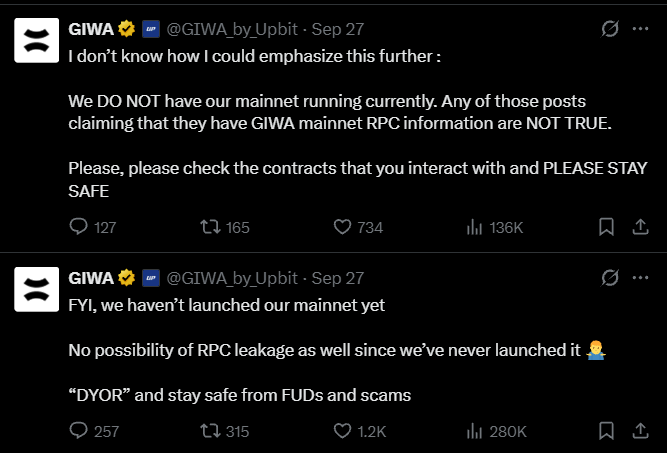
GIWA, the Ethereum Layer 2 backed by Upbit, says its mainnet has not launched and that reports of a mainnet RPC leak are false. The clarification came on September 27, 2026, as a separate scam story spread through the community.
A fake network using the real Chain ID 9134 pulled in real ETH before the funds disappeared. How did a counterfeit chain look convincing enough to fool more than a thousand wallets?
At a Glance
-
GIWA mainnet status: Not launched
-
Claim circulating: Alleged mainnet RPC leak
-
Fake Chain ID: 9134
-
ETH deposited into fake bridge: about 767.65 ETH
-
ETH ultimately drained: about 766.25 ETH
-
Addresses that bridged funds: 1,335
-
DYOR compensation: more than 200 ETH already distributed
-
Current warning: avoid unofficial GIWA RPCs, bridges and contracts
GIWA Ethereum Layer 2 Mainnet Has Not Launched
In its latest GIWA crypto news update, the team said it has never launched a mainnet, so no RPC could have leaked. The team urged users to check every contract they interact with and to stay alert to FUD and scams.
According to the official website, the GIWA blockchain is built on the OP Stack and positioned as an Ethereum L2 supported by Upbit. GIWA Wallet and the stablecoin ecosystem products still carry a "Coming Soon" label. In short, the real mainnet is not live.
Source: Official X Post
Fake GIWA Chain Used Correct Chain ID 9134 to Appear Legitimate
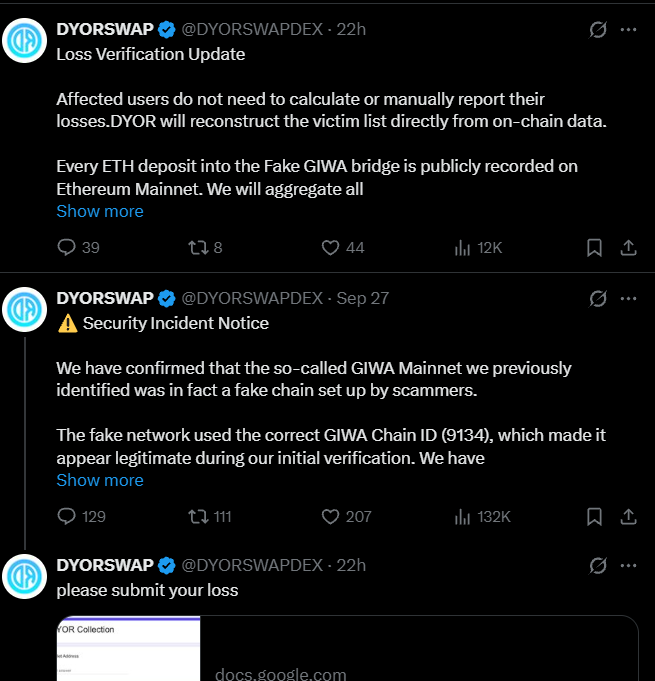
DYOR Swap says the network it connected to was a fraudulent chain built by scammers. Because it used the correct Chain ID, it passed DYOR's first checks.
This was more than a phishing page. The GIWA Fake mainnet scam ran OP Stack-style infrastructure, including a bridge and a batcher that posted transaction batches to Ethereum. Users could bridge real ETH, buy and sell tokens, and launch new ones, which made the setup feel authentic.
Fake Bridge Drew About 767 ETH Before the Funds Were Drained
This is the crypto hack today that has drawn the most attention. Real ETH entered the fraudulent bridge, and most of it was later moved out. DYOR stresses that its own contracts were not exploited. It describes itself as one of several applications affected by the impersonating network.
| Metric | Reported Details |
| Fake Chain ID | 9134 |
| Addresses that bridged funds | 1,335 |
| ETH deposited | ~767.65 coins |
| ETH ultimately drained | ~766.25 coins |
| DYOR wallets involved | 298 |
| DYOR actions reconstructed | 1,479 |
| DYOR liquidity pools | 104 |
| Compensation distributed | 200+ coins |
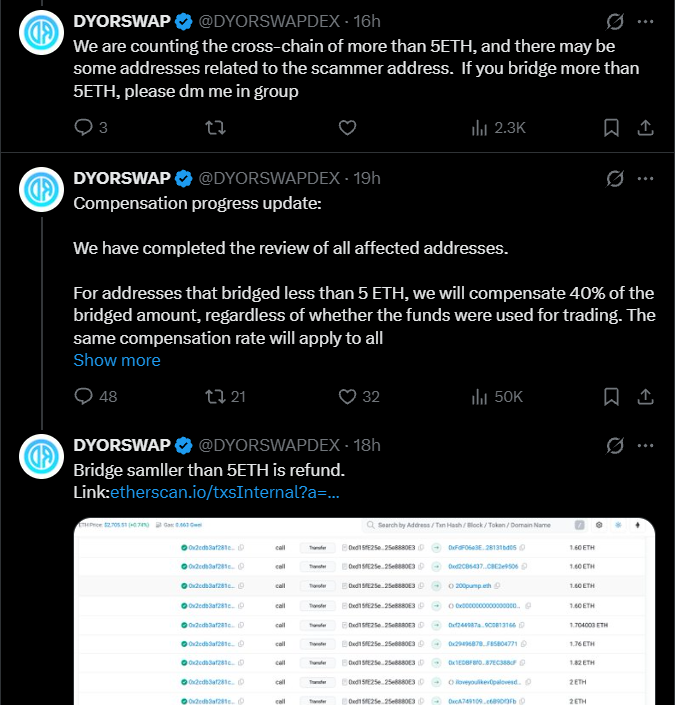
DYOR says it rebuilt the activity from L2 data that the fake chain itself published to Ethereum. Its spot checks matched live data exactly or within about 1.6%. Only roughly the final two minutes are missing.
Source: DyorSwap Dex
Timeline: How the Fake GIWA Mainnet Incident Unfolded
-
September 27, 02:10:59 UTC+8: The fake bridge is deployed.
-
39 blocks later: The first three ETH deposits land in the same second. DYOR believes they came from internal testing wallets.
-
September 27: Users bridge real coins and trade on the fraudulent network.
-
Later: About 766.25 coins is removed from the bridge.
-
September 27, 16:09: The chain states that the Mainnet has not launched.
-
September 28, 08:23: DYOR publishes its detailed recap.
DYOR Begins Compensation and Loss Verification for Affected Users
DYOR is using its own treasury to compensate users, even though it says it did not control the bridge or carry out the drain. Its stated policy is:
-
Addresses that bridged less than 5 tokens receive 40% of the bridged amount, whether or not the funds were traded.
-
Addresses that bridged more than 5 tokens are reviewed separately, since some may be tied to phishing or the scam itself. Legitimate users must contact DYOR for verification.
-
Users generally do not need to calculate losses. DYOR is rebuilding the victim list from public Ethereum deposit records.
DYOR lists 0xdf25f88aa6cde9937fdcfcf10fa349528c79dbf9 as the only official compensation address. It says it will never ask anyone to send funds, sign suspicious transactions or pay a fee to receive compensation. The team is still tracing the deployer, the funding sources and the wallet that received the drained Ethereum coins.
Source: X
What Users Should Know About the 9134 Network Scam
Keep these points in mind if you follow update posts on social media:
-
The official GIWA Mainnet is not live, so any RPC claiming otherwise is unverified.
-
A correct Chain ID proves nothing. Scammers can copy it freely.
-
Skip unofficial RPCs, bridges, and contracts, and check addresses independently.
-
No source in this story mentions a GIWA chain Airdrop or a public GIWA Chain testnet reward. Treat any such offer with caution until it confirms it on its official channels.
The same care applies to ETH news and other Ethereum news today: confirm a claim with the project's own accounts before you move funds.
Conclusion
Two connected but separate developments define this story. Its official mainnet has not launched. DYOR says a fraudulent network posing as Chain 9134 ran its own bridge and drained about 766.25 coins. The investigation and compensation process are both ongoing. Until it announces a launch itself, rely only on its official information.
Disclaimer: This article is for information only and is not financial advice. Cryptocurrency transactions carry financial and security risks, including total loss of funds. Compensation eligibility and recovery remain subject to DYOR's verification process and are not a guarantee of full recovery. Always verify wallet addresses, contracts, RPC endpoints and official announcements yourself before interacting with any crypto network.








