How Does Bitcoin Mining Work? Complete Beginner Guide to BTC Creation

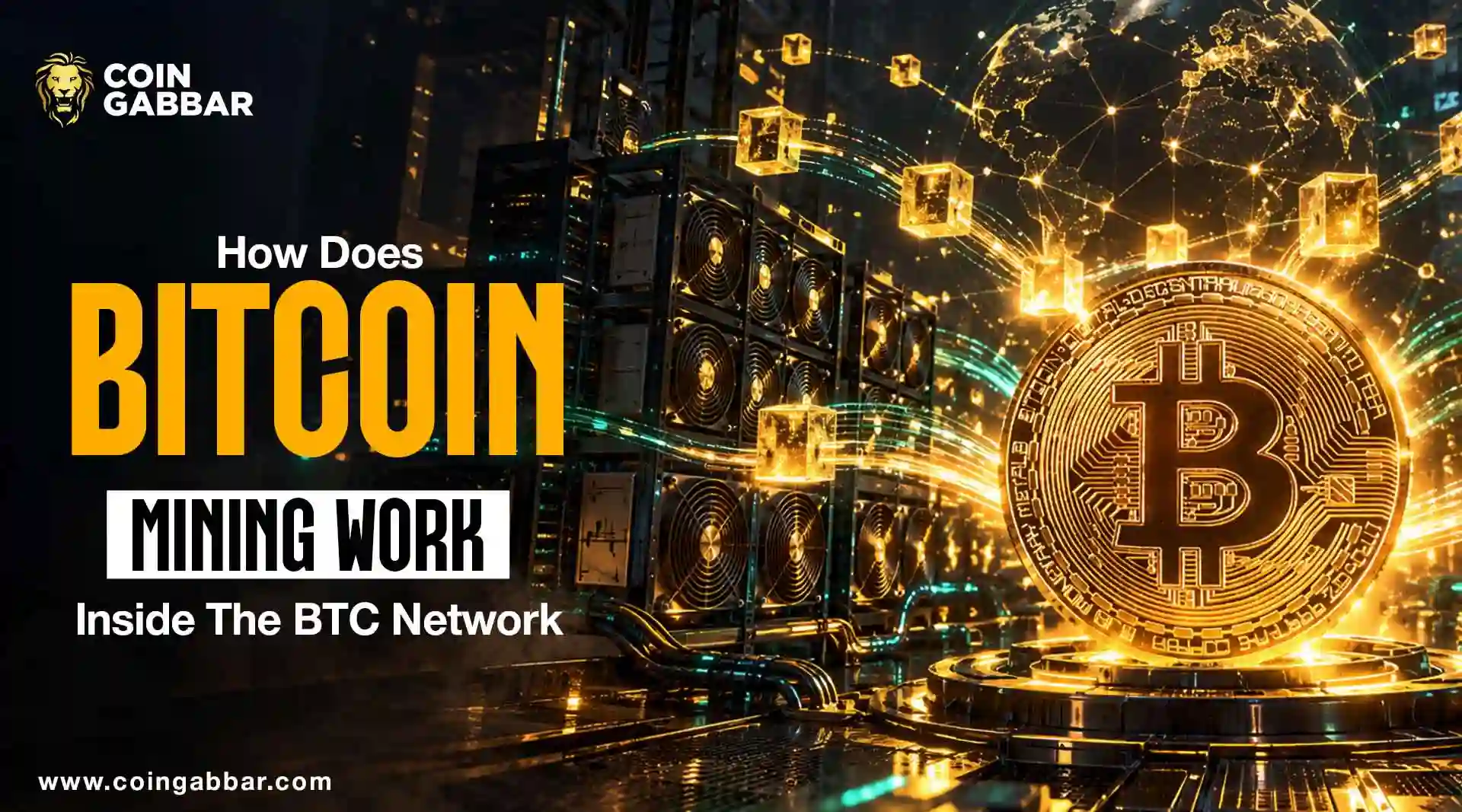
How Does Bitcoin Mining Work? A Step-by-Step Guide for Beginners
Behind every confirmed Bitcoin transaction is a decentralized process called mining. Miners verify transactions, organize them into blocks, and compete to add those blocks to the blockchain. In return, successful miners receive BTC rewards and transaction fees. This article breaks down how Bitcoin mining works from start to finish.
Key Takeaways
Miners check transactions and bundle them into blocks, which keeps Bitcoin honest without a bank.
Winning a block pays new BTC plus fees, and the reward is currently 3.125 BTC per block.
Serious mining needs special hardware and cheap electricity, so most beginners join a pool or skip it.
What Is Bitcoin?
Bitcoin is digital money that runs on a public ledger called the blockchain. Every transaction ever made is recorded there, and anyone can view it.
Satoshi Nakamoto published the idea in a 2008 whitepaper, and the network went live in January 2009. Only 21 million BTC will ever exist. That cap is built into the software.
What Is Bitcoin Mining?
Bitcoin mining is the work of adding new transactions to the blockchain. Bitcoin miners run powerful computers that compete to package payments into a block. The winner gets paid in BTC.
Bitcoin mining explained in one line: computers race to solve a puzzle, and the winner earns the right to add the next block.
How Bitcoin Mining Works for Beginners
Picture a huge shared notebook. Everyone can read it, but nobody owns it. About every ten minutes, a new page is added.
Miners compete to write that page, and the network accepts it only if the work is valid. Winning pays a reward, so miners have a reason to stay honest. Cheating costs money, and honesty pays.
Bitcoin Mining Process Step by Step
Payments are sent. Transactions wait in a queue of unconfirmed payments called the mempool.
Miners pick transactions. They usually favor the ones paying higher fees.
A candidate block is built. The miner bundles the chosen payments and adds a reward payment to themselves.
The hashing race begins. Miners run the block header through the SHA-256 function again and again, changing a number called the nonce each time.
A winner appears. The first miner to find a valid hash broadcasts the block.
The network checks it. Other nodes verify the block and add it to their copy of the chain.
The reward is paid. The winner receives new BTC and the block's fees.
Then the race starts again on the next block. That's the whole Bitcoin mining process in a nutshell.
How Bitcoin Miners Verify Transactions
Before a payment goes into a block, miners run a few checks:
Signature: Does a valid digital signature prove the sender owns the coins?
Funds: Do the coins exist, and are they unspent?
Double spending: Has the same coin already been sent somewhere else?
Format: Does the payment follow Bitcoin's rules?
Source: official BTC documentation
Invalid payments are dropped. You also don't have to trust the miner. Every full node re-checks each block on its own, so a bad transaction can't slip through.
What Is Bitcoin Proof of Work?
Proof of work is the rule that makes mining costly on purpose. To add a block, a miner must find a hash below a target number set by the network.
There's no shortcut. The only way is trial and error, at billions of guesses per second. Finding the answer is hard, but checking it takes a fraction of a second. The proof shows that real computing effort was spent.
The network also adjusts difficulty every 2,016 blocks, roughly two weeks. It aims for one block about every ten minutes. When more miners join, the puzzle gets harder. When some leave, it gets easier.
How Bitcoin Mining Generates New BTC
No central bank prints Bitcoin. Each block starts with a special payment called the coinbase transaction. It creates fresh BTC and sends it to the miner's address. That's how Bitcoin mining generates new BTC.
This amount, called the block subsidy, halves every 210,000 blocks, about every four years.
Year | Reward per block |
2009 | 50 BTC |
2012 | 25 BTC |
2016 | 12.5 BTC |
2020 | 6.25 BTC |
2024 | 3.125 BTC |
The next halving is expected around 2028. The final coin should be mined around the year 2140.
How Bitcoin Mining Rewards Work
A miner's payout has two parts:
Block subsidy: the new BTC, currently 3.125 per block
Transaction fees: what users paid to get into that block
As the subsidy shrinks, fees are expected to matter more. New rewards also can't be spent right away. They unlock after 100 more blocks, roughly 17 hours later.
Only the winner is paid each round. Everyone else's work earns nothing, and that's why pools exist.
What Hardware Is Needed for Bitcoin Mining
Item | Why it matters |
ASIC miner | A chip built only for SHA-256. Laptops and GPUs can't compete. |
Power supply | ASICs draw a lot of power, and some need a dedicated circuit. |
Cooling | They run hot and need constant airflow. |
Internet | A stable connection keeps you talking to the pool. |
Wallet | This is where your rewards land. |
Noise is real too. Many ASICs are loud enough that they don't belong in a bedroom.
Mining Pool: Why Most Miners Join One
Even with good hardware, your odds of winning a block alone are small. A mining pool combines the power of many miners.
When the pool wins, the reward is split by each member's share of the work. Payouts are smaller but steadier. Pools usually charge a small fee, and payout methods differ, so read the rules before signing up.
How to Mine Bitcoin for Beginners
Here's a simple path if you want to try it.
Check your electricity price. It's your biggest ongoing cost.
Choose an ASIC. Work out profit using your own power rate.
Set up a wallet you control. Save the seed phrase offline.
Pick a pool. Look for clear fees and payout rules.
Connect your miner. Enter the pool details in its settings.
Track results. Watch earnings and temperature.
Bitcoin Mining Scams and Security Risks
Mining itself is legal and harmless. The trouble comes from people who exploit it. Fortinet's cybersecurity glossary describes two main dangers.
Hijacked devices. Hackers install malware that secretly uses your computer to mine for them. It can eat nearly all your processing power, spike your power bill and overheat the machine. The infection can also spread to other devices on your network.
Scams. Fortinet lists three common ones:
Wallet scams: Fake wallets, or tampered hardware wallets, send your funds to scammers.
Mining scams: Fake cloud-mining services take your money and never mine anything.
Exchange scams: Sites lure you with very low fees, then steal the login details you enter.
How to Protect Yourself
Use antivirus software to block and remove mining malware.
Turn on a firewall to keep threats out and watch traffic leaving your device.
Use a VPN on networks you don't control.
Avoid public Wi-Fi, where attackers can reach your device more easily.
Vet any cloud-mining offer before sending a single dollar.
Is It Worth It?
Bitcoin mining for beginners is rarely a quick win. Before you buy anything, weigh both sides.
Upsides
You earn BTC directly.
You help secure the network.
A pool gives steadier income.
Downsides
Hardware costs a lot upfront.
Electricity eats into profit.
Heat and noise are a constant issue.
Earnings drop when difficulty rises or BTC's price falls.
Machines get outdated as newer models arrive.
Final Thoughts
Bitcoin mining sounds complex, but the idea is simple. Computers compete, the network checks the winner, and honest work earns BTC. Understanding how to mine Bitcoin is easy. Making it profitable is the hard part, so run your own numbers first.
Disclaimer
This article is for education only and isn't financial advice. Mining profits depend on electricity cost, hardware, BTC's price and network difficulty, and you can lose money. Do your own research before buying equipment.