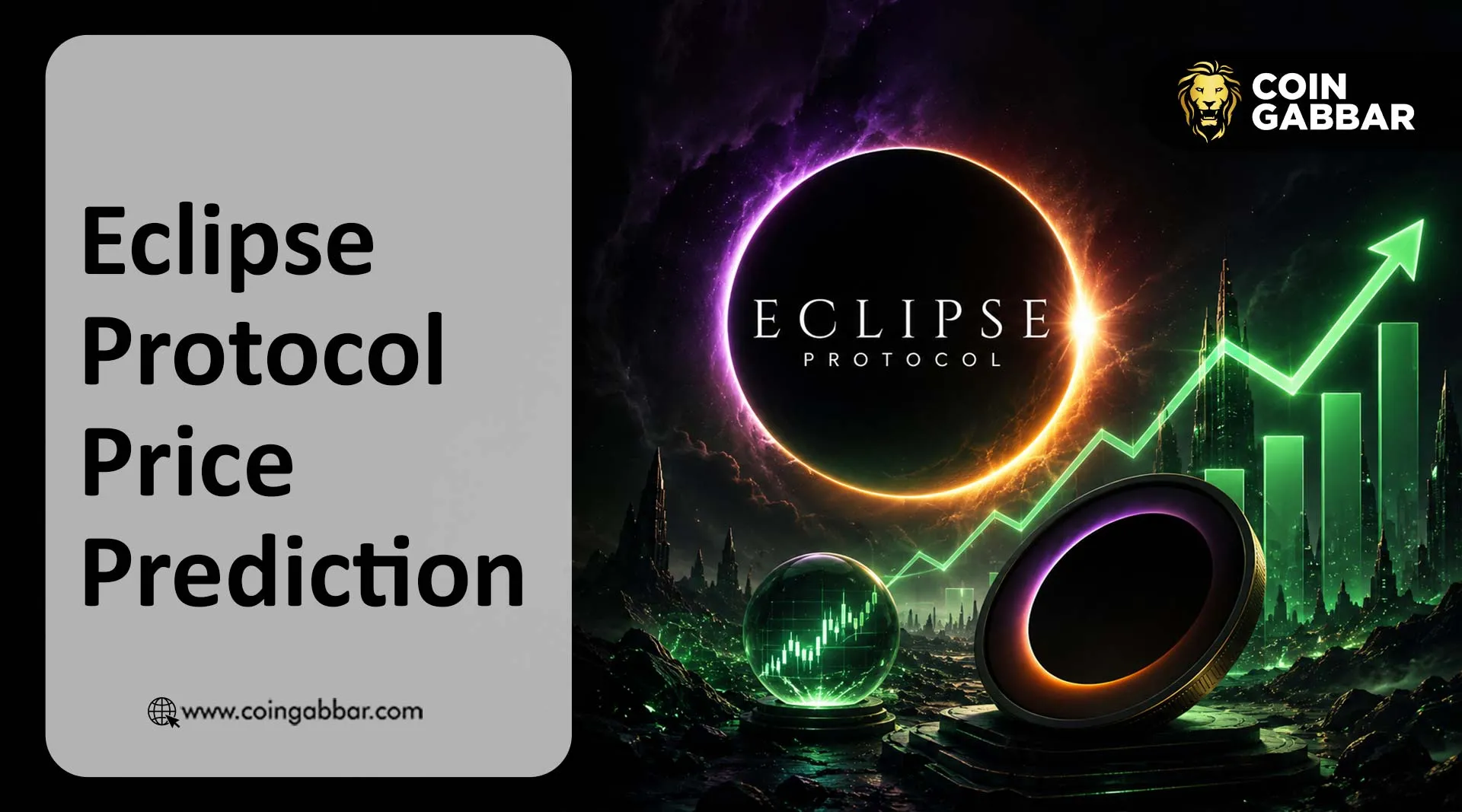
Eclipse Protocol Presale Live, $EPX Price Prediction Launch At $0.0220

The presale window just opened, and Eclipse Protocol is not hiding behind vague dates this time.
A fixed launch date and a fixed launch price are already on the table. For a market used to shifting timelines, that kind of certainty stands out on its own.
Why Is Eclipse Protocol Presale Live Now?
The project has pushed its pre-sale live ahead of a confirmed listing on PancakeSwap, scheduled for Friday, July 10 at 17:00 UTC.
The team is positioning this stage as the last entry point before the token moves to open trading.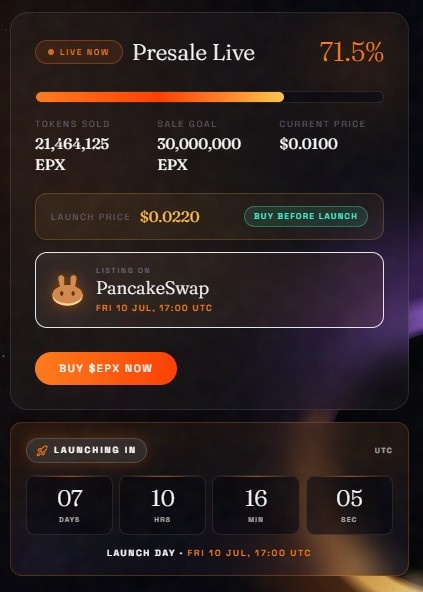
Unlike many presale projects that keep launch details loose, this one has already locked both numbers publicly. That decision alone shapes how early buyers are approaching this window.
What Is The $EPX Launch Price And Presale Price?
The current presale price for $EPX sits at $0.0100, while the stated launch price is $0.0220.
That gap works out to a claimed 120 percent upside between entry and open market debut, a figure the team has advertised directly on its pre-sale dashboard.
Numbers like this always deserve scrutiny. A fixed launch price only holds if liquidity and demand behave as expected once trading opens on PancakeSwap.
How Does The Eclipse Cycle System Work For EPX?
The protocol runs on what it calls the EPX Cycle System, spread across 156 cycles.
Each cycle processes 1,275,000 $EPX, split evenly. Half gets burned permanently, and the other half goes back to holders as rewards.
That structure ties long-term holding directly to shrinking supply. Over time, fewer $EPX tokens remain in circulation while active holders keep collecting distributions.
A dynamic tax model runs alongside this system, starting at 5 percent and rising to a maximum of 12 percent as the protocol matures.
What Do Eclipse Protocol Tokenomics Reveal About Long-Term Supply?
Total supply is capped at 100,000,000 EPX. Pre-sale accounts for 50% of that supply, with liquidity taking another 20%.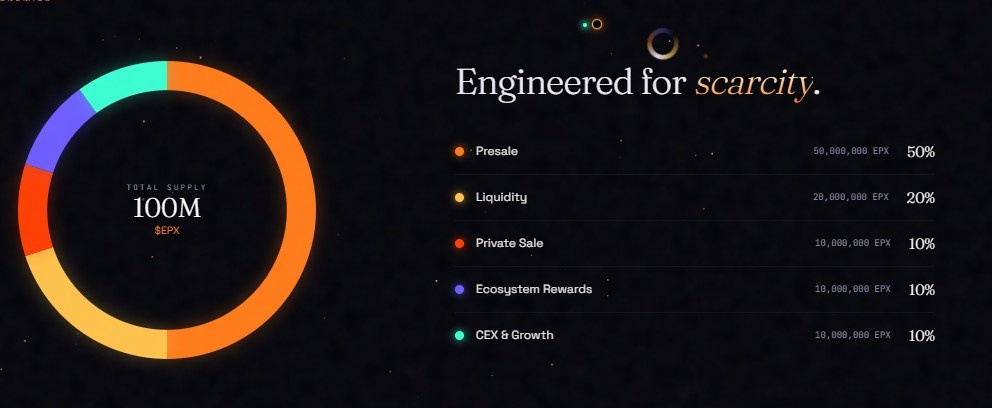
Private presale participants hold 10%, ecosystem rewards cover another 10%, and the remaining 10% is reserved for CEX listings and strategic growth.
That last bucket matters for anyone watching this price prediction story closely. A dedicated CEX allocation signals intent toward exchange listings beyond the initial PancakeSwap debut, though no centralized exchange has been officially named yet.
Eclipse Protocol Price Prediction: What Could $EPX Look Like Post Listing?
No trading history exists yet for $EPX, so every scenario below is an analyst estimate built from the presale structure and burn mechanics, not a guarantee.
| Scenario | Estimated Price Range | Key Driver |
|---|---|---|
| Bear Case | $0.015 - $0.020 | Heavy early selling, weak PancakeSwap liquidity depth |
| Base Case | $0.022 - $0.035 | Demand matches launch price, steady cycle burns |
| Bull Case | $0.045 - $0.070 | Strong holder retention and CEX listing speculation build |
This price prediction range will likely narrow fast once actual trading volume shows up after July 10.
What Else Is The Project Offering Beyond The Presale?
The ecosystem being built around $EPX goes well beyond a single token launch.
That includes EPX Vault for staking, Eclipse Farm for yield farming, and EPX AI for market intelligence and portfolio analytics.
EPX Agents adds an AI agent marketplace, while EPX Compute offers decentralized GPU access. Eclipse Launchpad, Eclipse Arena, and EclipseDAO round out governance, gaming, and incubation plans.
Whether this breadth translates into real usage after listing remains the bigger question for long-term $EPX demand.
Expert Opinion
CoinGabbar analysts tracking the EPX Protocol price prediction story note that publishing both a fixed pre-sale price and launch price ahead of trading is uncommon for a token at this stage.
That transparency reduces one layer of uncertainty, though it does not remove market risk once PancakeSwap liquidity goes live. The burn-and-reward cycle structure appears designed to reward patience over quick flips, which could slow early volatility if holder behavior matches the model.
Disclaimer: This article is for informational purposes only and does not constitute financial advice. Figures referenced here, including pre-sale price, listing price, and price prediction ranges, are based on publicly available project materials and analyst estimates only. Cryptocurrency investments carry significant risk. Always conduct your own research before making any investment decision.







.webp)