US Crypto Regulation Faces a New Shock After CLARITY Vote


Why the Failed CLARITY Vote Could Change America’s Crypto Roadmap
A single tally just reshaped the near-term path for US crypto regulation. CLARITY fell one short inside the upper chamber, and within hours, both top financial regulators publicly signaled they're done waiting on lawmakers.
The Tally That Started It: 49-50
At 3:00 p.m. on September 15, the Senate failed to invoke cloture on H.R. 3633, the Digital Asset Market Clarity Act, by a count of 49-50.
Senator Coons did not participate, while Senators Collins, Hawley, Moran, and Tillis went no, with Tillis doing so specifically to preserve his right to file a motion to reconsider.
Source: U.S. Senate Daily Press, September 15, 2026
-
Tally: 49-50, closure failed
-
Bill: H.R. 3633, Digital Asset Market Clarity Act
-
Senator Tillis moved to reconsider immediately after
-
Majority Leader Thune had addressed crypto earlier that same morning
The official record shows this wasn't a quiet procedural moment either.
Senator Lummis spoke in favor of CLARITY shortly before voting began at 2:18 p.m., making the case for passage directly on the floor, while Senator Warren spoke earlier that day specifically on crypto and President Trump, signaling where opposition was rooted heading into the tally.
That split, a sponsor pushing for passage against pointed opposition tied to the administration itself, is part of why this vote landed as closely contested as it did, rather than failing by a wide, predictable margin.
SEC Chairman Atkins: "With Or Without Legislation"
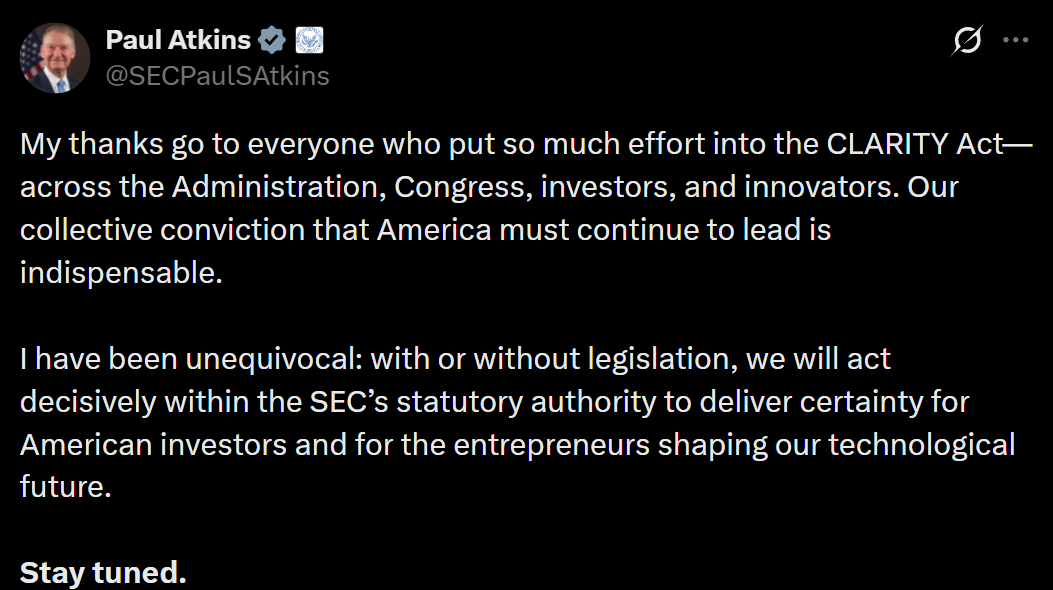
SEC Chairman Paul Atkins responded directly, thanking everyone who worked on the bill across the administration, Congress, investors, and innovators, framing his agency's next steps as central to US crypto regulation going forward.
Source: Paul Atkins' Official
He said the agency would act decisively within its existing statutory authority to deliver certainty for American investors and entrepreneurs, legislation or not, closing with a simple "stay tuned."
CFTC Chairman Selig: "Locked In And Ready To Ship"
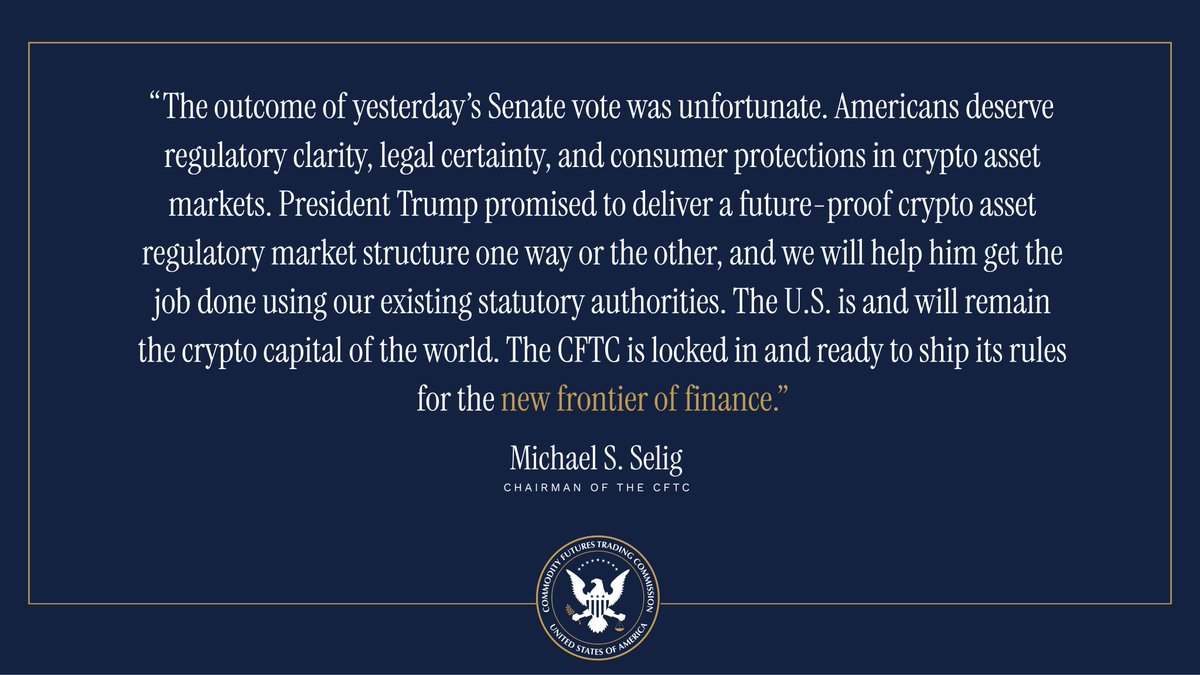
CFTC Chairman Michael Selig echoed the same posture, calling the Senate outcome unfortunate while insisting Americans still deserve regulatory clarity, legal certainty, and consumer protections in crypto markets.
Source: Mike Selig's Official
Selig said President Trump promised a future-proof crypto market structure "one way or the other" and that the CFTC will help deliver it using its existing statutory authorities.
His closing line left little ambiguity: the CFTC is "locked in and ready to ship its rules for the new frontier of finance."
JPMorgan's Read: Not Dead, But Narrow
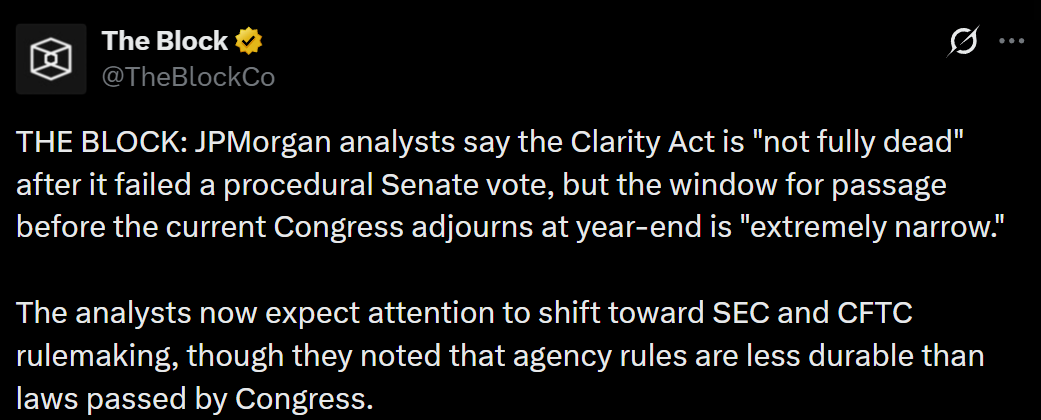
Wall Street's take on US crypto regulation lands somewhere between the two extremes. JPMorgan analysts described CLARITY as "not fully dead" despite the failed vote but called the window for passage before the current Congress adjourns at year-end "extremely narrow."
Source: The Block's Post
| Angle | Key Takeaway |
| Cloture Tally | 49-50, failed on H.R. 3633 |
| SEC Position | Will act under existing authority regardless of Congress |
| CFTC Position | Rules "ready to ship" using current statutory power |
| JPMorgan View | Bill is "not fully dead," but the path is narrow. |
| Risk Noted | Agency rules are less durable than actual law |
The analysts expect attention to shift toward SEC and CFTC rulemaking in the meantime, though they flagged an important caveat: rules written by agencies can be undone far more easily than a law passed by Congress.
What This Means Going Forward
The pattern here is consistent across all three reactions. Nobody involved in US crypto regulation is treating this as the end of the conversation; they're treating it as a fork in the road.
Congress may still find a path forward, per JPMorgan, but with a shrinking calendar before year-end.
Meanwhile, both regulators have now publicly committed toward moving with or without new legislation, meaning rulemaking activity from either agency is likely the next concrete thing worth watching, regardless of what happens with any reconsideration attempt.
Tillis's motion matters procedurally too. Filing to reconsider preserves a path back to another cloture attempt without forcing CLARITY to restart from scratch, though nothing in the official record sets a firm date for when, or whether, that second vote happens.
Disclaimer
This article is for educational and informational purposes only and should not be considered financial or investment advice. Always conduct your own research before making investment decisions.