"Funding Rate Explained: How It Works in Perpetual Futures"

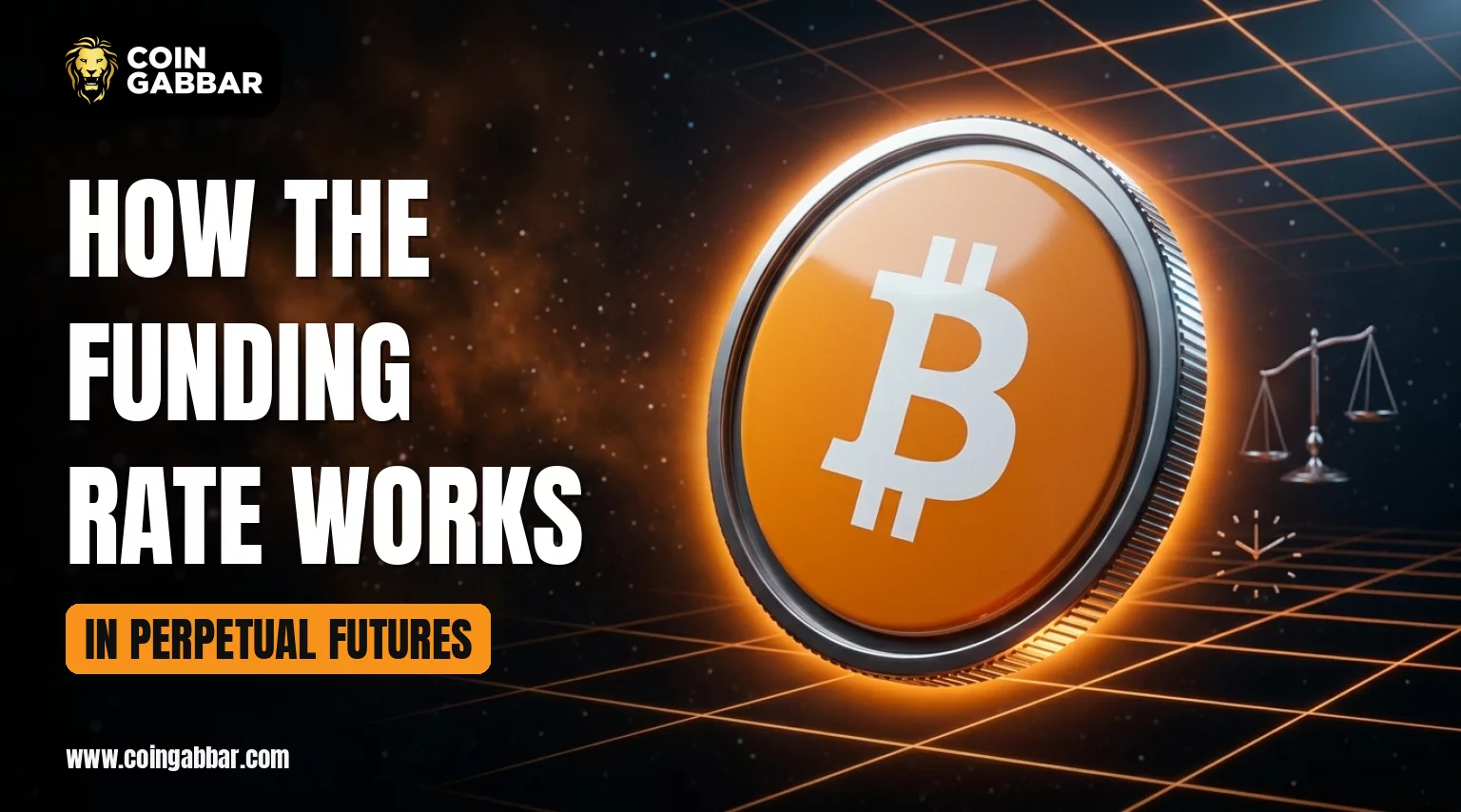
What Is the Funding Rate?
The funding rate is a periodic payment exchanged directly between traders holding long and short positions in a perpetual futures contract. It exists to solve a pretty specific problem, since perpetual contracts never expire and have no settlement date the way traditional futures do.
Binance's own official explanation puts it plainly: because perpetual contracts never settle in the traditional sense, exchanges need some kind of mechanism to keep the futures price and the spot price from drifting too far apart from each other. That mechanism is the funding rate, and honestly, it's a fairly elegant fix once you see how it works.
Why Perpetual Futures Need a Funding Rate at All
Traditional futures contracts have a built-in fix for price divergence, but perpetuals never had that luxury.
A normal futures contract expires on a set date, and at expiration, the price is forced to converge with the spot market whether it wants to or not.
A perpetual contract has no expiration date at all, so nothing forces that convergence naturally the way it would elsewhere.
Without some correcting mechanism, a perpetual contract could just drift and start trading like its own separate asset instead of tracking the coin it's supposed to represent.
The funding rate exists specifically to prevent that drift by creating a real financial incentive to trade in whichever direction pulls the price back toward spot.
How the Funding Rate Actually Works
The mechanics here come down to two components working together behind the scenes.
A premium component, based on the price gap between the perpetual contract and the spot index price.
An interest rate component, which on Binance is fixed at 0.03% daily, split across three funding intervals of 0.01% each, happening every eight hours.
When the funding rate turns positive, long position holders end up paying short position holders.
When the funding rate goes negative, it flips, and short position holders pay long position holders instead.
Different exchanges settle this on different schedules too, which trips people up more than you'd think. Binance calculates funding every eight hours, while other platforms like Hyperliquid process it hourly instead, and that difference genuinely changes how often these payments hit an account.
What a Positive or Negative Funding Rate Actually Means
Reading the funding rate is honestly one of the easier shortcuts for gauging market sentiment without digging through charts.
A positive funding rate usually means the perpetual price is trading above spot, signaling stronger demand from long traders.
A negative funding rate usually means the perpetual price is trading below spot, signaling heavier demand sitting on the short side instead.
Extreme positive rates tend to show up during strong bull runs, when leveraged long positions crowd one side of the market all at once.
Extreme negative rates tend to appear during sharp downturns, when shorts dominate and longs get compensated just to hold the other side of the trade.
Why Traders Actually Watch the Funding Rate Closely
Beyond the payment itself, the funding rate carries real, usable information for anyone paying attention.
High positive funding rates can quietly eat into profits for long traders holding a position across many funding cycles in a row.
Some traders deliberately take the opposite side of an extreme funding rate purely to collect that periodic payment, a strategy often called funding rate arbitrage.
A funding rate spiking sharply in either direction can hint that a market is overleveraged, which sometimes precedes a sudden liquidation cascade shortly after.
CoinGlass and similar tracking tools let traders compare funding rates across multiple exchanges at once, which genuinely helps since rates can vary more than people expect between platforms for the exact same asset.
Real Examples From Recent Contracts
New perpetual listings give a pretty clear look at how funding rate limits actually get set from day one.
When Binance launched its 1000CATUSDT perpetual contract, the exchange capped the maximum funding rate at launch at plus or minus 2.00%, with funding settled every four hours rather than the usual eight, a fairly common approach for newer or more volatile listings.
Practical Tips for Managing Funding Rate Exposure
A few habits genuinely help traders avoid getting caught off guard by funding payments they didn't plan for.
Check the current funding rate and countdown timer before opening a position meant to be held across a funding interval.
Factor funding costs into the total cost of a trade, not just the entry and exit price sitting on the chart.
Be aware that funding fees get exchanged directly between traders, not collected by the exchange itself, so the money always moves from one side of the trade to the other.
Watch for consistently high funding rates as a signal that a market may be crowded and due for some kind of correction soon.
For anyone still getting comfortable with the basics of leveraged trading before layering funding rate strategy on top, this deep dive into crypto futures is a solid place to start.
It's also worth understanding how margin and collateral requirements interact with funding costs, since both eat into a position's overall returns in different ways.
Conclusion
The funding rate is really the quiet mechanism holding perpetual futures prices in line with the spot market, working through direct payments between long and short traders rather than any action taken by the exchange itself.
It shifts constantly based on market positioning, and reading it correctly gives traders a genuine window into sentiment that a price chart alone won't show.
Understanding how the funding rate works, and factoring it into the true cost of a trade, helps separate traders who treat perpetuals as a deliberate short-term tool from those who get quietly worn down by fees they never bothered accounting for in the first place.
Disclaimer: This article is written only for general information and educational purposes. It does not offer financial, investment, or legal advice of any kind. Readers should conduct their own research before making any investment decision.