What Is a Token Unlock, and Why Does It Crash Prices?

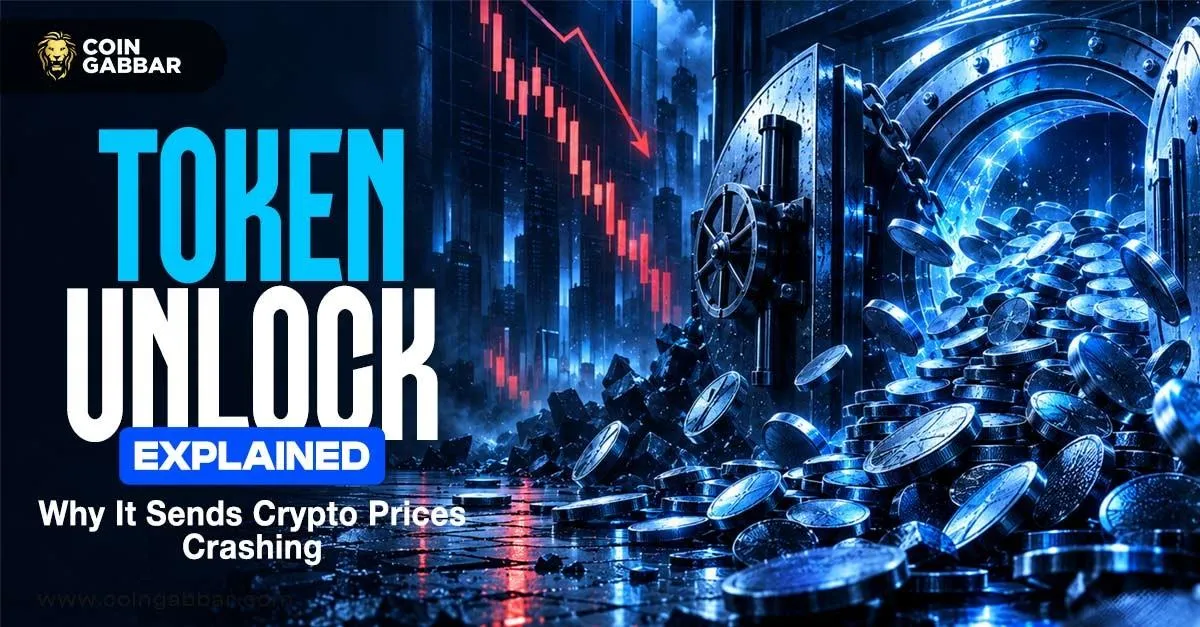
What Is a Token Unlock?
Anyone who has watched a token quietly bleed value with no news, no hack, and no drama has probably run into a token unlock without even realizing it. The simplest way to put it: a token unlock is the scheduled release of coins that were previously locked away, usually held by the team, early investors, or advisors who got in long before the public ever had a chance.
Those tokens sit under a vesting schedule from the very start. Nobody can touch them, sell them, or move them until the lock period runs out.
Once that date hits, the coins become tradable, and honestly, that one event can shift a market a lot more than most people expect walking in.
Why Projects Lock Tokens in the First Place
Locking tokens is not some arbitrary rule someone made up for fun. There is a real reason behind it.
It stops insiders from dumping their bags the second a token lists on an exchange.
It buys a project time to actually build something before early backers can cash out.
It signals commitment, since a team sitting on locked tokens has skin in the game for longer than a few days.
It keeps circulating supply artificially low in those early, fragile months after launch.
Here is the catch, though. Every single lock eventually ends. A token unlock is just that promise finally coming due, and the market is left to absorb whatever supply shows up, whether it is ready for it or not.
Why a Token Unlock Tends to Crash Prices
Nothing exotic is happening here. It is really just supply and demand doing what supply and demand always do.
A wave of new coins hits circulation, either all at once or on a scheduled drip.
Recipients often sell a chunk of it fairly quickly, whether to lock in gains or simply cover bills.
If buyers do not show up in equal force, the price has nowhere to go but down.
Smaller tokens feel this far worse, since their order books are thin to begin with and cannot absorb the extra supply.
Keyrock, a market maker that studied more than 16,000 unlock events, found that nearly all unlocks create negative pressure on price, no matter the token's size or who actually receives the tokens. That number is honestly a bit jarring once it sinks in, and it holds up across almost every kind of project out there.
It Often Starts Before the Unlock Even Happens
Here is the part that catches a lot of people off guard. A token unlock rarely waits politely for its own scheduled date before moving the market.
Traders anticipate the event and start selling early, trying to get ahead of the drop before everyone else does.
Prices can slide for days, sometimes weeks, before the actual unlock date even arrives.
Some of the sharpest moves happen right before and right after the release, not necessarily on the day itself.
This means a chart can already look weak well before any headline or announcement shows up.
Not Every Token Unlock Hits the Same Way
Size and structure change the outcome quite a bit, so not every unlock deserves the same amount of worry.
A small unlock under roughly 1% of circulating supply usually barely moves the needle.
A large unlock, especially one flowing mostly to team members or early investors, tends to hit a lot harder.
Linear unlocks that trickle out gradually tend to cause far less disruption than one big cliff release dumped all at once.
Tokens that have already vested most of their supply tend to see calmer price action overall, simply because there is less left to shock the market.
Projects that plan this out carefully, spreading releases over time instead of dumping everything at once, generally hold up better through the process. A look at Byzanlink structures its vesting shows exactly this kind of thinking in action, with long cliffs for strategic investors and a much smaller float released right at launch.
How Investors Can Prepare for a Token Unlock
A few habits make this whole thing a lot less painful to deal with.
Check a project's vesting schedule before buying in, not after the damage is already done.
Watch how much supply is unlocking relative to the token's total circulating supply.
Pay attention to who actually receives the unlock, since team and investor tokens tend to sell faster than community allocations do.
Avoid piling into a large position right before a known unlock date, no matter how good the chart looks that week.
Comparing a tokenomics across newer launches also helps build a feel for what a healthy schedule looks like. This roundup of presales with strong tokenomics is a decent place to see how vesting structure gets weighed against price and hype for projects that have not launched yet.
Conclusion
A token unlock is not some hidden trick buried in fine print. The schedule is usually public from day one, sitting right there in the whitepaper for anyone willing to actually go read it. The trouble is that most investors only notice it once the price has already dropped and the damage is done.
Understanding how a token unlock works and actually checking a project's release schedule ahead of time turns what feels like a random, unexplainable crash into something far more predictable.
That alone can be the difference between getting blindsided and simply choosing to sit it out. For anyone who wants to keep sharpening this kind of instinct, a running list of crypto blogs is a solid habit to build, since tokenomics patterns like this tend to repeat far more often than people expect.
Disclaimer: This article is written only for general information and educational purposes. It does not offer financial, investment, or legal advice of any kind. Readers should conduct their own research before making any investment decision.




.jpg)