What Does Blockchain Need to Become Everyday Payment Infrastructure?

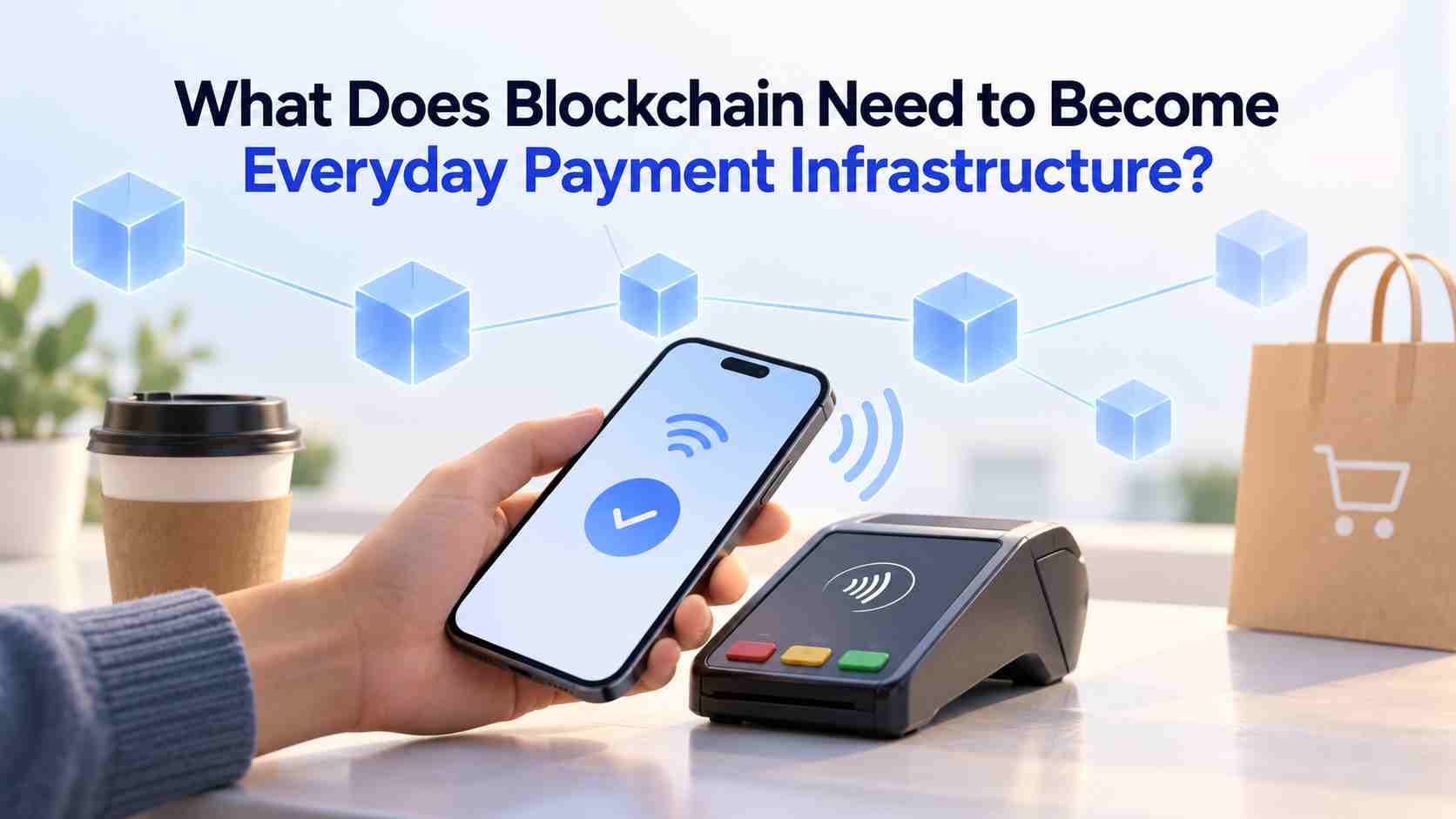
The mainstreaming of blockchain tech has already happened, at least on an awareness level. Everyone’s heard of big-hitters like Bitcoin, and many millions of people trade crypto assets across a range of networks and platforms. But calling the technology an everyday payment option would still stretch the definition.
A few things need to fall into place for blockchain to rival traditional banking and payment card systems.
Simplification & User-Friendliness
The underpinnings of blockchain tech are purposefully complex, and early adopters were tech-savvy enough to use the wallets and trading platforms, along with all the detail and esotericism they brought with them. That’s not good enough for average users who’re coming across from banking apps, where simplicity is the name of the game and being able to use blockchain-based services in a friction-free way that’s familiar to them, rather than needing to deal with a steep learning curve, is critical for wider adoption.
User-friendliness also needs to extend to real-world payment scenarios, both in-person and online, and many industries are already doing this well. So, for instance, being able to deposit via the blockchain to take advantage of the live casino at PowerPlay is an example of how iGaming is leading the way in terms of supporting and normalizing this as an everyday transaction method. Processing must be swift and unfussy in any context, at least from an end-user's perspective, because that’s what everyone is accustomed to.
Scalability & Cost-Effectiveness
For blockchain to truly transition into mainstream use as a payment platform, it has to be scalable in a way that’s efficient and affordable, and minimizing gas fees is critical. More than keeping them low, there needs to be consistency, so that there aren’t spikes in costs that happen when network traffic peaks. Unless processing transactions costs under a cent, there’s less chance of more businesses and users adopting the blockchain.
That scalability will require additional infrastructural investment, although since even standard payment platforms involve some degree of merchant-side costs, it should be possible to recoup this. And the more transactions that get shifted to the blockchain, the more it will make economic sense.
Avoiding Volatility
Volatility is part of the appeal of crypto assets to traders and investors, but that’s not something which works well in a payments context, because merchants and customers are put off by the potential of their currency rising and falling in price rapidly, potentially even in the seconds between a transaction being confirmed and the currency arriving in the receiving wallet.
Stablecoins are therefore fundamentally better suited to payments, given that they are pegged to fiat currencies. Merchants also need to be able to quickly convert blockchain assets into fiat currency to use elsewhere in their business, as well as for convenience when it comes to tax compliance and cash flow management.
What blockchain really needs, aside from additional work to make it ready for wider mainstream adoption as a payment method, is time. Time to establish itself as a viable option for purchases with the same reputation and reliability as cash and card.