BoJ Rate Hike Shock: What Japan’s Stance Means for the Crypto Market


Japan just did something it hasn't done in three decades. On September 18, 2026, the Bank of Japan pushed rates to their highest point since the 1990s, and traders from Tokyo to every crypto exchange in between sat up and took notice. This BoJ rate hike isn't a small tweak. It's tied to inflation, a weak yen, and Japan's growing place in the world's crypto trade.
Key Takeaways
-
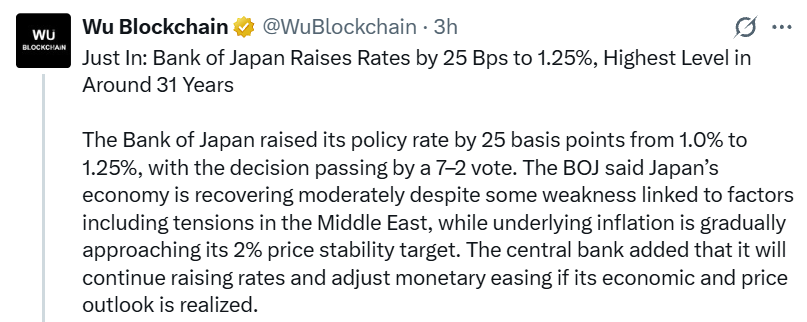
The Bank of Japan raised its policy rate by 25 basis points to 1.25%, the highest level in roughly 31 years, passed by a 7-2 vote.
-
Japan's Nikkei 225 jumped 2%, adding about ¥23.6 trillion ($150 billion) in stock value right after the announcement.
-
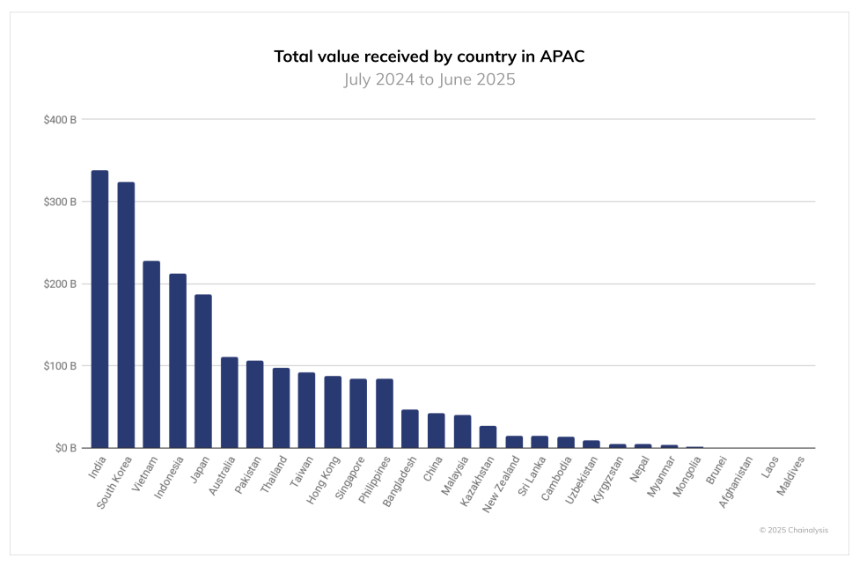
Japan's on-chain crypto activity grew 120% in the year to June 2025, the fastest pace among APAC's top five markets, led largely by XRP trading.
Bank of Japan Raises Rates to 1.25%: What Actually Happened?
The Bank of Japan lifted its policy rate from 1.0% to 1.25%. Nine board members voted, and seven backed the hike while two wanted to hold steady. The central bank said Japan's economy is recovering moderately, even with some weak spots tied to tensions in the Middle East. Underlying inflation is edging closer to the 2% target, and the bank flagged a real risk that price growth could run past that mark.
Source: Wu Blockchain X
A few forces are pushing prices up. A weak yen, higher oil costs, and strong AI-related demand are all adding pressure. Wage hikes are also getting passed into shop prices more often now. The bank expects consumer prices to rise clearly above 2% from the second half of fiscal year 2026.
Governor Ueda's next comments will get close attention, since they should hint at how fast and how often Japan raises rates from here. The bank says financial conditions stay loose even after this move, and future hikes depend on how the economy, prices, and markets behave.
How Did the Crypto Market React to the BoJ Rate Hike?
Right after the news, Japan's stock market rallied hard, and crypto held its ground too. As per Bull Theory, Over ¥23.6 trillion ($150 billion) flowed into Japanese stocks as the Nikkei jumped 2% after the BOJ raised rates to 1.25% as expected, putting fresh focus on how Japan’s tighter monetary policy could impact global liquidity and the crypto market.
As per CoinGecko data, the global crypto market cap sits at $2.75 trillion, up 2.1% in 24 hours, with daily trading volume near $85.1 billion. Bitcoin dominance is at 56.5% and Ethereum's share stands at 11%.
Bitcoin itself trades close to $77,000. Bitcoin price today is $77,493.41, after a 1.4% surge in a day with $1.557T in market cap.
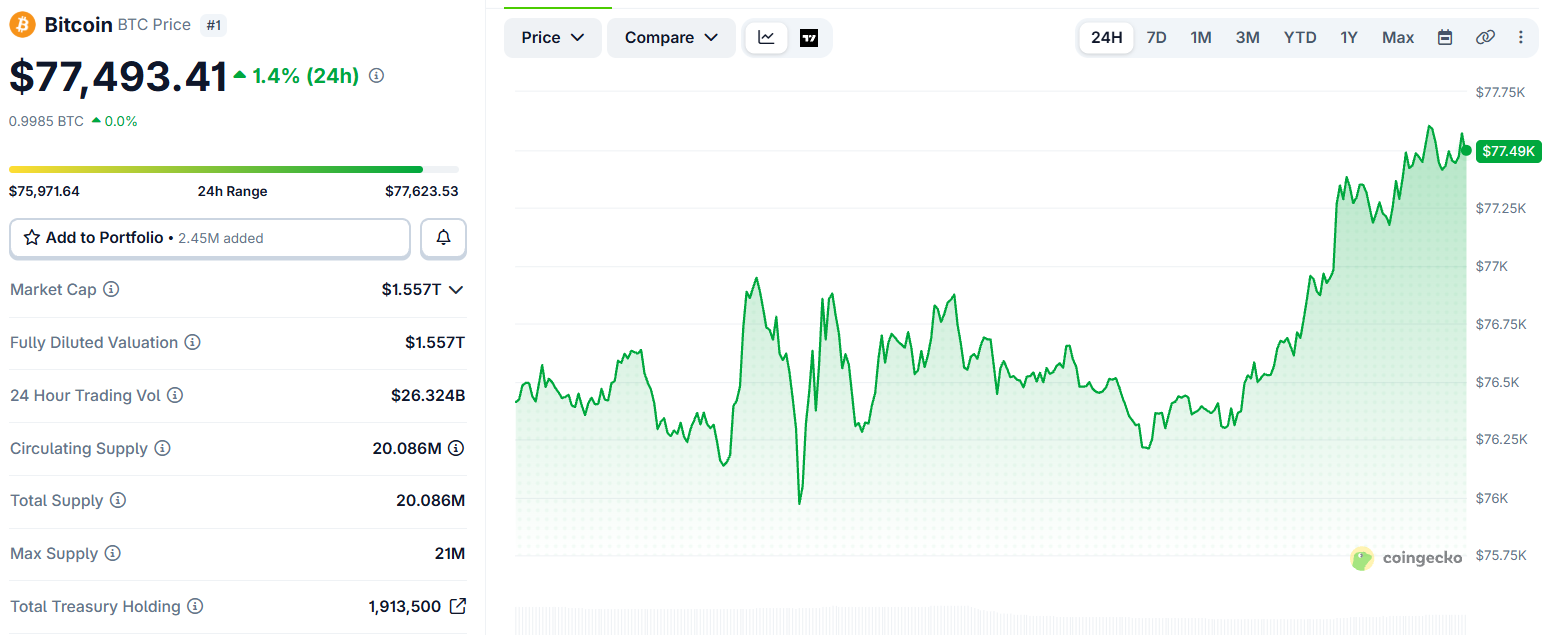
Rather than spooking traders, this BoJ rate hike appears to have added to a broadly calm, risk-on mood that started with the Fed's own rate move.
Where Does Japan Stand in the Global Crypto Market?
Japan's growth here outpaces its neighbors. According to Chainalysis, on-chain value received in Japan grew 120% in the 12 months to June 2025, ahead of Indonesia (103%), South Korea (100%), India (99%), and Vietnam (55%). Yen-based crypto buying flowed mostly into three coins:
Source: Chainalysis Data
| Asset | JPY Fiat Trading Volume (12 months to June 2025) |
|---|---|
| XRP | $21.7 billion |
| Bitcoin (BTC) | $4.7 billion |
| Cardano (ADA) | $2.0 billion |
Policy is catching up with that demand. Japan's Financial Services Agency has approved moving bitcoin and about 105 other tokens out of the Payment Services Act and into the Financial Instruments and Exchange Act. That single change clears a legal hurdle standing between Japan and its first spot Bitcoin ETF, with a possible 2028 listing on the Tokyo Stock Exchange now on the table.
On tax, Japan's 2026 reform outline would replace the current up-to-55% miscellaneous-income rate with a flat 20.315% rate for crypto assets traded on FSA-registered exchanges, plus a three-year loss carryforward. Staking rewards and unlisted altcoins would stay under the old 55% rule for now, and this tax change isn't active yet, with 2027 or later the likely start.
What's Next for Bitcoin, XRP and Wider Crypto Sentiment?
Analysts are watching whether Japan's ETF path and tax reform arrive on schedule, since both could pull more yen into regulated crypto products. For now, the crypto market stays upbeat following both the Fed and BoJ hikes, and upcoming ETF decisions plus Japan's regulatory shift are seen as the next real catalysts.
Expert Opinion: Market analysts note that a hawkish central bank move landing without a crypto sell-off is a meaningful signal. It suggests traders read Japan's policy tightening as a sign of economic normalization rather than a risk-off trigger. Its rapid on-chain growth, concentrated heavily in XRP, combined with pending ETF and tax reforms, positions the country as one of the more closely watched crypto markets in Asia through 2026 and beyond.
Conclusion
BoJ rate hike to 1.25% didn't spook markets. It landed alongside a stronger Nikkei and a steady crypto market, while Japan's XRP-heavy trading habits and looming ETF rules point to a bigger role ahead for the country in global crypto flows.
YMYL Disclaimer: This content covers financial and monetary policy topics and is for informational purposes only. It is not financial, investment, tax, or legal advice. Cryptocurrency and interest rate movements are highly volatile, and past patterns do not guarantee future outcomes. Always do independent research and consult a licensed financial advisor before making investment decisions.