Cardano Midnight Blockchain Privacy Layer Explained

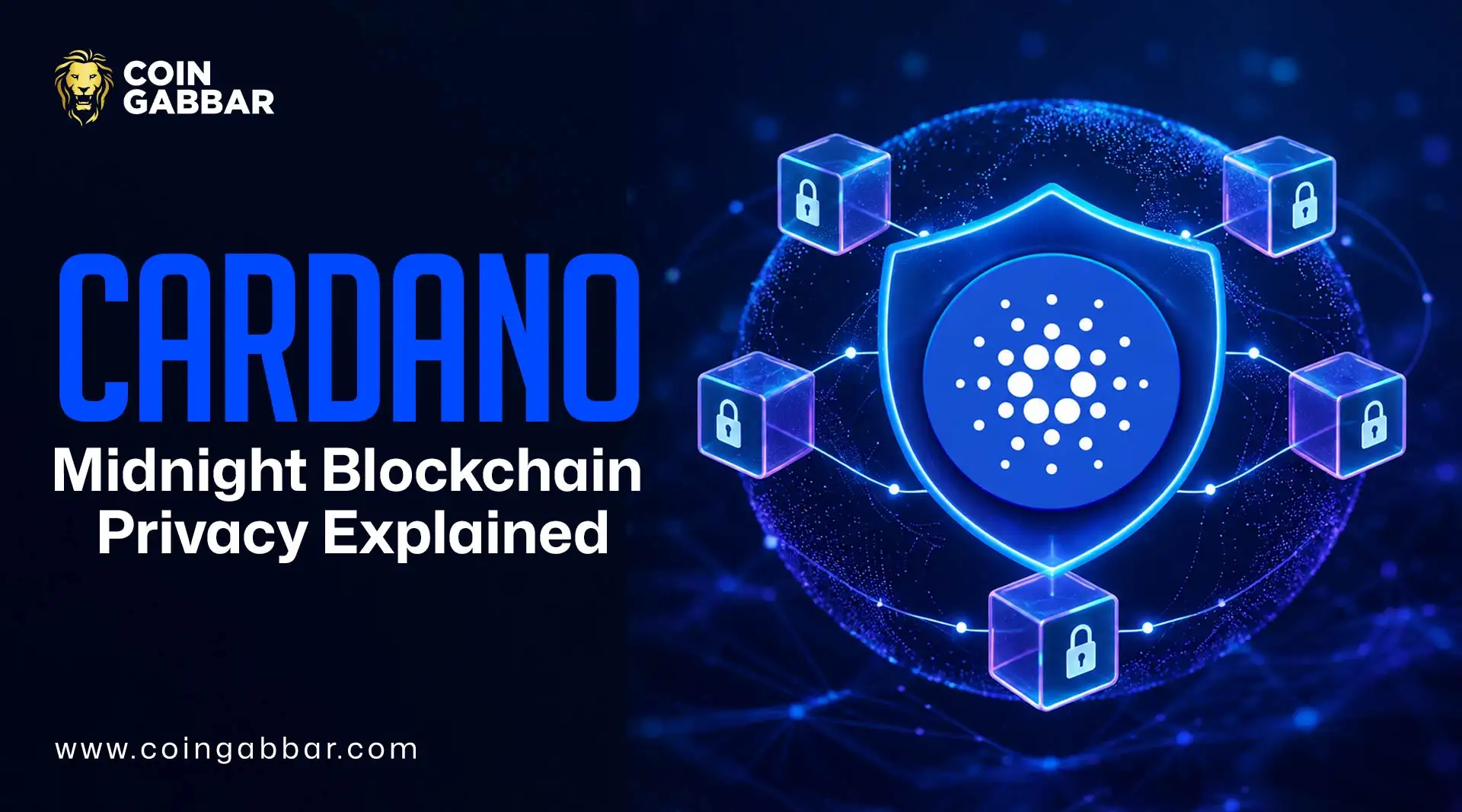
A New Kind of Privacy Shows Up On Cardano
Most blockchains show everything. Every wallet balance, every transfer, and every contract call sits out in the open for anyone to check.
The Cardano Midnight Blockchain does things differently. It lets apps hide the sensitive parts while still proving the rules got followed.
Midnight isn't a Cardano Layer 2 rollup. It runs as its own Layer 1 network, connected to Cardano through what's called a partner chain design, and its mainnet went live in December 2025, right around the same time as its NIGHT token listing across several major exchanges.
That's worth keeping in mind if there's also interest in the wider Cardano price prediction conversation, since Midnight adds a new piece to the ecosystem without changing how Cardano itself runs day to day.
What Is the Cardano Midnight Blockchain Privacy Layer
Midnight was built by Input Output Global (IOG), the same research team behind Cardano. It's not part of Cardano itself.
It's its own separate Layer 1 blockchain, connected to Cardano through a partner chain setup. That means it runs its own network and rules while still leaning on Cardano for things like settlement and staking, a link that keeps showing up in the broader Cardano price prediction conversation.
The main idea behind Midnight is simple: privacy that can actually be controlled. Most blockchains force a pick between two options, everything public or everything hidden. Midnight doesn't. Developers can decide, one transaction at a time, what stays open and what stays private.
On Midnight's official site, the project calls itself a "fourth-generation blockchain," built to handle real-world, regulated use cases that fully public ledgers just can't manage.
How Midnight Uses Zero Knowledge Proofs for Privacy
Zero-knowledge proofs, or ZK proofs, let one party prove something is true without revealing the data behind it, like proving someone's over 18 without showing an exact birth date.
Midnight applies this through its own programming language called Compact. Developers write smart contracts in it, and the network compiles them into ZK circuits that verify computations without exposing the inputs- technical groundwork that's part of the bigger enterprise push behind Cardano's payments ambitions.
The compiler handles the hard math underneath, so developers don't need to be cryptography experts themselves. Midnight's stated goal is simple: make privacy a normal part of building apps, not a niche skill reserved for cryptographers.
How Midnight Combines Public and Private Blockchain Data
Midnight runs what the project calls a dual-state, or dual-ledger, architecture. Public data sits on an unshielded ledger anyone can view, similar to how most blockchains work today. Private data sits in a separate shielded state that stays local and encrypted.
The two layers talk to each other through ZK proofs. Midnight's own whitepaper research lays out how a smart contract can check a private balance, confirm eligibility, or validate a rule, then publish only the proof that the check passed, never the actual numbers behind it.
This is different from chains like Ethereum, where contract state stays transparent by default and privacy has to be bolted on through outside tools. Midnight builds that choice into the base protocol instead.
Why Selective Disclosure Matters for Midnight Users
Selective disclosure means a user or business can reveal only the specific piece of information a situation requires, nothing more. Someone proving they're a verified resident of a country, for example, wouldn't need to expose their full ID, address, or date of birth.
For everyday users, this could mean logging into services without handing over a complete data profile every time. For regulated industries, it offers a way to satisfy compliance checks without publishing sensitive records on a permanent, public ledger.
The project frames this as a middle ground between total transparency, which many businesses can't legally use, and total secrecy, which regulators tend to reject outright.
What Businesses Can Build With Midnight Privacy
According to Midnight's own use-case material, the network targets areas where privacy and verification both matter: private trading platforms.Where order size stays hidden, lending markets where collateral details aren't public, tokenized ownership of real-world assets like property, and identity checks that work across apps without resubmitting documents every time.
These are stated goals, not confirmed large-scale deployments yet. Growth on the holder side has moved faster than actual usage, with NIGHT's holder count reportedly crossing 86,000 unique wallets within its first several months. As Cardano's own community education resource on Midnight explains, the mainnet is still only months old, so most real business use cases remain early, and how many actually launch with real users is still an open question.
How Midnight Connects With the Cardano Ecosystem
Midnight's link to Cardano runs through its partner chain framework rather than a shared execution layer. NIGHT, its native token, launched on Cardano on December 4, 2025, following distribution through the Glacier Drop and Scavenger Mine claim phases.
Holding NIGHT generates DUST, a separate, non-transferable resource spent to pay for transactions and shielded operations on the network.
This split, NIGHT as the capital asset and DUST as network capacity, ties into a design the Cardano price prediction narrative keeps circling back to, since predictable transaction costs matter for how the whole ecosystem gets valued.
Cardano stake pool operators are tied into this too, with existing operators able to become Midnight validators for an extra reward stream, linking Midnight's health directly back to Cardano's own validator base.
Midnight Privacy Benefits and Key Limitations
The stronger signal here is technical. Midnight ships a working mainnet with a dual-ledger design and a purpose-built privacy language, further along than many privacy projects that stay stuck in testnet for years.
The main concern is adoption. A privacy layer only proves useful once real apps and users actually show up on it, and the biggest unknown remains how regulators treat privacy-enabled chains across different countries.
A regulated Japanese exchange recently added NIGHT to its platform after clearing local review, a Sony-backed listing that gave the token fresh distribution though one approval doesn't settle how other regulators will treat the network long-term. Treat Midnight's later roadmap phases as plans, not guarantees.
What the Midnight Blockchain Means for Cardano Users
For existing ADA holders, Midnight doesn't change how Cardano itself works day to day. It just adds an optional, connected network for apps that specifically need privacy features. Cardano's main chain doesn't offer.
Developers curious about building on Midnight, or following the wider Cardano news cycle around it, can expect a network still in its early operating months, with core features live but real-world usage patterns yet to fully form.
Conclusion
Cardano Midnight Blockchain brings real, working privacy tools to the Cardano ecosystem: zero-knowledge proofs, a dual-state ledger, and its own compact smart contract language, not just ideas on paper.
It runs as a separate Layer 1 partner chain, not a Cardano rollup, and its mainnet, along with the NIGHT token, has been live since December 2025.
Disclaimer: This piece is written purely to inform, not to tell anyone where to put their money. Crypto projects like this carry real risk; things can break, and rules around them can change fast. Independent research is worth doing before deciding anything.