Cold Staking vs. Hot Staking: Which One Protects Coins Best

Cold Staking vs. Hot Staking: Which One Protects Coins Best
Staking has turned into one of the easiest ways to earn steady rewards on proof-of-stake coins, though understanding the staking risks and rewards behind it matters before anyone jumps in.
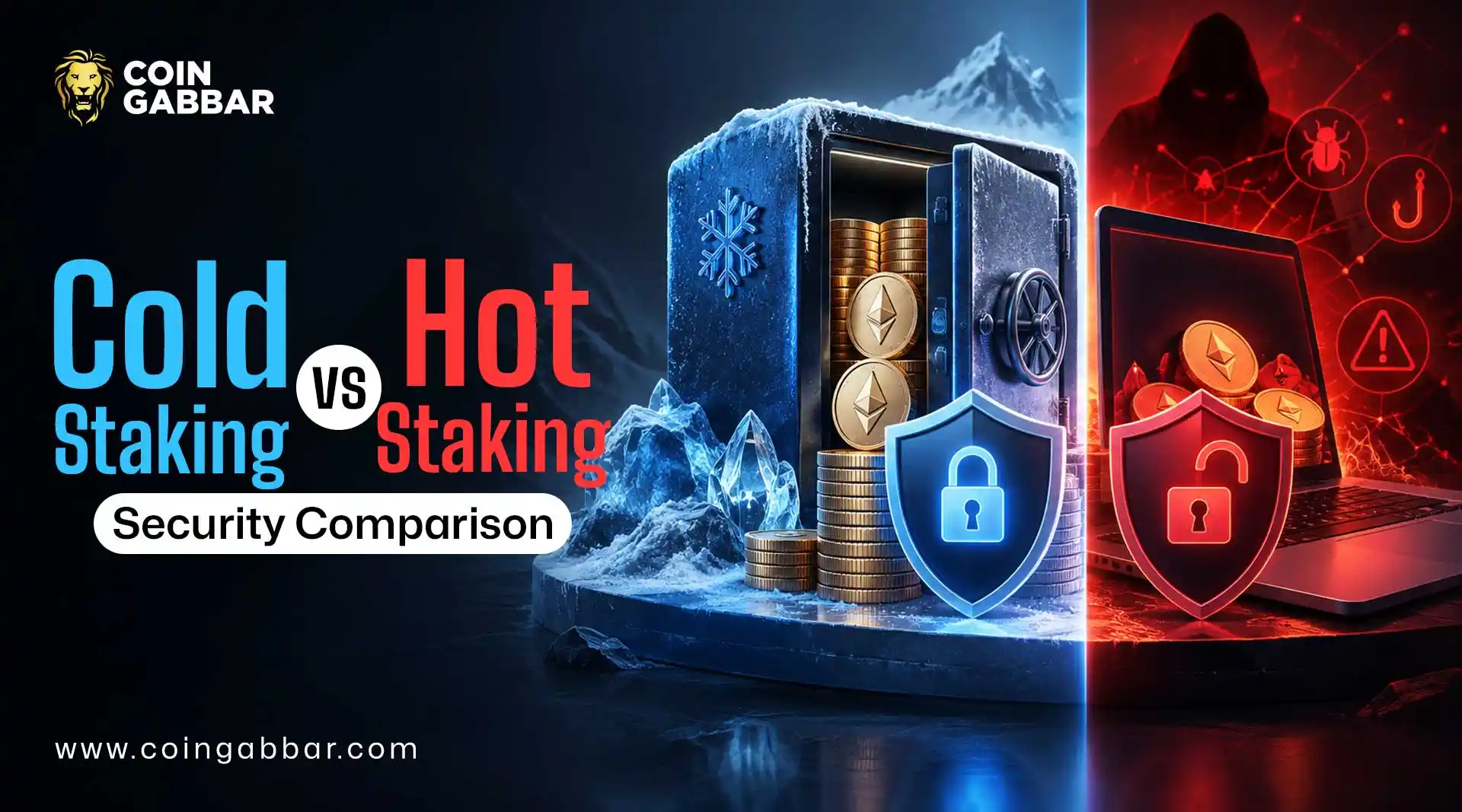
Cold staking vs. hot staking comes down to one real question: where do the keys sit while coins are locked up and earning?
One approach keeps everything offline, hard for anyone else to reach. The other stays connected, trading some of that safety for speed. Both can pull in the exact same network rewards, yet the risk sitting behind each one looks nothing alike.
What Is Cold Staking, and How Does It Work?
Cold staking means locking coins for staking while the private keys stay offline, usually tucked away on a hardware wallet or an air-gapped device. The coins still count toward a validator's stake and still earn rewards, but the keys needed to actually move them never touch anything connected to the internet.
That single detail is really what separates the two sides of the cold staking vs. hot staking debate.
A few networks build this in directly. Cardano is one of them, since its own staking model lets a wallet stay eligible for rewards with no lockup and no slashing risk attached.
Because the keys stay isolated, an attacker would need to physically get hold of the device, not just send a convincing phishing link. That trade-off makes cold staking a little slower to set up, but it shuts down most of the usual ways things go wrong.
What Is Hot Staking, and Why Do Beginners Use It?
Hot staking runs through a wallet or exchange account that stays connected to the internet the entire time. Most beginners land here simply because it's quicker: connect a wallet, pick a validator, and start earning within minutes.
It's usually the first real difference people notice once they start comparing cold staking vs. hot staking side by side.
Plenty of exchanges now build this straight into their apps too. SUI staking going live on Revolut is a recent example of how easy exchange-based staking has become for everyday users. That convenience comes at a cost, though. A hot wallet's keys sit on a device that malware, fake apps, or a well-crafted phishing page can reach.
The rewards work out the same as cold staking, but the exposure looks different, since the attack surface now covers anything connected to that wallet, not just a piece of physical hardware, a point the Solana staking guide touches on as well.
Cold Staking vs Hot Staking: Key Differences
Factor | Cold Staking | Hot Staking |
Key storage | Offline, air-gapped | Online, connected wallet |
Setup difficulty | More technical | Quick and simple |
Reward source | Same network rules | Same network rules |
Main risk | Physical device loss | Phishing, malware, hacks |
Best suited for | Long-term holders | Active or short-term stakers |
What Are the Main Risks to Consider?
Neither method wipes out risk completely. Cold staking still leans on the physical device and its backup staying safe; losing a hardware wallet without a working seed phrase backup means the access is gone for good.
Hot staking leans on the platform staying bug-free, plus the person using it staying alert to phishing attempts. Validator risk sits on top of both approaches either way.
A validator that gets slashed for downtime or bad behavior can cost delegators part of their stake, regardless of how the keys were being stored. Basic wallet security habits end up mattering no matter which method someone picks.
Liquid staking setups such as Ethereum staking through Lido add yet another layer worth understanding, since they blend hot-wallet convenience with a pooled validator setup.
What Does the Data Say About Cold Staking vs. Hot Staking?
The stronger signal points toward cold staking for anyone planning to hold a position for months or years, since it removes most of the everyday attack surface.
The bigger worry is convenience quietly turning into carelessness, where basic checks get skipped simply because the process feels fast and familiar.
The biggest unknown that remains is validator performance over time, since a poor choice there affects cold and hot stakers in exactly the same way, and published reward estimates can shift as network conditions change.
Looking at how validator rewards and penalties actually work shows why uptime and commission matter more than the storage debate on its own, a point the earlier Ethereum staking comparison walks through in more detail.
Conclusion:
Cold staking suits investors planning to hold long-term who don't need to move funds around often. Hot staking fits people who want a quick setup and easier day-to-day access and who don't mind the extra exposure that comes with staying connected.
Neither approach comes with a guaranteed return, and validator choice ends up mattering just as much as the storage method itself. Testing a small amount first, on either setup, remains the safest way to actually see how it behaves before committing more.
Disclaimer:
This article is for informational purposes only and does not amount to financial advice. Staking rewards and risks vary by network and provider, and results are never guaranteed.






.jpg)