Cluster Protocol: The Future of Decentralized AI Infrastructure

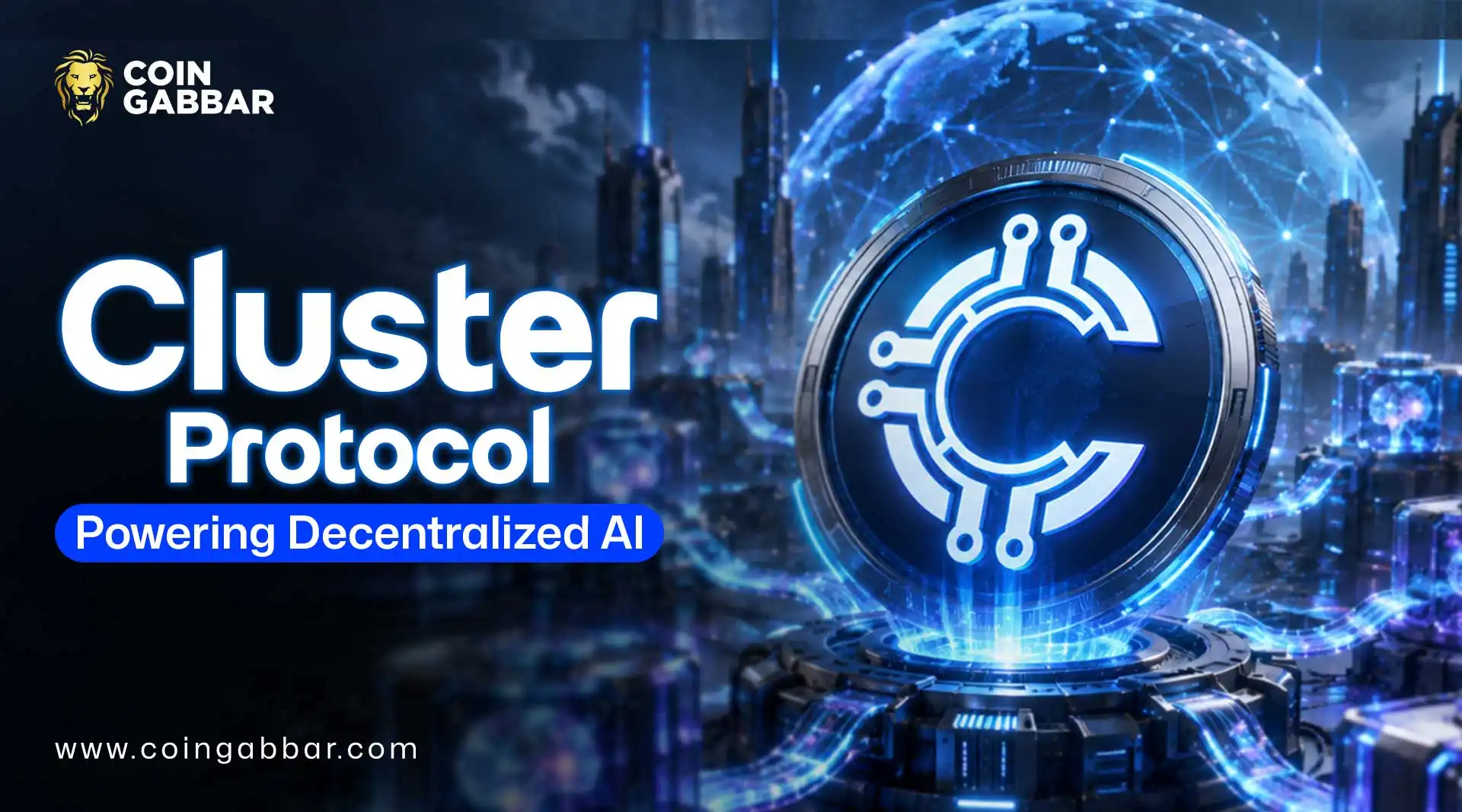
How Cluster Protocol Powers Autonomous Decentralized AI Workflows
Every wave of internet infrastructure has had a moment where control shifted from a handful of gatekeepers to the people actually building on top of it. Bitcoin took money out of bank vaults. Ethereum opened up the internet's back end. Aave and Uniswap did the same for lending and trading. Cluster Protocol is making that same argument for artificial intelligence: models, compute, and data shouldn't sit locked inside three or four companies' servers.
Key Takeaways
Cluster Protocol is an on-chain orchestration layer that connects AI models, GPU compute, and datasets through one endpoint, with every job metered and settled directly on-chain instead of billed through a private company API.
AI agents can transact on their own. Because access is priced and settled automatically on-chain, an autonomous agent can pay for the model, compute, and data it needs without a human approving every step.
The $CP token has a fixed, published supply of 5 billion, with no team, seed, or Series A tokens unlocking at launch those allocations all start at zero and vest over time.
What Is Cluster Protocol?
So, what is Cluster Protocol at its core? It's an orchestration layer for autonomous workflows a platform where anyone can design, deploy, and tokenize on-chain protocols without writing code or signing up for a subscription. Instead of renting AI capacity from a single provider and hoping pricing or policy doesn't change under you, Cluster gives builders one endpoint that sits in front of models, GPU compute, and datasets, all metered and settled directly on-chain.
The pitch is simple: today's AI stack is rented, and the landlord writes the rules. Cluster-Protocol is built to be the version builders actually control.
Source: Official Wesite
Cluster Protocol Explained: Why It Exists
Most AI products right now run on infrastructure owned by a small number of large companies. Model calls hit their endpoints, data sits on their servers, and when pricing or availability changes, everyone downstream feels it. Cluster Protocol explained in one line: it's an attempt to replace that rented stack with an open one, where model access, compute, and data all move through a single, transparent, on-chain layer instead of a handful of private APIs.
This isn't a small tweak to how AI infrastructure works it's a different ownership model entirely, one where the people using the network also have a claim on how it runs.
How Cluster Protocol Works
Understanding how Cluster Protocol works starts with its no-code interface. Builders design ideas visually and turn them into on-chain protocols directly, without touching a smart contract or managing servers. From there, three components come together:
Component | What It Does |
AI Models | Run inference directly against available models |
GPU Compute | Rented per job instead of by the hour |
Data Marketplace | Owners list and price their own datasets |
Every one of those pieces connects through a single endpoint, and every job a model call, a GPU rental, a dataset purchase gets metered and settled on-chain. That combination is what lets Cluster-Protocol function as a genuine orchestration layer rather than just another API wrapper.
Cluster Protocol AI Infrastructure
The Cluster Protocol AI infrastructure is built around ownership rather than access. Instead of a single company deciding which models are available, what a GPU hour costs, or which datasets are approved for use, the infrastructure is assembled from independent pieces that plug into the same settlement layer. Builders get full control over how their creations live on-chain they can keep a project private, make it public, or tokenize it entirely on their own terms.
That flexibility matters because AI infrastructure today is rarely modular. Switching providers usually means rebuilding pipelines from scratch. Cluster's design goal is to remove that lock-in by keeping the underlying components interchangeable and priced transparently.
Cluster Protocol Decentralized AI
The decentralized part isn't just branding. Cluster-Protocol decentralized AI means no single company sits between a builder and the actual work being done the model call, the compute job, or the dataset purchase clears on-chain rather than through a private billing system. That structure is what allows the network to stay open: any partner can plug in a model, any provider can list compute, and any data owner can price their own dataset without asking permission from a central operator.
This is also why the project describes itself as a "liberation engine" for AI, echoing the same shift that open protocols brought to money, the internet, and finance before it.
Cluster Protocol Autonomous Workflows
The clearest sign of how far this idea goes is Cluster-Protocol autonomous workflows software that acts without a human clicking approve on every step. Because every job is priced and settled on-chain automatically, an AI agent that needs a model, a machine, and a dataset can acquire all three on its own, without a person manually authorizing each charge.
That single change matters more than it sounds. An agent that can pay for its own resources is an agent that can actually finish a task end-to-end, instead of stalling at the point where it needs a human to approve spending.
Cluster Protocol AI Agents
Cluster Protocol AI agents sit right at the center of this design. The orchestration layer isn't only built for human developers clicking through a dashboard it's built so agents themselves can hold access, spend on compute, and complete workflows autonomously. As more products shift toward agent-driven automation, having a settlement layer that agents can transact through directly, without a middleman approving every action, becomes a practical requirement rather than a nice-to-have.
Cluster Protocol Tokenized Data
Data is the other half of the picture. Cluster-Protocol tokenized data means dataset owners can list, price, and sell access to their own data through the same marketplace that handles models and compute rather than handing it over to a platform that resells access on its own terms. Builders can design apps, agents, or entire protocols and tokenize any part of that creation, keeping ownership with the person who actually built it.
The $CP Token: How Payment Works on Cluster
Every transaction on the network a model call, a GPU job, a dataset purchase settles in $CP. According to Cluster-Protocol's own tokenomics overview, the supply and distribution are fixed and published upfront:
Detail | Figure |
Total supply | 5,000,000,000 $CP (fixed, no mint function) |
Circulating at launch | 1,369,091,667 $CP (27.38% of supply) |
Community allocation | 40.38%, the largest single share |
Foundation allocation | 21.00% |
Team & Advisors | 17.00% (nothing at launch, 18-month cliff) |
Liquidity | 8.00% (fully unlocked, no vesting) |
Series A & Strategic | 9.33% (locked 12 months, then 24-month release) |
Seed | 4.29% (locked 12 months, then 24-month release) |
Source: Official $CP tokenomics
Two details stand out. First, no team or investor tokens unlock at launch Seed, Series A, and Team allocations all start at zero. Second, the token contract only moves tokens between wallets; there's no upgrade path, pause switch, or blocklist function built in, which the team has stated is deliberate and verifiable directly on-chain.
$CP itself is described as a utility token that pays for network activity and unlocks higher access tiers during periods of peak demand not as an investment, and staking rewards are framed as protocol incentives rather than yield, dividends, or a profit share.
Why This Matters Going Forward
AI is quickly becoming infrastructure that other software depends on, the same way payments and cloud storage became infrastructure a decade ago. Whoever controls the pricing and access rules for that infrastructure ends up shaping what gets built on top of it. Cluster Protocol's bet is that keeping models, compute, and data open and interoperable instead of locked inside a handful of platforms leaves more room for builders, agents, and smaller teams to compete on equal footing.
Whether that vision fully plays out depends on adoption, execution, and how the broader AI infrastructure market evolves. But the underlying idea an orchestration layer where autonomous workflows can run without a gatekeeper in the middle is a genuinely different starting point from how most AI products are built today.
Disclaimer
This article is for informational purposes only and does not constitute financial, investment, or legal advice. Details on Cluster Protocol, its architecture, and $CP tokenomics are sourced from the project's official website and blog as of early September 2026 and are subject to change. Always verify current details through Cluster Protocol's official channels before making any decisions.
Also read: