GameFi Explained: Top 5 Crypto Gaming Coins to Watch

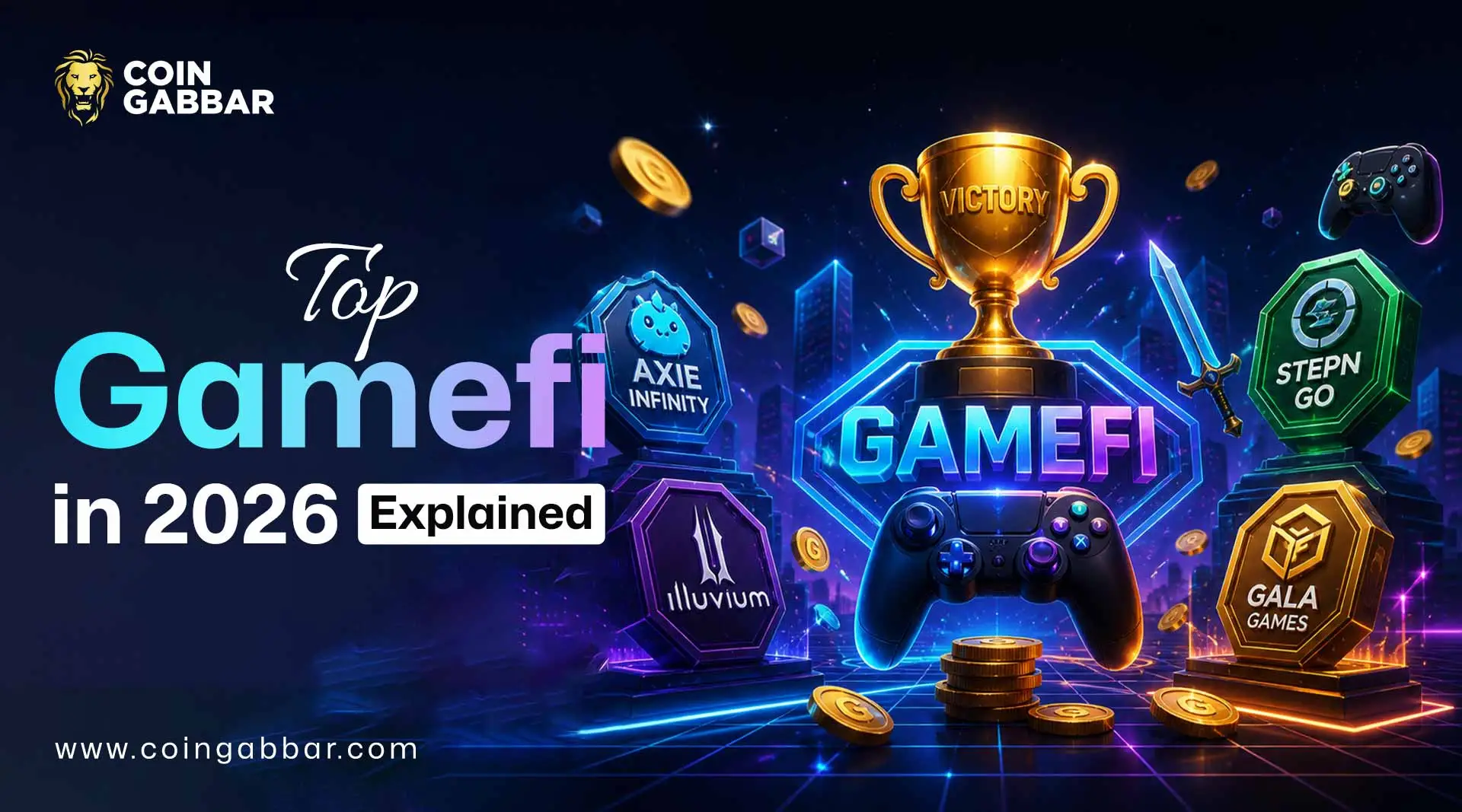
Best GameFi Projects Shaping Play-to-Earn Crypto Gaming
Gaming and crypto used to be two completely separate worlds. One was for fun, the other was for finance. Then someone decided to mix them together, and GameFi was born.
The early days of GameFi were a mess of overhyped projects, ugly browser games, and tokens that crashed 90% in three months.
The idea behind GameFi is straightforward. You play a game, you earn actual crypto tokens that have real value. You can trade them, sell them, or hold them. Your in-game items aren't stuck inside one developer's server anymore, they're yours, stored on a blockchain, and you can sell them to anyone in the world if you want.
It sounds almost too good, right? And honestly, it's not without its risks, more on that at the end. But the sector is growing fast, and a handful of coins have stood out from the rest. Here are five worth paying attention to.
1. Axie Infinity (AXS)
You can't talk about GameFi without starting here. Axie Infinity is essentially the reason the whole play-to-earn movement got taken seriously.
The concept is simple, you collect little creatures called Axies, battle them, breed them, and trade them. Every Axie is an NFT, so it's yours. Not the developer's. Yours. You can sell it, hold it, or pass it on. At the height of the craze, people in Southeast Asia were actually replacing their income by playing this game full time. One Axie sold for over $800,000.
The token, AXS, is used for staking and governance, meaning holders get a say in how the game evolves. The team took some hits during the crypto winter, but they've come back with free starter Axies to lower the entry barrier, and the community never really left. It's still one of the biggest names in the space for a reason.
2. Gala Games (GALA)
Most GameFi projects build one game and hope it works. Gala went a different direction and built an entire platform for multiple games instead.
The GALA token runs across all of Gala's games, role-playing, strategy, battle games, you name it. Whether you're playing one title or hopping between several, GALA is the currency that ties the whole thing together. You can use it to buy in-game items, participate in events, or earn rewards for supporting the network through what they call Gala Nodes.
What makes Gala interesting long-term is that it runs on its own blockchain called GalaChain, which means lower fees and faster transactions compared to projects stuck entirely on Ethereum. The ecosystem is also actively bringing in AAA game developers, which could seriously expand the user base.
3. Immutable (IMX)
This one doesn't get talked about enough outside of crypto circles, which is honestly a bit surprising given what it does.
Immutable isn't a game, it's the layer that games are built on. It's a Layer 2 network on top of Ethereum designed specifically so that gaming transactions don't cost you a small fortune in gas fees every time something happens. That was always the dirty secret of blockchain gaming, by the time you counted transaction costs, you weren't really earning anything.
Immutable fixes that. Fast, nearly free transactions, while still being backed by Ethereum's security underneath. Game developers can actually build something playable without forcing their users to pay fees just to swing a virtual sword.
IMX is the governance token for the network, and a growing number of serious gaming projects are choosing to build on it. If blockchain gaming goes mainstream, and it's looking more likely, the infrastructure holding it up becomes very valuable.
4. The Sandbox (SAND)
The Sandbox takes a different approach altogether. Instead of putting you in a premade game world, it hands you the tools to build your own.
Think of it as Minecraft meets the metaverse, except you actually own everything you create. Players can build games and experiences using simple tools, turn them into NFTs, and sell or rent them to others.
Big names like Snoop Dogg and Adidas have bought virtual land in The Sandbox, which gives you a sense of how seriously some people are taking the virtual real estate angle.
The SAND token is what makes the whole economy run, buying land, trading assets, participating in governance, and earning rewards for creating content.
It's one of the longest-running names in the metaverse-gaming space, and it keeps attracting new partnerships.
5. Ronin (RON)
Ronin started as Axie Infinity's private blockchain, built out of necessity because Ethereum simply couldn't handle the traffic Axie was generating. It's basically what happens when a gaming project gets so big it has to build its own road.
Since then, Ronin has expanded way beyond Axie. New games are launching natively on it, and RON, the network's token, covers transaction fees and governance across all of them.
The reason developers keep choosing it is simple: it was built for gaming from day one, so it actually works the way gaming needs it to work. Fast, cheap, and not grinding to a halt when a popular game gets a new update.
It doesn't get the headlines AXS or SAND get, but it's one of the more quietly solid projects in the space.
A Quick Word Before You Dive In
GameFi is genuinely exciting, and the market is growing. But these tokens are volatile. Prices swing hard, projects can underdeliver, and the regulatory picture for blockchain gaming is still unclear in many parts of the world. Never put in more than you're comfortable losing, do your own research, and don't let hype push you into decisions you haven't thought through.
That said, if you're going to explore GameFi, these five are a solid place to start understanding the space.
Disclaimer
This blog is for educational purposes only and should not be considered as financial advice.