How to Buy Zaviron Safely and Avoid Look-Alike Tokens

What This Guide Covers: How to Buy Zaviron and Avoid Fakes
If you search for how to buy Zaviron, you will not land on one clean result. You will find the official ZVR presale, price trackers, and at least one other token also called "Zaviron" trading on a completely different network.
That overlap is not a coincidence. It is a common pattern with new presale tokens, and it is exactly why buyers lose funds to the wrong address.
This guide walks through where to buy ZVR, which payment methods they accepts, and real vs. fake Zaviron: how to check.
What Is Zaviron (ZVR)
Zaviron is a Web3 project positioned around commerce, digital payments, and rewards, according to the project's own website.
The team is running a public token sale for ZVR through its official website, structured in stages with the price rising at each one.
Source: Zaviron Roadmap
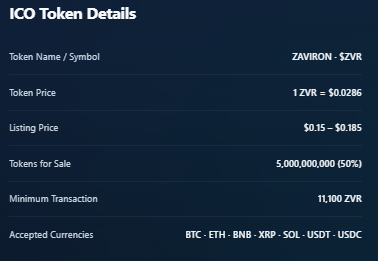
As of the current stage, the project states ZVR is priced at $0.0286, with the project's own stated listing range of $0.15 to $0.185. You can review the live official Zaviron page for stage-by-stage pricing before you commit funds.
The project describes a fixed total supply of 10,000,000,000 ZVR, with roughly half earmarked for the presale and public sale, according to its own disclosures.
A word of caution here: earlier project materials and the live presale widget have shown different figures for both the presale price and the allocation percentage at different points.
Note: Treat any number in this article, or anywhere else, as a starting reference only. Confirm the exact live rate on the official dashboard immediately before you buy.
Why Look-Alike Zaviron Tokens Exist
Token names and tickers are not unique across blockchains. Anyone can deploy a token called "Zaviron" with the symbol ZVR on Ethereum, Solana, Base, or any other chain, whether or not they are connected to the original project in any way.
Search engines, wallets, and even reputable exchange listing pages will happily index all of them under the same name. This happens for a few reasons:
No registry controls the name. Token names and tickers are not trademarked or reserved on-chain, so duplicates are technically simple to create.
New chains make copying easy. Anyone can deploy a token contract in minutes and choose any name or symbol, including one already in use elsewhere.
Search engines rank by relevance, not authenticity. A page mentioning "Zaviron" can rank well regardless of whether it is connected to the original project.
Aggregators index everything automatically. Price trackers and DEX listing pages often pull in any token matching a searched name or ticker, with no manual check for a real connection.
This creates a real risk for buyers. A search for "buy ZVR" or "Zaviron token" can return official presale pages, third-party trackers, and unrelated tokens side by side, with no obvious signal about which one is the actual presale everyone is talking about.
The burden falls on you to verify the source before connecting a wallet or sending payment.
Where to Buy ZVR: Stick to the Official Source
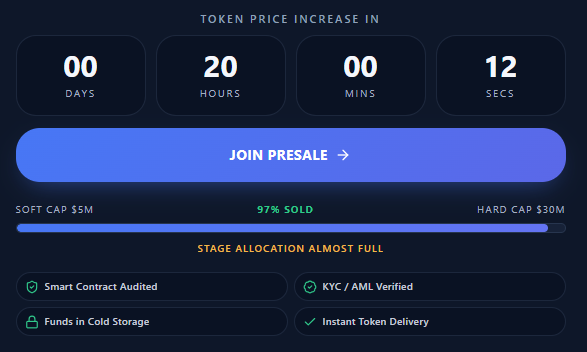
Right now, the only place to buy the Zaviron token is through the project's own platform at zaviron.io.
Source: Zaviron Official Website
The presale is not listed on any exchange, decentralized or centralized, and no major exchange has publicly confirmed a Zaviron listing as of 24 July 2026.
The project's roadmap names Binance, KuCoin, and Coinbase as exchanges it hopes to list on after the sale ends, but a project's wish list is not a confirmed listing agreement.
Practical rule: if a website, ad, DM, or social post offers you a way to buy the ZVR anywhere other than the official platform, treat it as unverified until proven otherwise.
How to Buy Zaviron Presale: Step-by-Step
According to the project's own how-to-buy guide, the presale purchase flow works like this:
Create an account. Sign up on the official platform with your email and accept the listed legal agreements.
Choose your currency. Select from the accepted payment options on the buy page.
Enter the amount. Type in the ZVR amount you want, respecting the current minimum contribution.
Send payment. Pay from a wallet you personally control to the exact address shown on the platform on the correct network.
Submit your transaction ID. Paste your TXID into the confirmation step so the platform can verify your payment on-chain.
Wait for tokens to be credited. Once confirmed, your ZVR balance updates inside your dashboard.
Before you fund anything, double-check the deposit address against the one shown inside your logged-in dashboard, not a cached screenshot, a search result, or a link from a third party.
Deposit addresses can differ by payment currency and network, so match the address to the exact asset you are sending.
Zaviron Buy Guide At a Glance" table
| Field | Details |
|---|---|
| Token Name | Zaviron (ZVR) |
| Network | Ethereum |
| Current Status | Live, current stage more than 90% claimed |
| Payment Methods | USDT, USDC, ETH, BNB, BTC, SOL, XRP |
| Official Purchase Source | zaviron.io only |
| Risk Factors | No published audit, no team disclosure, look-alike token exists on Solana |
Zaviron Payment Methods Accepted in the Presale
According to the official platform, the Zaviron presale currently accepts the following for payment:
USDT, USDC, ETH, BNB, BTC, SOL, XRP
Each currency has its own deposit address and network, generated inside the presale dashboard once you select it.
Sending funds on the wrong network, for example, sending an ERC-20 stablecoin to a Solana address, typically results in permanent loss of funds with no recovery path.
A Real Example: A Different "Zaviron (ZVR) "Token Exists Elsewhere
This is the part every prospective buyer needs to see before searching for ZVR anywhere else. A separate token, also called "Zaviron," also using the ticker "ZVR" is tradable through Coinbase's decentralized exchange trading experience on the Solana network.
That token trades at a fraction of a cent, with a market capitalization in the tens of thousands of dollars and a stated total supply of 1,000,000,000, a different figure from the 10,000,000,000 total supply the project discloses.
Nothing in the available public record ties that Solana-based token to the Ethereum-based presale run through zaviron.io.
The contract, the network, the supply, and the valuation do not match. Buying that token is not the same as buying into the Zaviron presale, and doing so through an exchange DEX listing does not mean the project has been confirmed on that exchange.
If you are specifically trying to buy the token discussed in this guide, a listing with the same name on any exchange is not sufficient confirmation on its own. Verify the contract address and network directly against the official presale platform first.
Real vs. Fake Zaviron: How to Check
Run through this checklist before treating any "Zaviron" result as the one you intended to buy:
Match the network. The presale is described as an Ethereum-based token. A token with the same name on Solana, Base, or any other chain is a separate asset by definition, regardless of shared branding.
Match the supply. The presale states a 10,000,000,000 total supply. A materially different circulating or total supply is a signal you are looking at an unrelated token.
Match the contract address. The project has published a contract address on its channels. Cross-check it on a block explorer such as Etherscan and confirm it matches what is shown inside your presale dashboard before approving any transaction.
Go direct, not through search. Type "zaviron.io" into your browser manually or use a saved bookmark, rather than clicking the first search result or an ad.
Ignore price as a signal. A token trading publicly at a fraction of a cent tells you nothing about whether it is connected to a presale still in progress. Presale tokens are, by definition, not yet listed for open trading.
Red Flags to Watch Before You Buy ZVR
A closer look at the Zaviron presale surfaces several open items worth knowing before you commit funds:
No founder names, executive titles, or advisor profiles have been published on the website, X account, or any independent source.
No audit report from a recognized security firm such as CertiK, Hacken, or SolidProof has been published, despite some promotional materials referencing an audit.
Staking, one of the project's stated utilities, is confirmed inactive at 0% APY with no live launch date.
Core figures, including presale price and allocation percentage, have shown discrepancies across the project's own materials at different points.
No independently verified hard cap or soft cap has been confirmed, which removes two standard investor-protection mechanisms from the sale.
None of these points alone confirm fraud, and early-stage presales commonly launch before every disclosure is finalized.
Zaviron Safety Checklist
Bookmark zaviron.io directly and use that bookmark every time, instead of searching.
Confirm the deposit address inside your logged-in dashboard for every transaction, every time.
Cross-check the smart contract address on a block explorer before approving any wallet interaction.
Never buy through a link sent in a DM, unsolicited email, or a comment section, even if the page looks identical.
Treat "Zaviron" tokens found on exchanges or DEX aggregators as unverified until you confirm the contract and network match the official presale.
Only commit funds you could fully afford to lose, given the unresolved disclosure gaps noted above.
Read the rug pull explainer if you are new to presale-stage risk before your first purchase.
CoinGabbar Analysis
Zaviron sits in a large and legitimate category of crypto activity, Web3 payments and commerce, but the project is currently pre-audit and pre-team-disclosure, with data points that have shifted across its own materials.
Separately, and just as important for buyers, the shared "Zaviron" and "ZVR" naming with an unrelated token elsewhere in the market raises a distinct kind of risk that has nothing to do with the presale project's own conduct: search and wallet confusion.
A buyer who does not verify the network and contract address can end up holding an entirely different, unrelated asset while believing they participated in the presale.
Weighing both factors together, the presale carries typical early-stage risk on fundamentals, and it carries an additional, avoidable risk from naming overlap that a few minutes of verification can fully remove.
Final Thoughts
Buying into any presale, Zaviron included, comes down to two separate jobs: judging whether the project itself is worth the risk and making sure the transaction actually reaches the project you intended to fund.
This guide has focused mainly on the second job, because it is the one most within your direct control.
Go to the official site directly, match the network and contract address every time, use only the payment methods and minimum purchase figures shown live on the dashboard, and never let a shared name or ticker stand in for real verification.
For the fundamentals-focused view, including tokenomics, red flags, and a DYOR checklist, see the latest Zaviron presale news before you buy.
Glossary
Presale — A token sale held before public listing, usually at a lower price than the expected launch price.
TGE (Token Generation Event) — The point when a token is minted and becomes transferable.
Look-Alike Token — A separate token that shares a name or ticker with another project, often on a different blockchain, with no official connection.
Contract Address — The unique on-chain identifier for a token. Two tokens with the same name will always have different contract addresses.
Network / Chain — The blockchain a token is issued on, such as Ethereum or Solana. Sending funds on the wrong network usually causes permanent loss.
DEX (Decentralized Exchange) — A platform for trading tokens directly from a wallet, without a central operator holding funds.
Minimum Contribution — The smallest amount a buyer is allowed to purchase in a presale round.
Soft Cap / Hard Cap — The minimum and maximum amount a token sale is set to raise.
Disclaimer: This article is for informational purposes only and does not constitute financial, investment, or legal advice. Crypto presales carry a risk of total capital loss. Terms and pricing can change without notice, so verify current details on the official platform before transacting.


.jpg)