Inside KiiChain Tokenomics: Where Does the KII Token Supply Go?

Kiichain Tokenomics: How KII Powers the Next-Gen Blockchain Economy
The Kiichain network is a blockchain ecosystem focused on improving financial infrastructure in emerging markets, particularly through on-chain foreign exchange (FX), stablecoin payments, and real-world asset application. Its network is designed to combine EVM compatibility with fast settlement and interoperability.
Kiichain’s tokenomics are designed around a different philosophy. Its tokenomics are not engineered to maximize early speculation and short-term price action but to support long-term economic activities, real usage, and durable network effects. This tokenomics model helps users see how coins are distributed, released, and used across the network.
The project is also using blockchain within its testnet activities, staking system, and community reward structure. The model combines traditional financial principles, discipline, alignment, and capital efficiency with the transparency, programmability, and community participation enabled by Web3.
What is Kiichain Tokenomics?
Kiichain tokenomics refers to the economic model surrounding the Kii token. It covers important areas such as supply, allocation, distribution, rewards, staking, and token release mechanisms.
The Kiichain testnet currently shows the chain being used for staking, while participants can earn ORO rewards through different activities. The project states that ORO earned during the Oro testnet will convert to coins on the mainnet.
How do Kiichain tokenomics work?
Kiichain tokenomics works by connecting the tokens with different parts of the network. Users can hold and use KII, while validators and participants can contribute to network security and receive incentives.
One important part is staking; Chain’s testnet allows staking token to support network decentralization and security. The Chain explorer also includes staking exchange and governance functions, showing how token holders can become part of the network's broader economic system.
KiiChain's codebase also includes a minting mechanism that distributes scheduled emissions over a defined period. The mechanism is designed to gradually release tokens and can be adjusted through governance proposals.
KII Token Functions Within the Ecosystem
Several features make the Kiichain token model important:
-
KII as the native token: KII is the main token associated with the KiiChain network.
-
Staking utility: Users can stake KII to participate in network security and earn rewards.
-
Network participation: The token is connected with activities across the ecosystem.
-
Community incentives: The Oro testnet uses ORO rewards to encourage users to complete tasks and interact with the ecosystem.
-
Governance: Blockchain infrastructure includes governance functionality, allowing network parameters to be managed through proposals.
-
Scheduled emissions: The network's mint module supports predefined token release schedules rather than unrestricted daily issuance.
KII Token: Supply and Distribution Breakdown
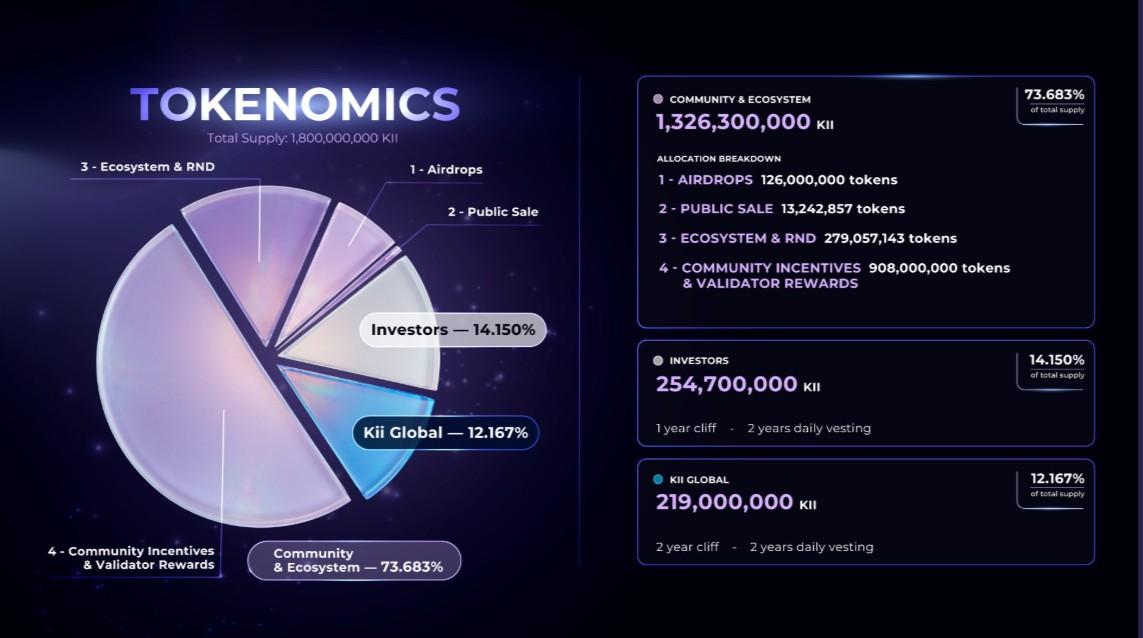
A total supply of 1,326,300,000 tokens (73.68%) is allocated to the Community and Foundation initiatives, making it the largest portion of the token supply. This allocation is intended to support community participation, economic growth, liquidity, and the long-term development of the Network.
The allocation is divided into four main areas:
-
Airdrop: 126,000,000 tokens (7.000%), a crypto airdrop reserved to reward and attract community members.
-
Public Sale: 13,242,857 tokens (0.736%), allocated for public participation in the token sale.
-
Ecosystem & R&D: 279,057,143 tokens (15.503%), supporting ecosystem development, research, and innovation.
-
Community Incentives & Validator Rewards: 908,000,000 tokens (50.444%), used to encourage network participation and reward validators and other contributors.
-
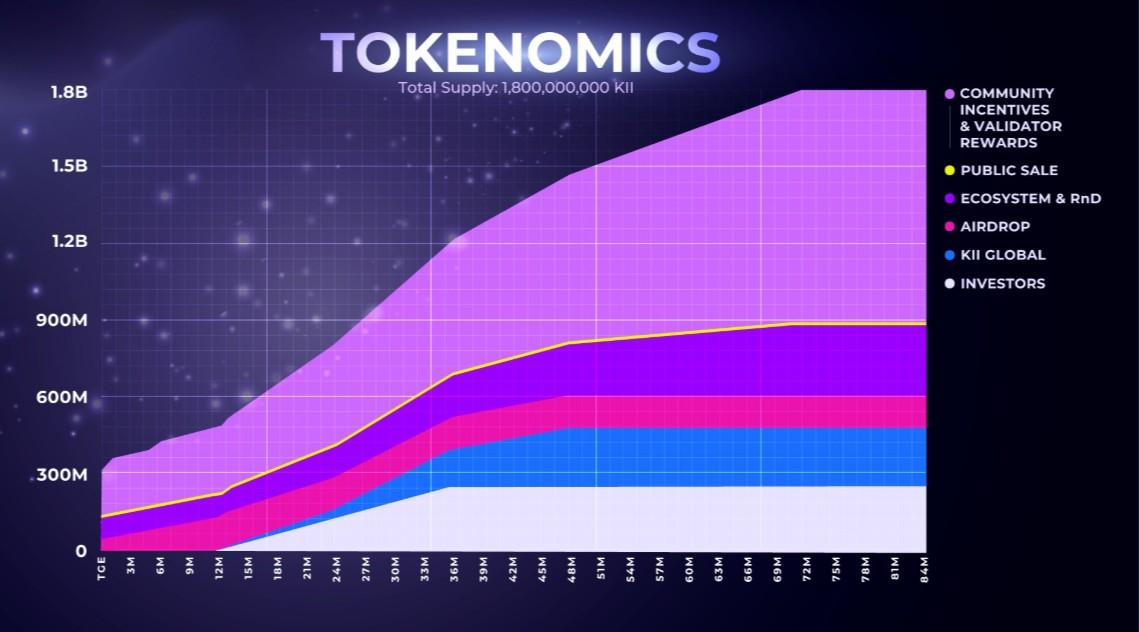
Instead of releasing all these tokens at once, the community and ecosystem allocation is designed to be distributed gradually. Tokens can be deployed as KiiChain grows and based on factors such as network activity, community programs, liquidity requirements, grants, and other ecosystem development initiatives. This approach aims to support the network's growth over the long term.
The KII Token: Utility at the Core
The token is designed to sit at the center of the ecosystem. Its role goes beyond simply being a tradable digital asset. The blockchain can be used for staking, helping participants support the network and its validators. It is also connected with network activity and ecosystem incentives. This network testnet specifically encourages users to stake tokens and participate in different activities to earn ORO rewards.
This utility-focused approach is important because a token becomes more meaningful when it has practical functions within its own ecosystem. As Blockchain develops its on-chain FX and crypto stablecoin infrastructure, the usefulness of token will depend on how widely the network is adopted and how effectively the coin is integrated into its applications.
Conclusion
KiiChain tokenomics provides the economic framework for the KII coin and its role within the network. Staking, scheduled emissions, governance, community incentives, and ecosystem participation are important parts of the model. This network is building an EVM compatibility blockchain focused on FX settlement, stablecoins, and real-world assets, giving the coin a role within a broader financial ecosystem.
Because token allocations and sale terms can change, readers should always check the latest official Kiichain documentation before relying on specific supply, allocation, or unlock figures.
Disclaimer
The information provided in this article about tokenomics is for informational purposes only and should not be considered financial, investment, or trading advice. Cryptocurrency markets are highly volatile and involve significant risks, including the possible loss of funds.
Token allocations, prices, supply figures, rewards, and project details may change over time. Readers should verify the latest information through KiiChain’s official channels and conduct their own research before making any financial decisions.