Pons Launchpad V2: How New Tokens Are Priced and Launched

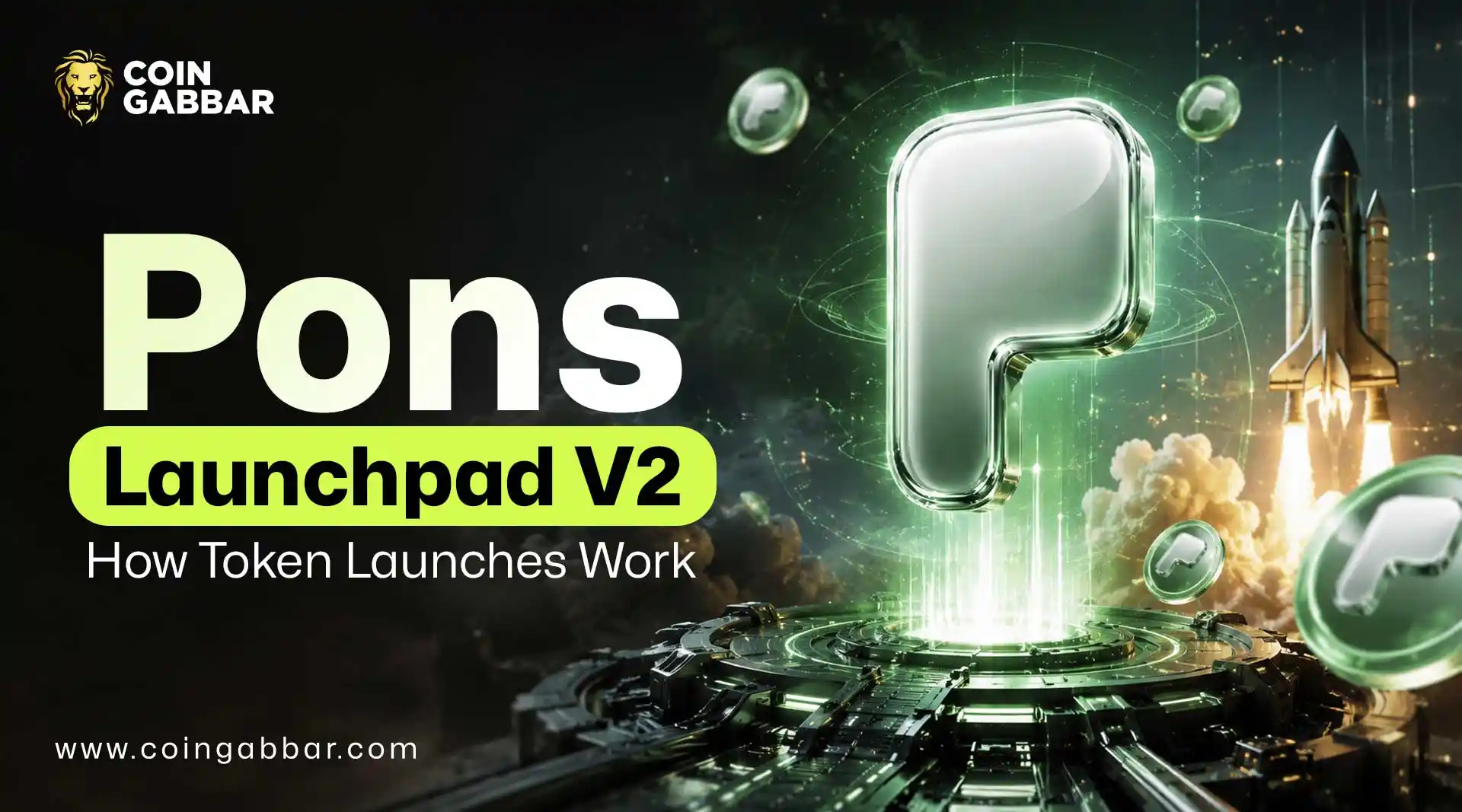
How Pons Launchpad V2 Uses Bonding Curves for Token Price Discovery
Pons Launchpad V2 just changed how every token on Robinhood Chain gets priced from its very first second of trading. This is Pons v2 explained in plain terms, sourced directly from pons' own official documentation.
Key takeaways:
Every launch now starts on a bonding curve instead of an instant liquidity pool.
Graduation moves a token into a permanently locked Uniswap v4 pool.
Liquidity can never be pulled by anyone, including the creator or pons itself.
What Is Pons Launchpad?
Pons is a launch protocol built specifically for Robinhood Chain. A creator deploys a token, the public trades it, and pons itself never takes custody of anyone's tokens or funds.
Every action: creating, buying, selling, claiming fees is a transaction your own wallet signs directly. There's no centralized account holding your assets behind the scenes.
What Is Pons v2?
So what is Pons v2, specifically? It's the newer version of that same protocol, and it changes the core pricing mechanism from the ground up.
In the earlier version, a launch went straight into a liquidity pool the moment it was created. Pons Launchpad V2 does something different: a launch now starts on a bonding curve holding the entire token supply, and a pool only gets built once that curve sells out.
That single change removes the launch-day liquidity problem entirely. There's nothing to snipe before the curve opens, and no separate migration step for a creator to get wrong.
A launch also trades in two places over its life first against the curve, then in a normal Uniswap pool once it graduates. Nothing is required of you when it switches over, and the tokens in your wallet stay exactly the same before and after.
One more flexibility worth knowing: a launch doesn't have to be priced in ETH. It can pair against another approved token instead, and that token becomes the currency for the whole launch what you buy and sell in, and what the creator gets paid in.
How Pons v2 Works: The Four-Step Launch Lifecycle
Understanding how Pons v2 works starts with its lifecycle. Every launch follows the same four steps, with no path where a creator does something different halfway through.
1. Create. The creator sets a name, symbol, image, description, and links, then pays a launch-fee. The entire supply mints straight to the curve no one, including the creator, holds a set-aside bag of tokens before trading opens.
2. Trade the curve. Anyone can buy and sell. Price rises as people buy and falls as they sell, and you can always sell back to the curve without waiting for outside liquidity.
3. Graduate. Once the curve sells out, it closes. Everything it collected, along with tokens held back for this exact purpose, gets handed over to build the pool.
4. Pool. A Uniswap pool is created and its liquidity is locked permanently. Trading carries on there, and the token behaves like any other token on Uniswap.
Graduation happens automatically, inside whichever purchase finishes the curve. If that automatic step doesn't complete, anyone at all can push the launch forward it needs neither the creator nor pons. A launch can never be left stranded just because its creator lost interest.
Pons v2 Bonding Curve Explained
The Pons v2 bonding curve is the mechanism behind every price you see before graduation, so it's worth understanding on its own.
Picture a vending machine that always has stock. The curve holds the entire supply from the moment a launch is created, and it will always sell tokens and always buy them back you're never waiting for another trader to take the other side.
Price isn't set by any single party. It's worked out from how much supply has already been bought: more buying pushes price up, more selling pushes it down. The starting price also isn't zero, so the first buyer doesn't get supply for free.
For more information you can also check Pon’s official V2 documentation.
Buyback and Vesting: What Happens to Repurchased Tokens
A creator can choose to spend part of their own fee share buying their token back off the market. This comes out of the creator's share, not the trader's, and it's entirely optional.
Bought-back tokens aren't burned. They're locked away and released gradually over five years, split between the creator and the protocol, nobody receives a lump sum, and there's no moment where a large stockpile suddenly hits the market.
The five-year clock is weighted, so later buybacks don't ride on the progress of earlier ones. A large buyback made this month can't become withdrawable immediately just because the launch has been buying back for years.
Either side of the split the creator or pons can trigger a release, and whichever one calls it pays out both. So a creator who stops paying attention doesn't strand the protocol's share.
If a buyback can't be done sensibly, because liquidity is too thin or it would move the price too far, it's simply skipped, and that money goes to the creator as normal instead.
Safety and Recovery: Why Liquidity Can't Be Pulled
Once a launch-graduates, its liquidity is locked and never comes back out. There's no unlock button, no waiting period, and no privileged wallet that can reach it not the creator, and not pons.
This is the detail that matters most. Rug pulls almost always work by a creator removing liquidity. On a graduated pons token, that isn't possible not as a promise, but because the function to do it simply doesn't exist.
Graduation happens in two steps, with a safety valve in case the second step can't complete, usually because something about the pairing asset changed since it was approved. If a debut gets stuck for seven full days, pons can return what was collected rather than leaving it stranded, and any launch that's gone through this is permanently marked as such.
Some things can never be recovered by anyone, deliberately. Locked liquidity, supply locked at graduation, and tokens sent directly to a contract address by mistake are all gone for good.
Risk Disclosures Worth Reading
Pons is direct about the risks involved. Launch tokens are volatile and can lose all value, and anyone can create a launch with any name, symbol, or image including ones that deliberately imitate an existing project.
A few things worth checking before trading:
Always verify the token address, since it's the only identifier that can't be copied.
A creator can set a tax at launch, within the protocol's cap read it before trading.
Reaching graduation isn't a signal of quality. It only means the curve sold out.
A launch paired against another token carries that token's risk on top of its own.
Transactions are submitted by your wallet and may be irreversible.
Final Word
Pons Launchpad V2 replaces instant-pool pricing with a bonding curve and a graduation process that locks liquidity permanently and irreversibly. Between the four-step lifecycle, the buyback vesting structure, and the built-in safety mechanics, it's a meaningfully different design from what came before one worth understanding fully before creating or trading a token on it.
Disclaimer
This article is for informational purposes only and does not constitute financial or investment advice. All information is sourced directly from pons' official v2 documentation and may change as the protocol updates. Tokens launched through any launchpad can be highly volatile, illiquid, or lose all value. Always do your own research before transacting.
Also read: