PCN Chain Mainnet Migration: What Users Should Know

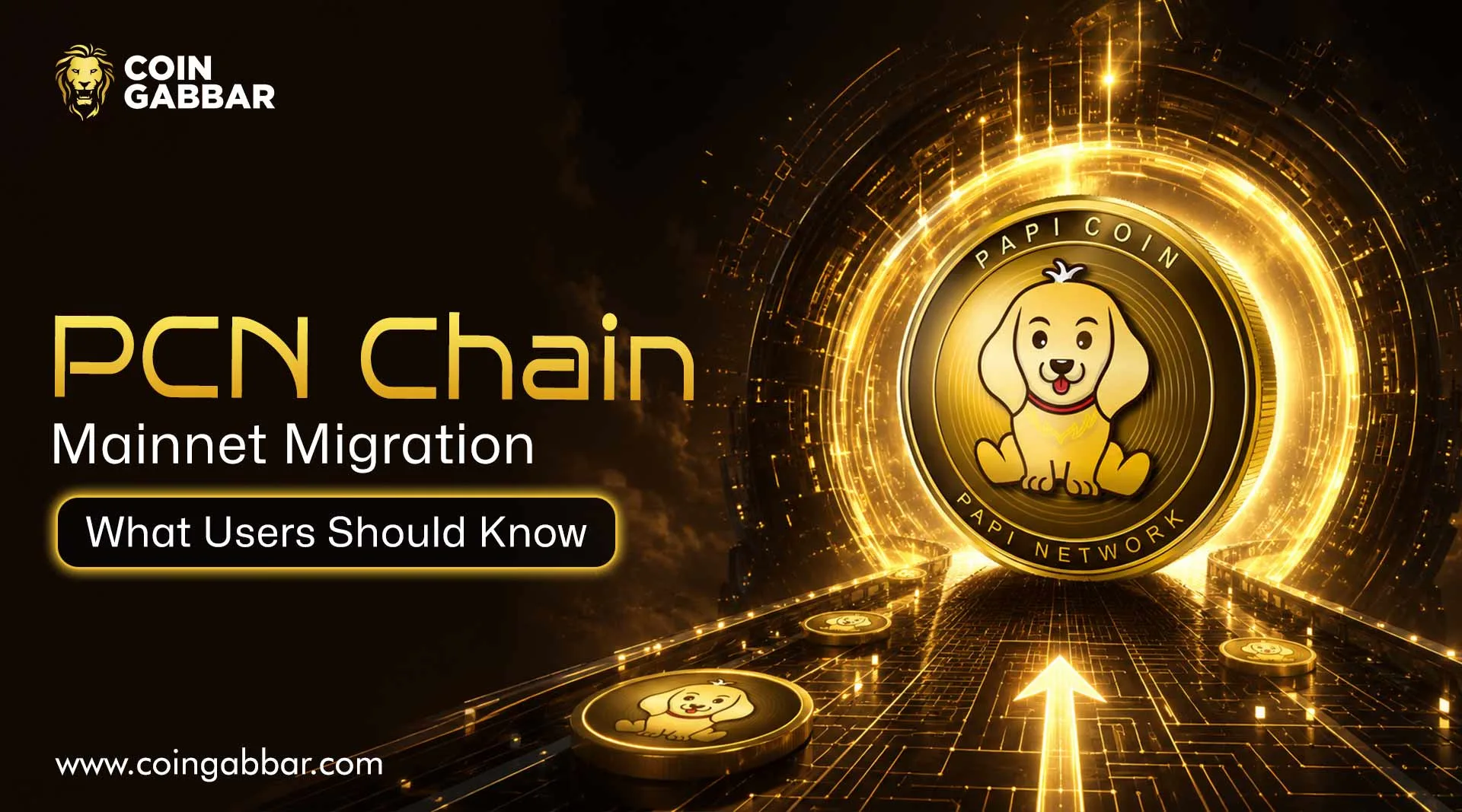
PCN Chain Mainnet Migration: Here's What Users Should Know
Most crypto apps go through a similar arc before they ever become a real, independent blockchain. They start inside an app, and at some point they try to move onto their own network.
That's the phase PCN Chain says it's entering now. The team recently confirmed that a mainnet launch is on the way, and it's asking users to get ready ahead of time.
Below, we'll walk through what PCN Chain actually is, what a mainnet migration involves, and what's been confirmed so far. Nothing here is investment advice, just a breakdown of the facts as they stand.
So What Exactly Is PCN Chain
At its core, PCN Chain is a mobile app built around a play-to-earn setup. Its own whitepaper says the goal is to bring blockchain into gaming.
Users earn PCN tokens simply by staying active, and the app functions as a kind of wallet tied into a larger rewards system.
The team calls it a P2E blockchain app, and that's fairly accurate to how it works in practice. Activity gets tracked, and the earning rate can climb the more someone engages with it.
It's available on both Android and iOS, so it's not locked to one ecosystem; anyone with a phone can try it out.
Where It Actually Comes From: The PAPI Network Link
There's a connection worth mentioning here. PCN Chain traces back to PAPI Network, a project built around the idea of cloud mining.
According to its whitepaper, this is meant to let people earn PAPI coins without owning any mining hardware at all.
The method itself is pretty basic. Open the app, tap a button once every 12 to 24 hours, and that starts an earning session. This is what's usually referred to as a tap-to-mine setup.
There's no actual computing power involved behind the scenes; no real mining is taking place. The reward is tied to how often you show up in the app, not to any genuine mining work.
Knowing this background helps explain why the app-first model exists in the first place and why any move toward a real blockchain is treated as a big step.
The Announcement Itself
PapiNetwork posted the update on its official X account. It said the countdown to migration has begun and asked users to finish a migration checklist. Keeping the app updated was mentioned too.
Per the post, eligible users will soon be able to move their transferable balance over to the mainnet. That said, no specific date has been given yet. The tweet only promises that more official details are coming.
Naturally, this brings up a question a lot of people are already asking: is this migration actually real? Going by the official post alone, yes, the announcement itself is genuine.
But the finer technical points, things like an exact date, smart contract addresses, or an explorer link, haven't surfaced yet. For now, it's safest to treat this as an early-stage announcement rather than something already in motion.
What Does a Mainnet Migration Even Mean
It helps to step back and define this properly. A mainnet migration, in plain terms, is when a project shifts away from a temporary, app-based structure and onto its own dedicated blockchain.
Before this happens, tokens usually just live inside an app, or sometimes on a network borrowed from elsewhere. After the migration, those tokens move onto the project's own chain.
It's a fairly standard step across the industry, and it's often summed up as the point where an app-based token finally becomes a blockchain-native one.
Typically, this kind of process includes:
A snapshot of everyone's balance at a fixed point in time
Some form of eligibility or verification check
Setting up a new wallet or blockchain address
Actually transferring the tokens onto the new chain
PCN Chain hasn't said which of these will apply in its case.
Still, the announcement hints that some kind of eligibility check is coming.
Breaking Down the Checklist
Users were told to complete a "Mainnet Checklist," though the post never spelled out what's actually on it.
Similar app-based projects tend to include basic account and app-related tasks in checklists like this, so it's reasonable to expect something along those lines.
Since the full list hasn't been made public, here's a table showing only what's actually been confirmed, not assumptions:
Checklist Step | Confirmed Status |
Update the app | Confirmed instruction |
Keep the account active for now | Confirmed instruction |
Complete the full migration checklist | Mentioned, details pending |
Confirm eligibility | Mentioned as a future step |
Until the rest of the checklist is published, anyone wondering exactly how to move their balance over will need to wait for a follow-up post.
Who Actually Qualifies
The announcement uses the word "eligible" specifically, which suggests migration won't apply to everyone or every balance automatically.
Based on what's been shared, eligibility seems to hinge on a few things:
Having a transferable balance sitting in the app
Running an updated version of the wallet
Meeting whatever additional criteria gets announced later
This ties into a broader pattern common to these kinds of apps, where only a portion of in-app tokens can eventually move to a live network.
Locked or non-transferable balances might follow a separate path entirely, though that hasn't been confirmed one way or the other.
Why the App Update Matters
The official post was pretty direct about asking users to keep the app updated. That's a normal ask before a migration like this, since new wallet functions, security checks, or blockchain integrations typically arrive through app updates rather than anything else.
If you're looking for the official app, here's where to find it:
Android : the Google Play Store listing for PCN Chain Wallet
iOS : the Apple App Store listing for PCN Chain
Updating the app on its own won't guarantee eligibility, though. It's just one piece of the broader preparation process.
Tokenomics (Official Whitepaper Section)
As per their whitepaper, the tokenomics look like this:
Token Allocation:
Allocation | Percentage |
Player Rewards | 40% |
Platform Development | 20% |
Staking Pools | 15% |
Marketing & Partnerships | 10% |
Core Team (4-year lock-up) | 15% |
Supply Details (Section 5.2 — "Maximum Supply"):
Total supply cap: 100 billion PCN tokens
Player rewards allocation (in tokens): 35 billion PCN tokens
New tokens minted only at specific milestones (user growth, platform development stages)
Burning Mechanism:
Every transaction burns a small % of PCN tokens deflationary, meant to increase scarcity over time
Earning Rate (Section 3.1 — "Dynamic PCN/hour System"):
Initial rate: 0.1 PCN/hour
Increases with engagement: 0.4 0.8 PCN/hour and higher
Extra bonuses for milestones (referrals, community events, achievements)
Staking (Sections 3.3 & 5.1):
Users can stake PCN tokens in liquidity pools for extra rewards
Reward size depends on amount staked + duration
Governance (Section 3.4):
DAO based—PCN holders can vote on proposals (reward structure changes, new features, tokenomics adjustments)
Roadmap (Section 6):
As per their whitepaper, the roadmap look like this:
Phase | Milestone |
Q2 2025 | Initial platform beta with basic games/rewards |
Q3 2025 | Full platform launch + staking + governance |
Q4 2025 | NFT marketplace + third-party game developer integration |
2026 and beyond | Cross-chain compatibility, new games, governance upgrades |
Wrapping Up
This migration announcement is a meaningful step for PCN Chain, at least on paper, shifting it from an app-based earning model toward a possible independent blockchain.
Right now, what's confirmed is limited: a checklist requirement, an app update requirement, and a promise that eligible users can eventually migrate their transferable balances.
The date, the technical process, and the full eligibility rules are all still pending.
Anyone trying to stay on top of this should stick to official sources only, the app itself and the verified social account, rather than relying on secondhand claims floating around elsewhere.
Disclaimer: This article is for educational and informational purposes only and should not be considered financial or investment advice. Always conduct your own research before making investment decisions.