Ripple ODL Regions: How On-Demand Liquidity Expands Globally

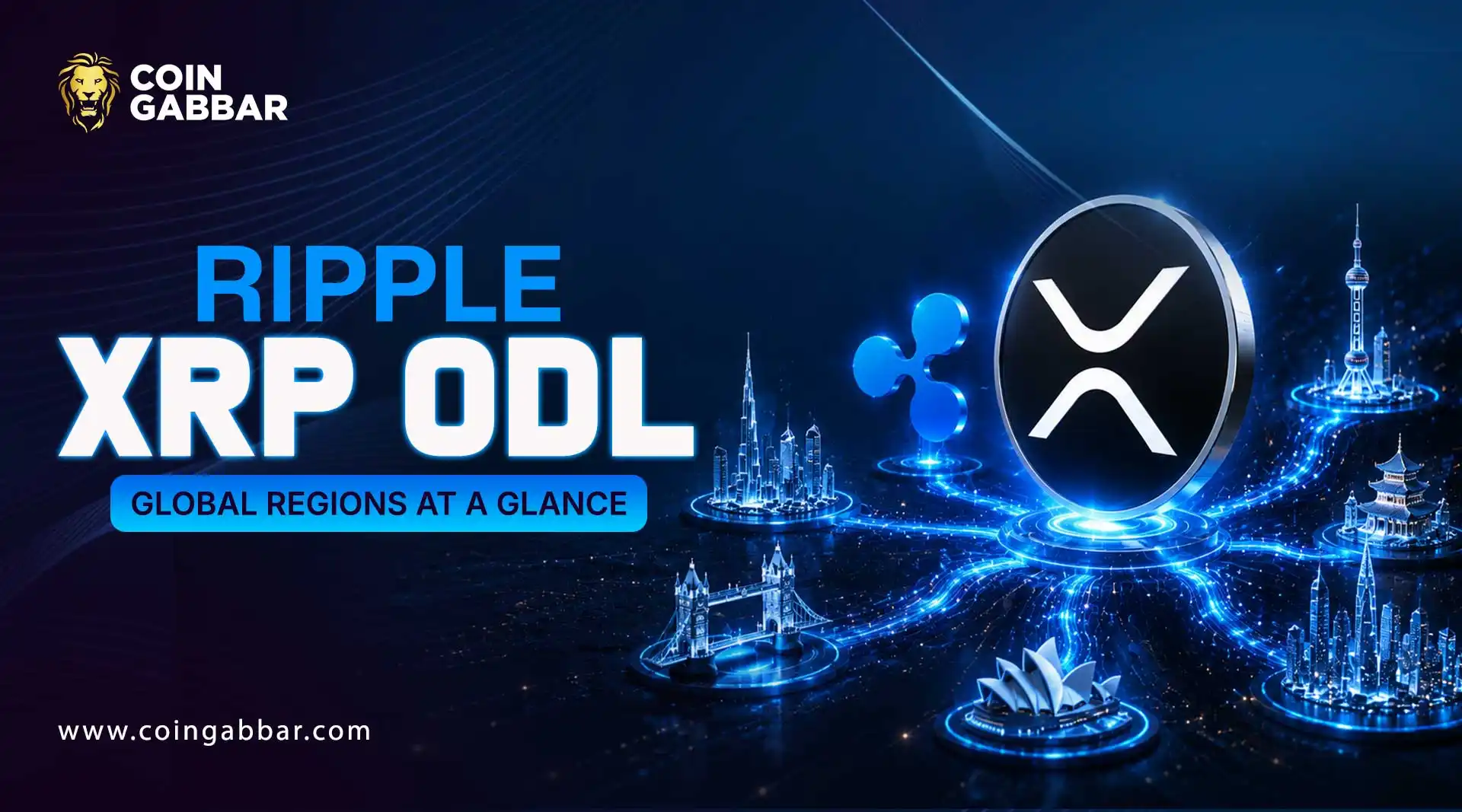
Ripple ODL Regions: Where On-Demand Liquidity Operates Worldwide
Cross-border payments have always had a problem. Sending money internationally is slow. Fees are high. Banks need large amounts of cash locked in foreign accounts before a single payment can go through. Ripple built On-Demand Liquidity to fix that. If you're new to the technology, here's what is Ripple ODL and how the payment model works before exploring its global expansion. But the bigger story is not just how ODL works. It is how far it has reached.
ODL is now active across multiple continents and dozens of payout markets. Investors following this expansion also track XRP price prediction 2026 to understand how growing payment utility could influence the asset's long-term outlook. This article covers where it operates, what each region means for payments, and why this global expansion matters.
Why Regional Coverage Is Not Just a Number
Every region has its own payment rails, its own local currency, its own regulations, and its own friction points. A payment going from the US to the Philippines runs into completely different challenges than one going from Europe to Brazil.
This is why each new market ODL enters is significant. Every new corridor is one where businesses and individuals can move money faster, at lower cost, without capital sitting idle in a foreign bank account. Ripple has offices spanning four continents and has been building toward this kind of global reach since 2012. Many readers also follow banks using XRP to understand which financial institutions have publicly adopted Ripple's payment technology.
How ODL Started — and Where It Has Gone
Ripple introduced ODL in 2018. The original focus was remittances money that migrants send home to their families. This is one of the highest-friction areas in global finance. Fees eat into every transfer. Settlement takes days. And the people depending on these payments are often in countries where banking access is already limited.
ODL tackled three specific problems from day one: high transaction fees, slow settlement times, and minimal transparency about where money was and when it would arrive.
It worked. And as the customer base grew, so did the use cases. ODL now supports small and medium enterprise payments, internal treasury flows for companies managing money across multiple countries, and marketplace vendor payouts for platforms settling with sellers in dozens of currencies.
By 2022, Ripple had expanded payout markets to nearly 40 destinations. Named regions include Africa, Argentina, Belgium, Israel, Australia, Brazil, Singapore, the UAE, and the UK with more being added over time.
The Regions: A Closer Look
Asia-Pacific: Australia and Singapore
Singapore is one of Southeast Asia's most important financial hubs and handles enormous volumes of cross-border transactions. ODL here means businesses settle payments into local currencies quickly, without pre-funding accounts. Australia processes significant international payment volumes both remittances and business payments where the cost of traditional transfers has historically been high.
Latin America: Argentina and Brazil
Brazil is one of Latin America's largest economies, with a fast-growing fintech sector actively exploring blockchain-based payments. Argentina deals with currency pressures that make the speed and settlement certainty of it especially useful for businesses moving money across borders.
Both countries are exactly the kind of markets where pre-funded banking rails cause the most friction and where the On-Demand Liquidity model delivers a clear improvement.
Middle East: UAE and Israel
The UAE processes massive international payment volumes. A large expatriate population means remittances constantly flow out of the country, and the UAE is also one of the world's most active fintech markets. Israel has a strong technology and finance sector with significant cross-border activity. Including both reflects how Ripple approaches coverage not just obvious corridors, but the full range of active payment routes.
Europe: UK and Belgium
The UK is both a global financial centre and a country with a large immigrant population sending money abroad. Belgium sits at the centre of European finance and trade. It is being active in both markets opens up options for businesses handling treasury flows across the continent and for payment companies serving customers who need faster, cheaper settlements.
Africa: Connecting Millions to Global Payments
Africa is a standout region and it deserves specific attention.
Large parts of the continent have limited access to traditional banking. Cross-border payment alternatives are expensive, slow, or simply unavailable to most people. Ripple has partnered with MFS Africa, a pan-African gateway that connects millions of mobile wallets across the continent.
This matters because it does not require recipients to have a traditional bank account. Payments can settle directly into mobile wallets, which are far more common than bank accounts across many African countries.
For this region, ODL is not just about reducing fees. It is about connecting people to the global financial system who have been excluded from it for a long time.
Real Customers, Real Impact
The regional expansion of ODL is not abstract. Companies already using it are seeing direct results.
Hai Ha Money Transfer is one example. Their CEO, Dianne Nguyen, has spoken about the impact clearly: since using ODL, the company can better manage its capital and funding flows. They offer near real-time payouts without waiting on banks to process settlements. For a money transfer business, that kind of speed changes the whole operation.
Other companies using ODL across different regions include Lemonway, which handles payments for online marketplaces, and Xbaht, which manages remittances for users sending money to Thailand. Each operates in a specific corridor with a specific type of transaction and both benefit from ODL's growing regional reach.
Machine Learning Is Making the Network Smarter
As it expanded into more regions, Ripple added Machine Learning capabilities to the system. Managing flow of funds across dozens of markets, multiple currencies, and varying transaction sizes is genuinely complex. The ML layer helps handle that complexity keeping the payment process efficient and ensuring funds are managed well as volumes grow.
This is especially important for regional expansion. Each new market has its own currency behaviour, liquidity conditions, and transaction patterns. Machine learning helps ODL adapt to all of it without slowing down.
What This Means for Businesses
When ODL covers a wide range of payout markets, it changes the calculation for any company moving money internationally.
Instead of maintaining separate banking relationships in multiple countries and keeping pre-funded accounts in each local currency a business connects to ODL once and reaches dozens of markets through a single system. Settlement is near real-time. Capital is not locked up abroad. And transaction costs are lower than what traditional correspondent banking charges.
For fintech companies, payment providers, and businesses with global operations, this kind of regional network is the difference between infrastructure that works and one that creates constant delays.
Conclusion
Ripple's On-Demand Liquidity is not a single-market solution. It is a global payments network operating across Africa, Latin America, Asia-Pacific, the Middle East, and Europe. Each region comes with different payment challenges different currencies, different regulations, different levels of banking access and ODL handles all of them through the same core mechanism: XRP as a real-time bridge, no pre-funded accounts required, and settlement in seconds.
The network is still growing. As more markets come online and machine learning sharpens liquidity management, ODL's regional reach will only expand bringing faster payments and lower costs to more people around the world.
Disclaimer
This article is for informational purposes only and should not be considered financial or investment advice. Always do your own research before using any blockchain platform or investing in any digital assets.
Also read: