GTech Network Giveaway: Who Qualifies and How to Claim

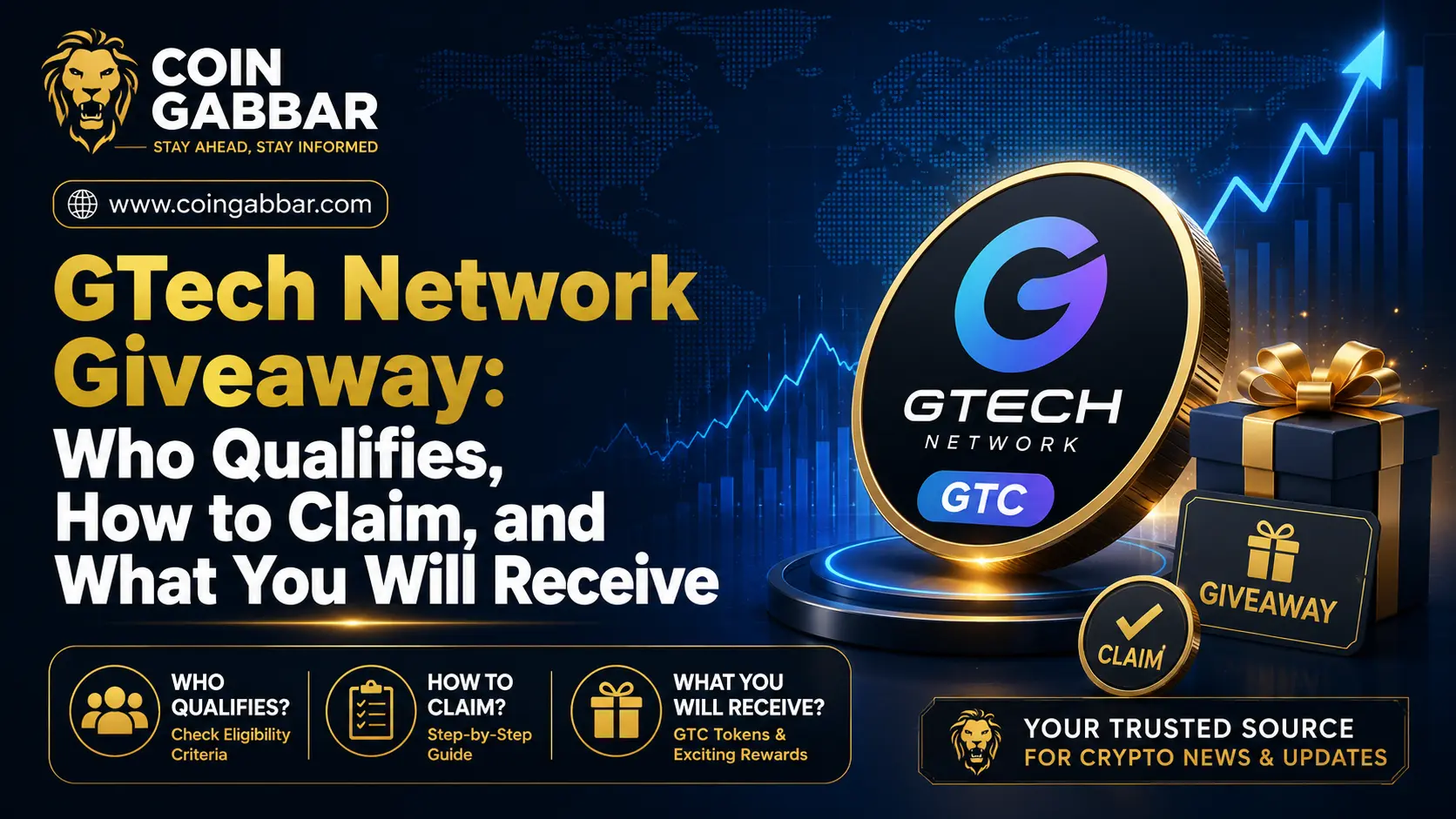
GTech Network Giveaway: Who Qualifies for GTC?
GTech Network Giveaway is now one of the most important topics for GTC holders after the project’s delayed listing timeline. The giveaway was announced as a community reward for holders and miners who stayed active during the waiting period. However, the full reward amount, snapshot date and claim deadline have not been officially published yet.
This guide explains who qualifies, what remains unconfirmed, how to prepare a self-custody setup, how to maintain active miner status, how vesting may apply, and how to avoid fake claim links. The goal is simple: help holders act safely before the official claim details are released.
The safest interpretation is this: two groups are expected to qualify. The first group is GTC holders who have withdrawn tokens to a non-custodial setup such as MetaMask or Trust Wallet. The second group is active miners who continue mining inside the GTech app without a long inactive gap. Holders who satisfy both conditions may be in the strongest position.
For related background, readers can review CoinGabbar’s GTC mine withdraw guide, GTech safety review, and mining token comparison.
Quick Answer: Who Qualifies?
The GTech Network team has indicated two main qualifying groups for the giveaway. These groups are important because they separate passive app holders from holders who have taken self-custody or stayed active in the mining system.
| Group | Who Qualifies | Main Action Needed | Main Risk |
|---|---|---|---|
| Group 1 | GTC holders using self-custody addresses | Withdraw GTC to MetaMask or Trust Wallet | Using exchange accounts or wrong chain |
| Group 2 | Active GTC miners | Continue daily mining activity | Missing activity for 15 consecutive days |
| Both Groups | Self-custody holders who also keep mining | Withdraw and stay active in the app | Missing snapshot or clicking fake links |
The two groups do not appear to be mutually exclusive. If you hold GTC in a personal address and continue mining actively, you may qualify under both eligibility routes. The final confirmation should still be checked through official project channels.
What Is the GTech Network Giveaway?
The giveaway is a planned reward event for the GTC community. It was announced after the listing delay, when many holders were waiting for updated exchange information. The project framed the campaign as a way to reward patient holders and active participants.
This matters because delayed token launches can weaken community confidence. A reward campaign gives holders a reason to stay engaged, withdraw correctly, maintain mining activity and follow official updates instead of relying on rumours.
The campaign is not the same as a confirmed exchange listing. A giveaway can happen before, during or after a listing update. Holders should track both separately: one is a reward eligibility event, while the other is a market access event.
For listing context, read CoinGabbar’s GTC burn update, delayed listing report, and launch delay explainer.
What Is Confirmed and What Is Not Confirmed?
The most important part of this article is separating confirmed information from unconfirmed claims. Crypto reward campaigns often attract fake dates, fake claim forms and fake reward screenshots. Holders should not treat any number as official unless it appears on the official project account or website.
Confirmed So Far
- A giveaway initiative has been announced for the community.
- Two qualifying groups are expected: self-custody holders and active miners.
- GTC is associated with BNB Smart Chain.
- MetaMask and Trust Wallet are relevant personal custody options.
- Holders should watch official project channels for final details.
Not Confirmed Yet
- Exact reward amount per holder
- Total reward pool size
- Snapshot date
- Claim deadline
- Minimum token balance requirement
- Exact claim page or process
- Whether both groups receive equal rewards
- Whether eligibility tiers will apply
Any post claiming a guaranteed reward amount, fixed deadline or live claim link should be treated with caution unless it can be verified from official sources.
Group 1: GTC Holders in Self-Custody
The first qualifying group is GTC holders who have withdrawn tokens to a non-custodial setup. This means a personal crypto address where the holder controls the private keys. MetaMask and Trust Wallet are common examples.
This matters because an app balance or exchange balance may not prove self-custody. If your tokens are still inside the GTech app or a centralized exchange account, you may not satisfy the self-custody condition.
What Counts as Self-Custody?
- MetaMask address controlled by your own recovery phrase
- Trust Wallet address controlled by your own recovery phrase
- Other BNB Smart Chain-compatible addresses where you control the private keys
What Does Not Count?
- Binance exchange account
- BingX exchange account
- Coinbase account
- Any centralized exchange account
- Any custody setup where another platform controls the private keys
Exchange accounts are custodial. The platform controls the keys on your behalf. That structure may be useful for trading, but it usually does not satisfy a self-custody reward condition.
How to Qualify for the Holder Group
To qualify under the holder route, the practical goal is to make sure your GTC appears in a personal BSC address before any snapshot occurs.
Step 1: Install a Safe App
Use only official sources. Download MetaMask from the official website or app store. Download Trust Wallet from the official app store listing. Never install APK files shared in Telegram, WhatsApp, YouTube comments or random websites.
Step 2: Add BNB Smart Chain
If using MetaMask, add BNB Smart Chain before receiving GTC. A wrong network can cause confusion, delays or failed token display. Trust Wallet usually supports BNB Smart Chain more directly, but holders should still verify the network before receiving tokens.
Step 3: Add GTC as a Custom Token
Use the official contract address from official project sources before importing the token. The contract commonly referenced for GTC is 0xd1F6cc234b9B82E90AC277c9C2E3C7a91d17DAf9 on BNB Smart Chain. Always cross-check it before use.
Step 4: Withdraw From the App
Open the GTech app and follow the official withdrawal process. Do not use links from private messages. If a gas fee is required, pay only through the official app flow. Do not transfer funds to a random address shared by support impersonators.
Step 5: Verify on BscScan
After withdrawal, paste your public BSC address into BscScan and confirm whether the token balance appears under BEP-20 assets. Do not rely only on in-app balance screens or screenshots.
For practical withdrawal safety, review CoinGabbar’s GTC withdrawal guide and GTC phishing guide.
Group 2: Active GTC Miners
The second qualifying group is active miners. In this context, active mining means continuing app participation rather than simply having downloaded the app months ago.
The draft states that 15 consecutive days of inactivity may make a user inactive and affect eligibility. That makes daily app activity important. Holders who want to preserve eligibility should open the app regularly, complete the daily mining action and avoid long inactivity gaps.
How to Maintain Active Miner Status
- Open the GTech app daily.
- Complete the mining action when available.
- Do not miss 15 consecutive days of app activity.
- Use only official app links.
- Track your activity before the snapshot is announced.
- Do not depend on Telegram reminders from unknown accounts.
Active miner status is a behaviour requirement. It is not only about balance size. A holder with many tokens may still lose eligibility under the miner group if app activity is inactive beyond the required limit.
Can You Qualify for Both Groups?
Yes, based on the current structure, a holder may qualify for both groups if they satisfy both conditions. That means withdrawing GTC to a personal BSC address and staying active in the app.
This may be the strongest eligibility position because it shows both self-custody and continued participation. However, final reward treatment may depend on the official announcement. The project could apply separate rewards, tiered rewards, one reward per user or another structure. Holders should wait for final details before assuming payout size.
What Is the Reward Amount?
The exact reward amount has not been confirmed. This is the most important caution for holders. No fixed GTC amount, dollar value, pool size or tier has been officially published in the draft as of June 7, 2026.
Prior reward events may give context, but they do not prove the payout for this campaign. Crypto projects often change reward size based on supply, listing plan, user count, snapshot rules, eligibility filters and market conditions.
How to Read Reward Claims
- If the amount appears only in Telegram, treat it as unverified.
- If a post asks for payment before reward release, treat it as a scam.
- If the claim page asks for seed phrase, it is fake.
- If the reward number is not on official channels, do not treat it as confirmed.
- If a screenshot shows a reward but no source link, verify before acting.
What Is the Snapshot Date?
The snapshot date has not been confirmed. A snapshot is the fixed point where balances and activity status are recorded for eligibility. Actions taken after a snapshot usually do not count for that event.
This creates a practical rule: holders should act before the snapshot is announced, not after. Waiting for the exact deadline can create last-minute problems such as network congestion, app issues, wrong chain selection, delayed gas funding or phishing exposure.
Why Acting Early Matters
- Withdrawals may take time.
- Gas fees may be needed.
- App traffic may rise near deadlines.
- Fake claim pages may increase.
- Snapshot rules may not allow late correction.
Because the date is still open, the safest holder action is to prepare eligibility now and then wait for the official claim process.
How Vesting May Apply to Giveaway Tokens
The draft states that giveaway or airdrop rewards may follow a miner-style vesting structure: 40% available at distribution and 60% released monthly over 10 months from listing. Holders should treat this as a likely structure only if the official announcement confirms it.
Vesting protects the market from sudden sell pressure. It also means recipients should not expect immediate access to the full reward. If the reward is paid in GTC, the actual value will still depend on future market liquidity and price after listing.
Important Vesting Questions
- Will giveaway rewards follow miner vesting?
- Will presale buyers have different rules?
- Does vesting start from distribution or listing?
- Will rewards be claimable inside the app or on-chain?
- Will locked rewards be visible in the app?
- Can reward tokens be transferred immediately?
How to Avoid Fake Giveaway Claims
Giveaway announcements attract phishing attempts. Scammers know holders are watching for claim details, so they create fake claim links, fake X accounts, fake Telegram admins and fake connection pages.
Common Scam Patterns
- Private messages claiming you have been selected
- Fake claim links shared in Telegram groups
- Accounts using similar names to the official project account
- Websites asking for seed phrases
- Forms asking for private keys
- Requests to pay BNB or GTC to unlock rewards
- Fake “snapshot checker” pages
What the Real Team Should Never Ask For
- Your seed phrase
- Your private key
- Your exchange password
- Your email OTP
- A private payment to receive rewards
- Unlimited token approval for unknown contracts
For additional safety context, readers can check CoinGabbar’s GTech legit review, GTC scam warning, and Telegram game update.
How to Check Your Eligibility Before the Announcement
Use this simple checklist before the final giveaway post goes live. It helps reduce the chance of missing a snapshot or falling for fake links.
Holder Eligibility Checklist
- Open MetaMask or Trust Wallet.
- Confirm BNB Smart Chain is selected.
- Add GTC using the verified contract address.
- Check whether your GTC balance appears.
- Confirm the balance on BscScan.
- Do not move funds to an exchange unless instructed officially.
Miner Eligibility Checklist
- Open the GTech app daily.
- Complete the mining action.
- Avoid 15 consecutive inactive days.
- Use only official app links.
- Do not install unofficial APKs.
- Watch official channels for snapshot details.
Where Will the Official Announcement Appear?
The safest sources are the official project website, the verified official X account and in-app notices. Holders should not treat Telegram forwards, YouTube comments, random screenshots or third-party claim links as official.
Two external verification points are the GTech official website and the GTC CoinGecko page. Use these for verification context, not as investment approval.
How This Giveaway Connects to the GTC Listing
The giveaway is closely connected to holder confidence before the next listing update. If the project rewards self-custody and active mining, it may encourage holders to stay involved while waiting for exchange confirmation.
However, the reward campaign does not guarantee a listing date or price. GTC remains high risk until live trading, deposits, withdrawals, liquidity and market data are visible. Holders should not use a giveaway announcement as proof that a specific exchange launch is final.
For listing-specific updates, read CoinGabbar’s official update watch, June listing update, and Binance Alpha update.
Key Takeaways
- The GTech Network Giveaway is aimed at GTC holders and active miners.
- Two groups are expected to qualify: self-custody holders and active app miners.
- MetaMask and Trust Wallet are examples of eligible personal custody tools.
- Exchange accounts are custodial and may not qualify for the holder group.
- The reward amount, claim deadline and snapshot date are not confirmed yet.
- Active miners should avoid 15 consecutive inactive days.
- Holders should never share seed phrases, private keys or passwords.
- Fake giveaway links are likely around any major GTC announcement.
- Always verify claim instructions through official sources before acting.
Glossary
- GTC
- The token associated with GTech Network. Holders should verify the exact contract before import or transfer.
- GTech Network Giveaway
- A planned reward event for qualifying GTC holders and active miners.
- Non-Custodial Setup
- A crypto setup where the holder controls the private keys. MetaMask and Trust Wallet are common examples.
- Custodial Account
- An account controlled by a third party such as an exchange. The user does not directly control private keys.
- Active Miner
- A participant who continues mining or app activity within the allowed inactivity limit.
- Snapshot
- A fixed point in time when balances and activity status are recorded for eligibility.
- Airdrop
- A token reward distribution used to reward users, promote adoption or widen token ownership.
- Vesting
- A scheduled release system where tokens unlock gradually instead of all at once.
- BNB Smart Chain
- The blockchain network associated with GTC transfers and contract verification.
- Phishing
- A scam where attackers use fake links, fake accounts or forms to steal crypto access or login data.
Disclaimer
This article is for educational and informational purposes only. It is not financial, legal, tax or investment advice. The GTech Network Giveaway reward amount, snapshot date, claim process, vesting rules, holder eligibility, withdrawal rules and listing timeline can change quickly. GTC is a high-risk cryptoasset, and users should verify all details through official project channels before taking action. Never share seed phrases, private keys, exchange passwords or OTPs. Consult a qualified tax professional for local tax treatment of airdrops, giveaways, token sales and crypto gains.
Also read: