Talus Network: Building Autonomous AI Agents for Onchain Systems

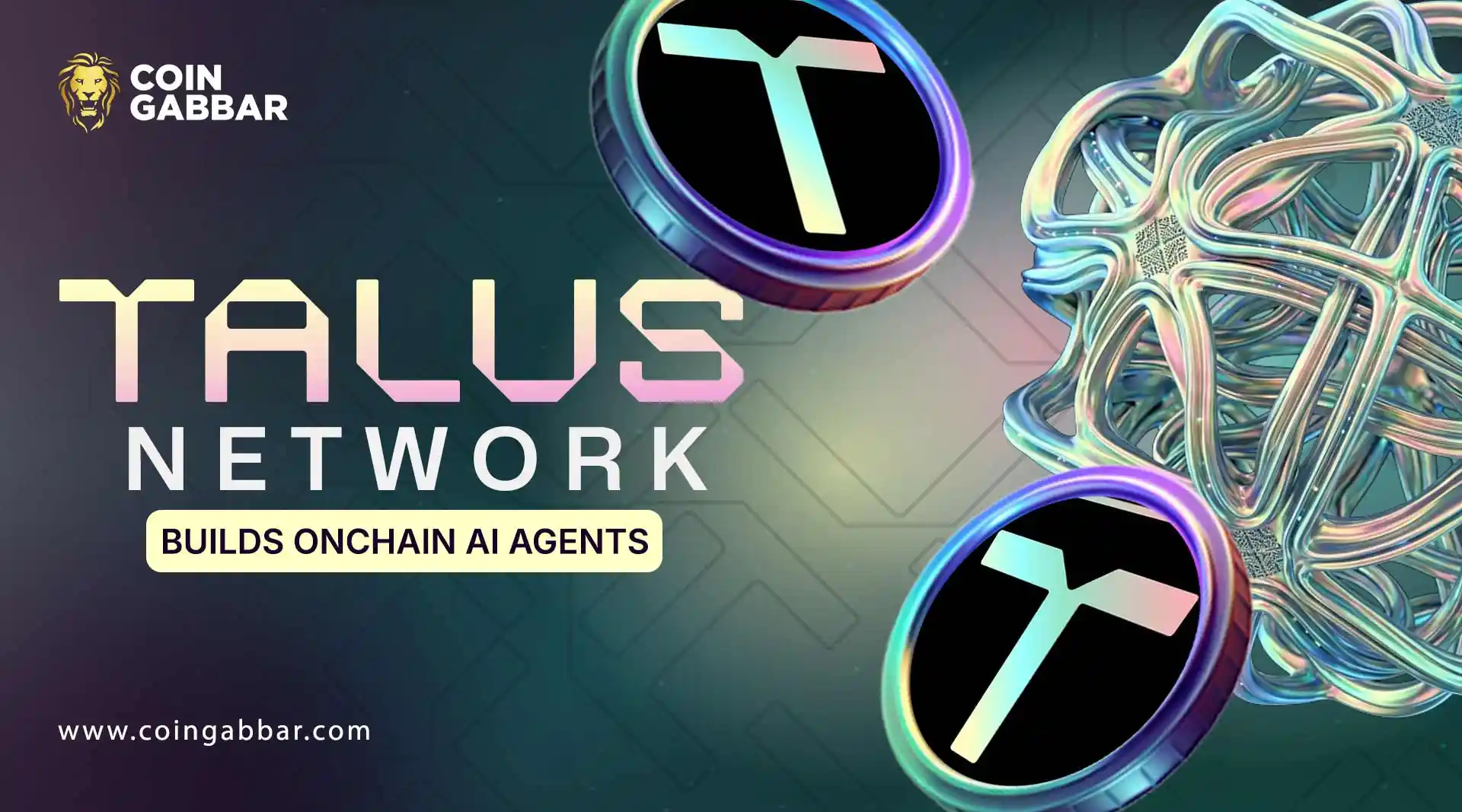
Talus Network Brings Autonomous AI Agents to Blockchain Ecosystems
AI and crypto keep merging in new ways. One project doing this is Talus Network. It lets developers build AI agents that live on the blockchain. Not on some private server. Right on chain, where anyone can check what's happening.
Let's look at what Talus actually does.
So What Is Talus?
Talus calls itself the top infra for autonomous AI agents.
It's a decentralized AI automation protocol. Simple idea. Developers use it to launch agents that think and act on their own. And they do it in ways people can verify and see clearly.
That last part is huge. Most AI today runs behind closed doors. You just trust it works. It can flips this. It uses blockchain for proof and stability. But it still hands off the heavy computing work to service providers. That keeps things fast and cheap.
In short, Talus wants AI agents that are honest by design, not just quiet and efficient.
The Gap Talus Wants to Fix
Blockchain tech has grown a lot already. Fast execution. Programmable systems. Lots of moving parts.
But it points out two big things still missing.
One, there's no real "brain" onchain. Smart contracts just do what they're told. They can't adapt. They can't learn or update themselves easily.
Two, there's no real "hand" either. Most systems still need a human to step in and react to changes. Nothing truly runs on its own yet.
Fix both problems, and a lot opens up. DAOs that adjust themselves. Decentralized Finance protocols that self-tune. AI traders that don't need someone watching them all day. That's the gap Talus is trying to close.
Why AI Is the Missing Piece
This is where AI steps in.
Add AI, or really any smart computing power, into a decentralized system, and that system can now think and decide on its own. No constant human control needed.
But it is clear about one thing. You can't just slap AI onto a blockchain and call it done. You need real infrastructure behind it. Something that handles how agents get deployed, how they talk to each other, how trust gets verified, and how everything actually runs smoothly.
That's the layer Talus is trying to build.
What This Actually Unlocks
Mix blockchain's trust layer with AI reasoning, and a few things become possible.
AI agents that stay online 24/7, with no one needing to babysit them.
Coordination at a global level, without some central company sitting in the middle.
Totally new ways to build economic tools, things that just weren't possible when smart contracts were static and rigid.
How Talus Is Actually Built
Now the technical side.
Talus runs on Sui. It uses Move, a language built for blockchain that looks a bit like Rust. Interestingly, it blends both Move and Rust inside its Agent Framework.
Sui itself brings some strong advantages. It uses Parallel Execution, which lets separate transactions run at the same time instead of lining up one by one.
It also uses Programmable Transaction Blocks, or PTBs. These can pack up to 1,024 separate operations into just one transaction. That's a lot packed into a single move.
There's also an object-centric data model. This means Sui knows exactly which data a transaction will touch before it even runs. So if one app suddenly gets busy, it won't slow everyone else down.
Because of all this, Sui can reportedly handle somewhere between 120,000 and 300,000 transactions per second.
For Talus, that speed means AI agents can run complex, multi-step tasks with quick finality and costs that stay predictable, for both developers and everyday users.
Why This Matters for Builders
If you're a developer, this changes what's possible.
Right now, most AI apps run on rented servers somewhere. You trust the company running them. You hope nothing goes wrong behind the curtain.
With Talus, the logic moves onchain. Anyone can check what an agent did and why. That's a different kind of trust. Not "trust me," but "verify it yourself."
For businesses working across borders or with strict compliance needs, that difference is huge. Auditors love proof. Regulators love proof. It is built to hand them exactly that.
Real Use Cases
This isn't just theory. It already has clear use cases mapped out.
Field | Use Case | Why Talus Fits |
International Trade | KYC/AML automation | Handles coordination across different jurisdictions |
Supply Chain | Provenance tracking | Works across many parties without heavy integration |
Trade Finance | Letter of credit | Settles automatically once documents are checked |
Legal | Evidence sharing | Keeps a clear, traceable chain of document custody |
DeFi | Compliance | Runs scheduled tasks automatically |
DAOs | Treasury management | Decentralized Autonomous Organization |
Each case leans on the same idea. Automate messy, multi-party work without needing tight custom setups between every single participant.
The Bigger Picture
Talus isn't just chasing small automation wins.
The real goal is bigger. A more open, more efficient digital economy. One where money flow, AI services, and coordination between people all run through autonomous agents, working together at a global scale, without needing a middleman to hold it all together.
That's a big claim, honestly. Whether it fully gets there is still an open question. But the pieces being built right now do point in that direction.
Conclusion
Talus Network sits right at the crossing point of two big trends, AI and blockchain. The bet is simple. Decentralized, provable AI agents will become a real part of how digital economies function down the road.
Built on Sui's fast infrastructure, and backed by real, practical use cases, it's a project worth keeping an eye on as this space keeps moving forward.
Disclaimer
This blog is based on publicly available information from official website and documentation. It's meant for information only, not financial, investment, or technical advice. Always do your own research before using any blockchain or crypto platform.






.webp)