Tap to Earn Guide 2026: How It Works and What to Know

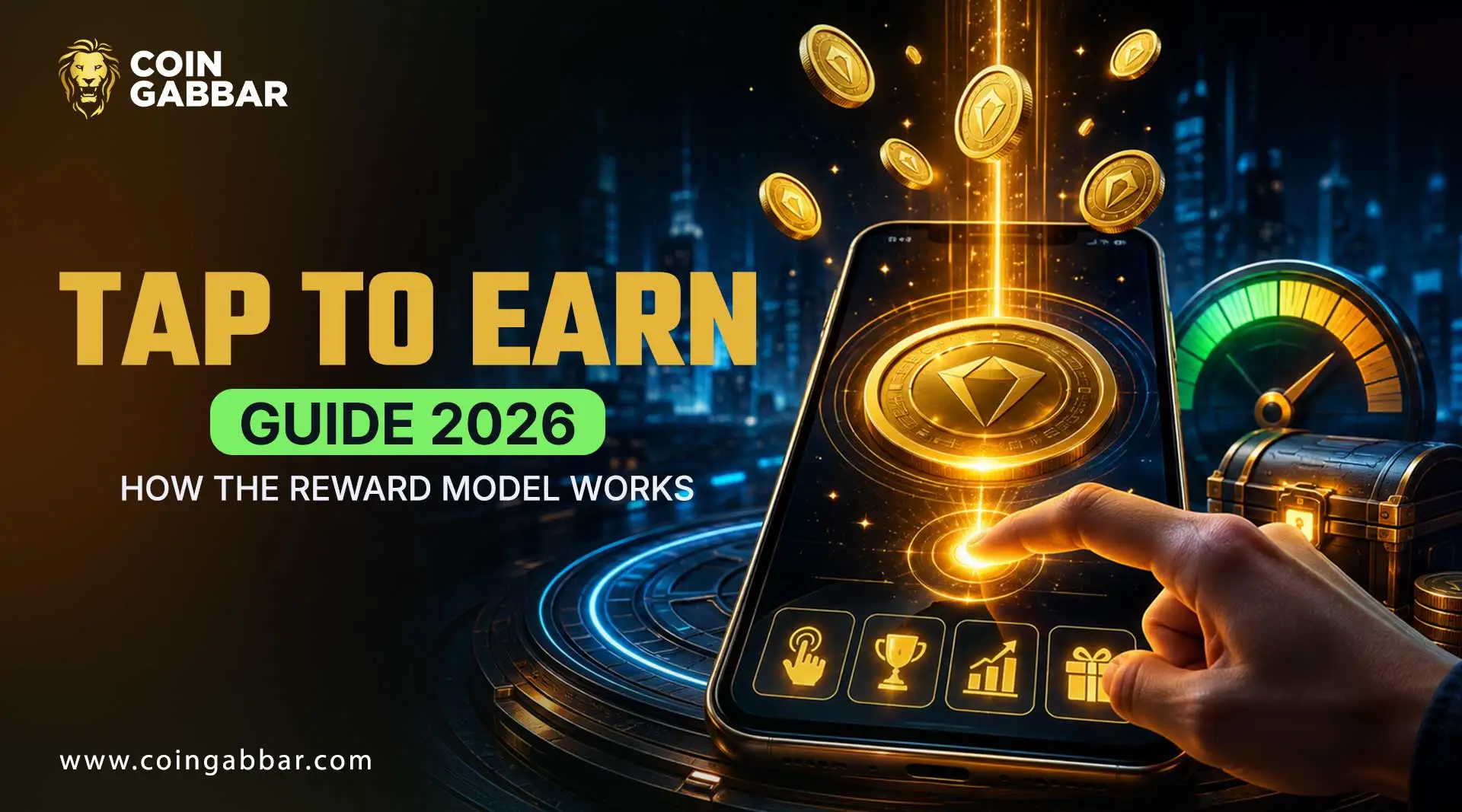
How Tap-to-Earn Turns Activity Into Rewards
Millions of people spend a few minutes a day tapping a screen, hoping it turns into free crypto. That's the whole pitch behind tap-to-earn games, and it hasn't gone away.
This tap to earn guide 2026 breaks down what actually happens behind that simple tap. It covers how these apps track activity, how points sometimes become real tokens, and where things tend to go wrong.
If you've downloaded one of these apps, or you're thinking about it, this is the part most people skip: understanding the mechanics before they start tapping.
What Is Tap-to-Earn?
Tap-to-earn is a game format where users complete a simple action, usually tapping or clicking, in exchange for in-app points. Some apps add extra tasks like inviting friends or watching short videos.
The points themselves aren't crypto. They're a database entry the app tracks against your account. Whether those points ever convert into an actual on-chain token depends entirely on what the project decides to do later.
That distinction matters more than most players realize.
How Does Tap-to-Earn Work?
Most of these games run inside a messaging app or a lightweight mobile app, so there's no heavy download or setup. You open the app, tap a button or character on screen, and a counter goes up.
Behind the scenes, the app is usually recording three things: how often you open it, how many taps or actions you complete, and who you refer to. This activity log becomes the basis for any future rewards.
Some apps add energy limits, cooldown timers, or upgrade systems to slow down how fast points-accumulate. That's a deliberate design choice, not a technical limitation. It keeps users opening the app daily instead of tapping once and leaving.
How Do You Earn Tokens?
Earning generally happens through a mix of these actions:
Daily taps or clicks within a set energy limit
Referral links, where inviting new users adds bonus points
Task completion, like joining a social channel or connecting a wallet
Streak bonuses for opening the app on consecutive days
In-app upgrades bought with existing points to boost future earning speed
None of this guarantees a payout. The project decides later whether points convert to tokens, and at what ratio. That decision is usually announced closer to a token generation event, not at launch.
Popular Tap-to-Earn Models
Tap-to-earn projects generally fall into a few recurring structures. Not every app fits neatly into one bucket, but most lean toward one of these:
Model | How It Works | What to Watch |
Pure tapping | Points earned purely from taps and energy refills | Low effort, often low reward per user |
Task-based | Points tied to completing marketing tasks | Rewards can favor early or high-effort users |
Referral-heavy | Growth driven mainly by invite chains | Can resemble a pyramid structure if unchecked |
Hybrid mini-game | Tapping combined with simple game mechanics | Longer engagement, still unpredictable payout |
None of these models confirm a listing or a guaranteed reward. The published project roadmap is the only place to check what's actually planned.
Points vs Actual Crypto Tokens
This is where confusion causes the most damage. In-app points are not the same as circulating supply of a real token.
Points sit in the app's own database. A crypto token exists on a blockchain, has a contract address, and can be verified independently through a block explorer. Until a project actually deploys a token and opens claims, your points are just a number the developer controls.
Some tap-to-earn apps never launch a token at all. Others launch one, but the conversion ratio from points to tokens ends up far smaller than users expected. Neither outcome is unusual.
Airdrops and Token Claims
If a project does move forward with a token, it usually distributes part of the supply to active users through an airdrop. This is where accumulated points can finally translate into something on-chain.
Claim processes typically involve a snapshot date, a claiming window, and a wallet connection step. The exact allocation percentage reserved for the community, and the vesting schedule attached to it, should come from the project's own published tokenomics, not from social media speculation.
A few points worth flagging clearly:
A high point balance doesn't guarantee a proportional token amount
Snapshot rules can exclude inactive or flagged accounts
Claim pages should always be verified against the project's official domain
How Tap-to-Earn Projects Make Money
Tap-to-earn apps aren't run for free, so it's worth asking how the operator profits. A few common paths:
User growth for future fundraising, since a large tapping community is a marketing asset
In-app purchases, like paid upgrades or energy refills
Advertising, particularly in task-based apps that pay users to view content
Token allocation for the team, set aside in the tokenomics before public launch
None of these paths are inherently a problem. They matter because they show the incentive isn't always aligned purely with the player's payout.
Tap-to-Earn Risks and Scams
Before spending real time on any tap-to-earn app, a few risks deserve attention:
Fake clones: Copycat apps mimic a popular tap-to-earn game to collect personal data or wallet approvals
Vanishing points: Some projects quietly reset or dilute point balances before any conversion happens
No confirmed token: Plenty of apps never publish a tokenomics document or a launch date at all
Excessive permissions: Apps requesting broad wallet approvals can drain funds if connected carelessly
Referral pressure: Heavy emphasis on recruiting new users can resemble a pyramid-style structure more than a game
The available data suggests most tap-to-earn apps never convert into a widely traded token. That doesn't make every project a scam, but it does mean expectations should stay realistic.
Are Tap-to-Earn Games Worth It in 2026?
The honest answer depends on what you're optimizing for. As a way to build wealth, tap-to-earn games remain a weak bet. Payouts are uncertain, and most apps never confirm a token at all.
As a low-cost way to learn how wallet connections, token claims, and airdrop mechanics actually work, they can still be useful. The main concern is time spent versus realistic upside, especially once energy limits and upgrade paywalls slow down free progress.
The biggest unknown remains whether a given app will ever launch a real token, and that's not something a player can predict in advance.
Conclusion
Tap-to-earn games turn a simple daily tap into a possible future reward, but that reward is never confirmed at signup. Points live inside the app until a project actually deploys a token, and even then, conversion ratios and vesting terms vary widely.
Readers should treat in-app points as speculative, verify any claim page against the project's official domain, and read the published tokenomics before assuming a payout is coming. This tap to earn a guide 2026 overview should be a starting point for research, not a substitute for it.
Disclaimer
This article is for informational purposes only and does not constitute financial advice. Tap-to-earn rewards and token launches are uncertain and carry risk. Always verify claims through official project sources before taking any action.
Also read: