What Are Liquidity Pools and How Do They Work in DeFi?

Why Are Liquidity Pools Important for DeFi Trading?
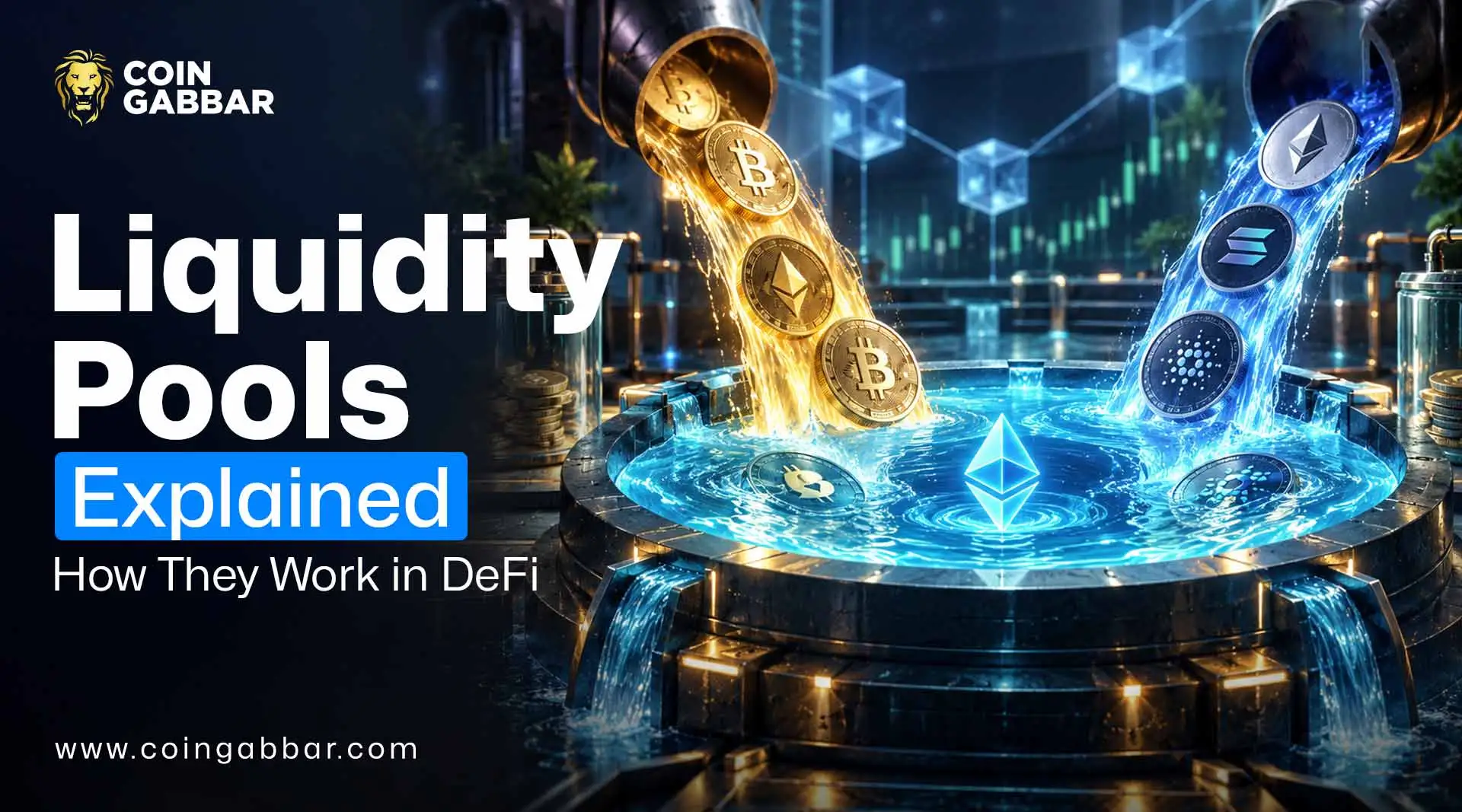
Every time someone swaps one crypto token for another on a decentralized exchange, something has to make that trade possible. There's no order book, no broker, and no company standing in the middle.
That's where liquidity pools come in. They're the reason decentralized exchanges can operate around the clock without needing a traditional buyer matched to every seller.
If you've ever wondered how a token swap actually gets priced, or why some DeFi platforms pay rewards just for depositing your crypto, this guide breaks it down in plain terms. We'll cover what a liquidity-pool is, how pricing works inside one, what liquidity providers earn, and the real risks worth knowing before you put any funds in.
What Is a Liquidity Pool?
A liquidity-pool is a shared pot of two tokens locked inside a smart contract. A smart contract is just code that runs automatically on a blockchain, without a person approving each step.
Anyone can deposit tokens into this pool. Traders then swap against that pool instead of waiting for another trader to appear.
Think of it like a vending machine stocked with two types of snacks. You don't need the owner standing there to buy one. The contract just runs the swap itself, following a formula baked into its code.
How Does a Liquidity Pool Work?
Picture a pool-holding two tokens, say Token A and Token B, sitting at roughly equal value. Someone comes along and buys Token A using Token B. Right away, the balance tilts. There's less Token A left in the pool, and more Token B.
That tilt is exactly what pushes the price. A small trade barely nudges it. A large one, relative to how big the pool is, can move it a lot. Traders call this slippage, and it's the main reason big orders often get broken up into smaller chunks instead of going through all at once.
So what decides how much the price should move? That comes down to a bit of logic baked into the contract, known as an automated market maker.
What Is an Automated Market Maker?
An automated market maker, or AMM, is the formula that decides token prices inside a pool. The most common version keeps the product of the two token quantities constant, a method usually written as x times y equals k.
In practice, that means prices adjust automatically as trades happen. Nobody sets the price by hand. The pool math does it, second by second.
This is different from a traditional exchange, where a live order book of buy and sell offers determines price. AMMs replace that order book with a self-adjusting pricing curve, which is what allows trading to continue even when few people are actively buying or selling at that moment.
Who Are Liquidity Providers and What Do They Earn?
Somebody has to fill these pools with tokens in the first place. That's the liquidity provider, or LP, and honestly the setup is simpler than the name suggests. Deposit your tokens, and in return you'll usually get LP tokens back, a kind of receipt proving how much of the pool belongs to you.
So why do it? Fees, mostly. Every swap that runs through the pool pays a small fee, and that fee gets shared out among the people who supplied the liquidity. Busier pool, bigger slice of fees to go around. It's a fairly straightforward trade: you put your tokens at risk, the pool pays you for the privilege of using them.
Just don't expect the same deal everywhere. One platform's 0.3% fee isn't another's, and bonus reward tokens sweeten some pools and not others. Pull up the actual fee schedule on whichever platform you're using before you assume anything.
What Is Impermanent Loss?
This is the part many new users skip past, and it shouldn't be skipped. Impermanent loss happens when the price ratio between the two pooled tokens changes after you deposit them.
Short version: say one of your two tokens jumps or drops hard in price compared to the other. Your pooled position can end up worth less than it would've been if you'd just left both tokens sitting untouched in a wallet.
Why call it "impermanent," then? Because that gap can close back up if prices swing back toward where they started. Nothing's locked in yet. But withdraw while the prices are still skewed, and that loss stops being theoretical. It's real money left on the table.
The wider the price gap between the two tokens over time, the bigger this effect tends to be. Pools pairing two highly volatile tokens generally carry more of this risk than pools pairing two similarly priced stable assets.
What Are the Main Risks to Consider?
Price swings between the two tokens aren't the only worry here. A few other things deserve a look before you put money in:
Smart contract risk: Even audited pools get exploited sometimes. One missed bug in the code, and funds can disappear fast.
Impermanent loss: Already walked through this above, but it's worth repeating since it quietly eats into, or wipes out, whatever fees you've earned.
Low liquidity pools: tend to swing harder on every single trade, so slippage bites anyone using them, buyer or provider.
Token risk: if either token in your pair crashes, so does the value of your position, fees earned or not.
Platform risk: A governance vote, a sudden fee change, or a team quietly stepping away from a project, any of these can reshape what a pool actually pays out.
None of this makes liquidity pools a bad idea outright. It just means that the advertised yield number is only half the story. The other half takes some digging on your own.
How Can You Start Providing Liquidity?
The screens will look different depending on where you're doing this, but the flow is roughly the same everywhere:
Connect a compatible wallet to whichever decentralized exchange or DeFi platform you're using.
Pick a token pair you already hold in roughly equal value, since most pools want both sides deposited together.
Confirm the deposit and pay whatever the network fee happens to be right then.
LP tokens land in your wallet, marking out your share of the pool.
After that, it's mostly watching how things perform and deciding when pulling out makes sense.
Before depositing, it helps to check a published audit report for the platform, review its official documentation on fee structure, and look at recent on-chain trading volume for the specific pool, since low volume usually means lower fee income.
What to Consider When Choosing a Liquidity Pool
The stronger signal for any liquidity pool is consistent trading volume relative to its size. A pool with steady volume tends to generate more reliable fee income than one riding a short-term spike.
The main concern for most first-time providers is underestimating impermanent loss. It's easy to focus on an advertised annual yield and overlook how a sharp price move between the two tokens can erase those gains.
The biggest unknown remains platform-specific: fee rates, reward token emissions, and governance decisions can all change. Reading a platform's own current terms, rather than relying on older articles or secondhand summaries, stays the safest approach.
Conclusion
Liquidity pools are what let decentralized exchanges function without a central order book. Users deposit token pairs, an automated market maker sets prices using pool ratios, and liquidity providers earn a share of trading fees in return.
What stands out is how much of this runs without human intervention, purely through smart contract logic. What remains uncertain, for any individual pool, is whether fee income will outweigh impermanent loss and platform-specific risks over time.
Before providing liquidity anywhere, check the platform's own fee schedule, audit status, and current pool volume directly on its official site.
Disclaimer
This article is for informational purposes only and does not constitute financial advice. Liquidity pools carry real risk, including impermanent loss and smart contract failure. Always do your own research before depositing funds.
Also read: