XDAO Expands to Solana and Embraces AI for Next-Gen DAO Governance

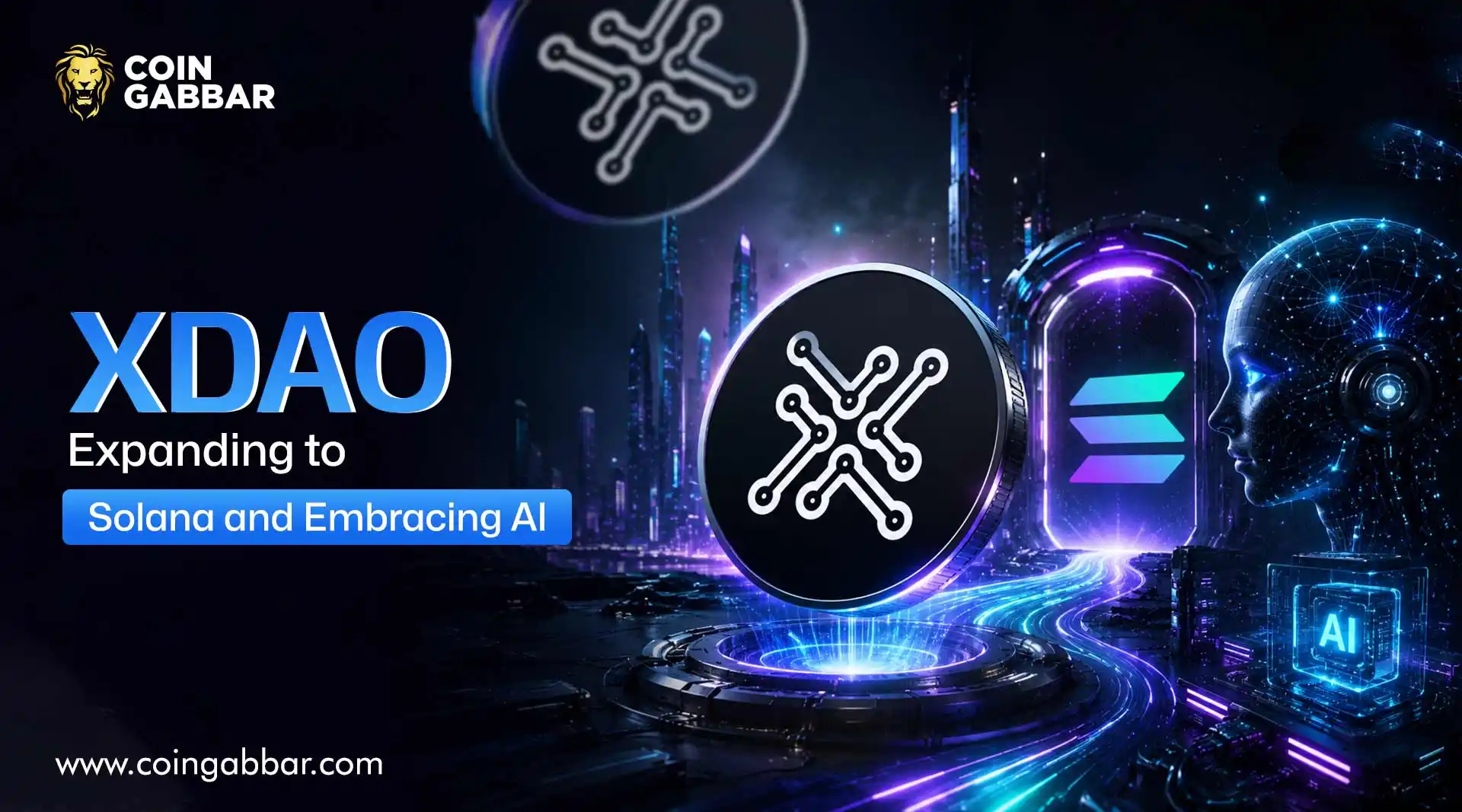
XDAO Expands to Solana as AI Bureaucrats Redefine DAO Governance
XDAO has been building in the DAO space since 2021. It started on BNB Chain, won a Binance Hackathon, and spent the following years expanding steadily. Today, the platform supports over 45 blockchains, has more than 32,000 organizations created on it, and has grown its user base into the millions. That kind of history makes a major announcement worth reading carefully.
The XDAO team recently shared a detailed community update. Two things sit at the center of it: a move to Solana and the building of a fully AI-native protocol. The team was direct about the scale of this shift. They called it a "completely new vision of what DAOs can be" not an upgrade, not an extension, but something built from scratch with a different goal in mind.
Why Solana
XDAO is building a product for fully legal DAOs in US jurisdictions, running on the Solana blockchain. That is a specific combination a specific chain, a specific market, and a specific legal context and it reflects a clear reading of where DAO adoption is actually happening.
The team explained their reasoning plainly. Solana is one of the fastest-growing blockchains with a strong developer community, and that community is heavily concentrated in the US. The US is also, by the team's own assessment, currently the most active market for DAOs. On top of that, the US has a well-developed legal framework that enables compliant cryptocurrency operations and governance. For an organization that wants to exist as a legitimate legal entity not just an on-chain address that legal infrastructure is the foundation everything else sits on.
This is not a standard cross-chain expansion. Most projects add a new network to reach more users or tap more liquidity. What XDAO is describing is a product built to operate inside a legal system. Incorporated, compliant, and governable under real-world law. That puts it in a different category from most DAO tooling built so far.
AI Bureaucrats: What They Actually Are
The AI direction in this announcement is where things get genuinely new. XDAO is developing what they call "AI bureaucrats" specialized agents designed to handle the operational side of running a DAO. Registration, paperwork, and the administrative tasks that currently require human time and often legal expertise. The goal is to remove that burden entirely.
But the team went further than just automating admin work. They described the ability to plug in AI as a "full-fledged manager" of your organization, operating within parameters you define. This is not a tool that helps draft a proposal or summarizes a document. It is AI with actual operational authority inside the organization a manager that governs and executes, not just assists bounded by rules the organization sets upfront.
The team used the phrase "truly autonomous governance" to describe what this enables. An organization that can function, make decisions, and carry out operations without needing constant human input at every step. Humans set the parameters. The AI works within them.
This is a real departure from how DAO governance has functioned until now. The standard model puts a human at every decision point someone drafts a proposal, members vote, someone executes the outcome. That works at small scale. As organizations grow and decision volume increases, it starts to break down. People running day-to-day operations get overwhelmed. Participation drops. Important decisions get delayed. AI bureaucrats address that problem directly.
What Changes About the DAO Model
Most DAO platforms have been built on one idea: replace centralized human authority with decentralized human authority. XDAO's new direction introduces something different decentralized AI authority, operating inside human-defined limits.
The difference matters. Decentralized human governance depends entirely on participation. In practice, participation in most DAOs has been low. When a small number of token holders show up to vote, the "decentralized" label gets harder to defend. AI governance does not have that weakness. It operates around the clock, does not get tired, and does not miss decisions because of competing priorities.
What XDAO is describing targets the part of DAO life that most participants find exhausting. The organizational values, the treasury strategy, the governance philosophy people care about those and want to stay in control of them. The paperwork, the compliance filings, the routine administrative overhead that is what slows organizations down and burns out the people responsible for it. Handing that layer to AI while keeping strategic decisions with the community is a logical division, and it is what XDAO is building toward.
The legal compliance angle makes this even more relevant. A US-based DAO maintaining active legal status faces a continuous administrative load regulatory reporting, governance documentation, filing requirements. AI bureaucrats that can manage that load make the difference between a DAO that can operate as a legal entity long-term and one that has legal status on paper but cannot sustain the overhead of keeping it.
Token and Airdrop: What the Team Said
The announcement also addressed the $DAO token and airdrop directly.
For community members who farmed tokens and created DAOs on TON: the team confirmed that no additional actions are required. Everything needed has already been done. The crowdfunding, vesting, and distribution modules on the platform are tools for organizations actively using XDAO to raise liquidity and manage finances. They are not requirements for airdrop qualification.
On timing, the team was measured. They are watching market conditions carefully and want to launch the token at the right time and in the right place when the foundation is solid enough. The team was clear that they want the $DAO token to carry real utility and lasting value, not ride a short-term wave of hype. No specific launch date was announced.
That approach building regardless of market conditions, waiting for the right moment is consistent with how XDAO has operated since 2021. It is a slower path. But it tends to produce more stable outcomes, and the team appears to understand that.
Where This Is All Headed
The picture from this announcement is of a project at a genuine turning point. Years of work across 45+ chains has built a platform with real usage and a large community. The Solana product and the AI-native protocol are the next layer not a continuation of what already exists, but something new built on top of it.
The team's own language makes that clear. "This isn't an upgrade to an old model." "A completely new vision of what DAOs can be." "We're not done — not even close."
For the DAO space more broadly, what XDAO is attempting matters beyond one project. If AI bureaucrats can genuinely absorb the administrative and compliance burden of running a legal DAO, the barrier to forming real, legally recognized decentralized organizations drops significantly. That is not just about making DAO creation easier. It is about making DAO operation sustainable at a level of seriousness that most teams today cannot maintain on their own.
Execution will determine whether the vision holds. But the direction is coherent, the reasoning is grounded, and the team has a track record that gives the announcement real weight.
Conclusion
XDAO’s move to Solana and its focus on AI-native governance signal a major evolution in the DAO ecosystem. By combining legal compliance, blockchain infrastructure, and autonomous AI agents, the platform aims to reduce operational complexity and make decentralized organizations more sustainable. While the success of this vision will depend on execution, XDAO’s established track record and growing ecosystem position it as a project to watch in the next phase of DAO development.
Disclaimer
This article is for informational purposes only and should not be considered financial or investment advice. Always conduct your own research before participating in any token event or using any blockchain platform.