Binance Tightens Crypto Transfer Rules for Indian Users in 2026


Binance Tightens Crypto Transfer Rules: What Indian Users Should Know
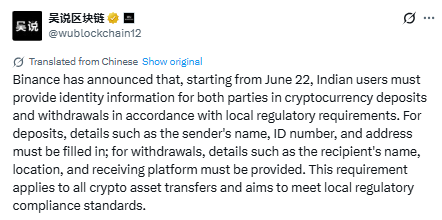
Binance Tightens Crypto Transfer Rules for Indian Users on June 22, 2026. Every crypto deposit and withdrawal on an Indian Binance account now requires complete identity information for both the sender and the receiver. No minimum amount. No exceptions.
Source: X Account
What Changed, Exactly?
For deposits, the sender must provide their full name, PAN card or national ID number, home address, and location. For withdrawals, users must submit the recipient's full name, city, country, and the receiving platform's name if one is involved.
Every transfer is covered, whether it is worth ₹200 or ₹20 lakh.
Spot trading inside Binance is untouched. Buying and selling within the platform works exactly as before. These rules only apply when money actually moves in through a deposit or out through a withdrawal.
Why Did Binance Do This?
Binance is not acting on its own here. India has adopted the FATF Travel Rule, an international anti-money laundering standard that requires crypto exchanges to collect and pass along sender and receiver identity details with every transaction.
In India, this falls under the Prevention of Money Laundering Act and is overseen by the Financial Intelligence Unit India (FIU-IND). Registered platforms now carry the same KYC and AML responsibilities as banks.
What makes this stricter than most banking rules is the lack of any threshold. Banks typically trigger AML checks above a certain transaction value. Binance's new requirement applies to every transfer, no matter how small. Every transaction must link back to a real, verified person.
What Does This Mean for Regular Users?
If you mostly trade within Binance and rarely send crypto elsewhere, your routine will barely change. But if you regularly send crypto to external wallets, receive funds from other exchanges, or transfer tokens to someone else the process is now more involved.
Collecting a counterparty's name, national ID, and address before each transfer is unfamiliar for most users. Peer-to-peer transfers will feel this the most. Many people on the receiving end will not know what details to share or may not want to share them at all.
For businesses handling payments or managing treasury in digital assets, this is no longer optional bookkeeping. Documenting counterparty information for every single transfer is now a legal compliance requirement.
The Bigger Picture
This fits a pattern India has been building since 2022. First came the 30 percent tax on gains and the 1 percent TDS on transactions. Then came the mandatory FIU-IND registration for exchanges. Platforms that ignored it were blocked.
The Travel Rule is the next brick in that wall. India is not treating crypto as a special category with looser rules anymore. It is being brought fully in line with the transparency standards that banks and payment processors have followed for years.
Other FIU-IND registered exchanges are expected to introduce the same requirements soon. Completely anonymous transfers through any regulated Indian platform are effectively over.
Three Things to Do Right Now
First, check that your Binance KYC is current PAN, address, and contact details should all be up to date.
Second, before your next deposit or withdrawal, have the other party's details ready. For deposits that means the sender's name, ID, and address. For withdrawals that means the recipient's name, city, country, and platform.
Third, if you handle business transactions, build a simple process for collecting counterparty information the same way you would for a bank transfer. Doing it consistently from the start is far easier than going back to fix records later.
Conclusion
The direction India is taking with crypto regulation is no longer ambiguous. Binance's move makes it official if you use a regulated exchange in India, your transfers will be tracked the same way your bank transactions are. The sooner you adjust, the smoother it gets.
Disclaimer
This article is for informational purposes only and should not be considered financial, legal, or investment advice. Crypto regulations may change, and users should verify requirements directly with Binance and relevant authorities.