CLARITY Act News Today: Will New Crypto Bill Finally Pass Senate Vote?

CLARITY Act News: Ethics Rules, BRCA, Stablecoin Yield and Enforcement
Senate Republicans just released a 616-page rewrite of America's biggest crypto bill, and it landed hours before a possible floor vote.
Senate Republicans released an updated draft of the CLARITY Act on July 22, 2026, following stakeholder briefing calls earlier that day. Crypto journalist Eleanor Terrett first reported the update, noting the new text folds together prior committee language on the Blockchain Regulatory Certainty Act (BRCA), stablecoin yields, and self-custody, while adding fresh ethics and enforcement provisions.
If you trade on a US exchange, or watch stablecoin policy, this draft could reshape the rules you operate under. Democrats say they haven't even seen the full text yet — here's what's actually inside, and why one section could blow up the timeline.
At a Glance: Latest CLARITY Act Update
-
New ethics package negotiated between the White House and GOP Senators Cynthia Lummis and Bernie Moreno
-
DOJ given civil enforcement authority, including power to sue exchanges
-
BRCA, Keep Your Coins Act, and stablecoin yield rules carried over unchanged
-
New law enforcement funding, training, and a nation-state cyber threat center added
-
Bankruptcy protections reaffirmed for customer digital assets
-
Coinbase CEO Brian Armstrong says the bill is ready for a full Senate floor vote
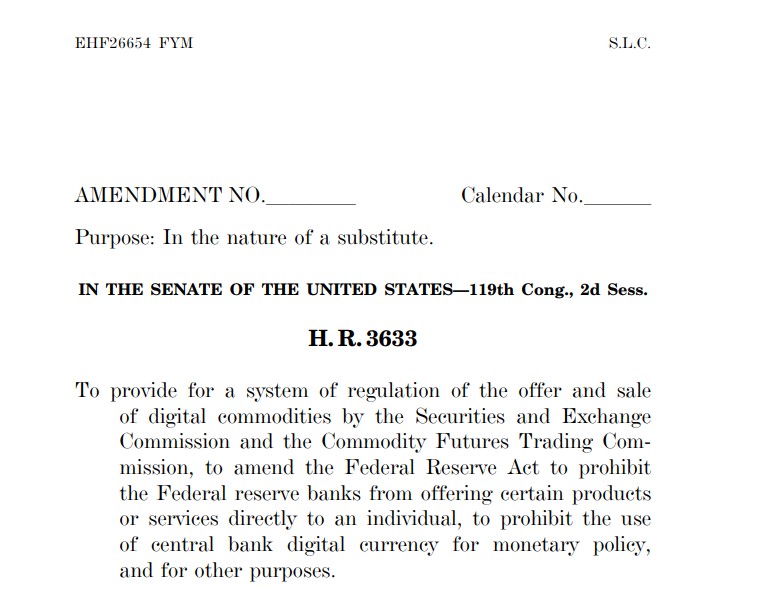
Source: Official Senate Gov Document
What Changed in the New CLARITY Act Draft?
New Ethics Provisions Target Crypto Activities of Government Officials
The updated ethics section bars the president, vice president, members of Congress, federal judges, and their spouses from issuing or sponsoring paid digital assets while in office. This restriction runs through January 20, 2029, and marks one of the most direct attempts yet to separate elected office from personal ventures.
DOJ Gains Civil Enforcement Powers Under Updated Ethics Framework
The Department of Justice would receive new civil enforcement authority, including the ability to pursue exchanges that knowingly list prohibited tokens. Democrats have pushed back, arguing state attorneys general should share enforcement duties rather than leaving it solely to the DOJ — a disagreement that could still reshape this section before any vote.
Crypto Holdings Disclosure and Blind Trust Requirements Added
Covered officials must now either sell their crypto holdings and related company investments or place them into a blind trust they don't control. Any crypto sale above $1,000 must be disclosed, and the bill directs the Government Accountability Office to study remaining ethics gaps.
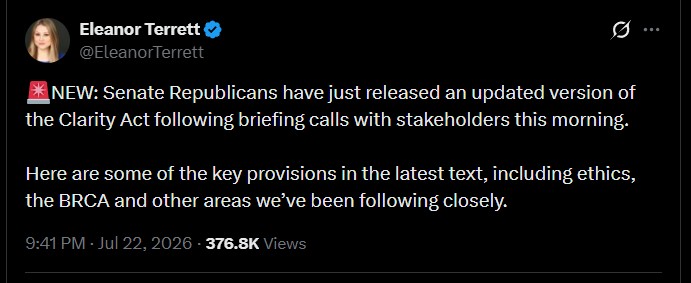
Source: Eleanor Terrett X
CLARITY Act Keeps Blockchain Regulatory Certainty Act (BRCA) Protections
Non-Custodial Developers and Blockchain Infrastructure Providers Get Clarity. The BRCA language is unchanged from the version cleared by the Senate Banking Committee in May.
It confirms that developers and infrastructure providers aren't automatically classified as money transmitters just for building or maintaining decentralized networks. The Lummis-Grassley amendment stays intact too, preserving criminal liability for anyone knowingly enabling illicit transactions.
Keep Your Coins Act Preserves Crypto Self-Custody Rights. The Keep Your Coins Law remains part of the package, protecting individuals' right to self-custody their own digital assets without added restrictions.
Stablecoin Yield Rules Remain Unchanged in Latest CLARITY Act Version
Activity-Based Rewards Allowed While Interest Payments Face Restrictions. Despite speculation that Senator Thom Tillis might add "circuit breaker" language favoring banks, this section stayed exactly as it cleared committee.
Companies still can't pay interest on idle stablecoin balances, but activity-based rewards tied to transactions or staking remain allowed, as long as they don't functionally resemble bank interest.
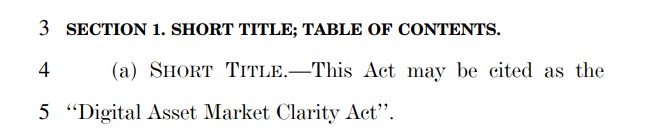
Source: Senate released 616-page document
New Crypto Law Enforcement Measures Added to CLARITY Act
Funding, Training and Cybercrime Response Programs Included. A brand-new section boosts funding for state and local investigations and blockchain analytics tools, creates prosecutor training programs, and establishes a dedicated cyber center targeting nation-state actors such as North Korea and Iran. A public-private task force would also coordinate anti-fraud efforts.
Stablecoin Issuers May Face Freeze, Seize and Reissue Requirements. Stablecoin issuers would be required to comply with lawful orders to freeze, seize, burn, and reissue tokens when directed.
CLARITY Act Adds Customer Asset Protection Rules for Exchange Bankruptcy
Digital Assets Could Receive Stronger Protection During Custodian Failures. The bill reaffirms that customer digital assets should get treatment similar to traditional financial assets during an exchange or custodian bankruptcy, staying out of the company's bankruptcy estate. Supporters say this could help prevent a repeat of the FTX collapse.
Coinbase CEO Brian Armstrong Supports Full Senate Vote on CLARITY Act
Armstrong Highlights Consumer Protection and US Leadership. He said the bill is ready for a full Senate floor vote, describing it as a genuine bipartisan compromise built over thousands of negotiating hours.
He pointed to 70% of American voters saying the U.S. should have already passed comprehensive crypto legislation, and credited Stand With Crypto members for sending roughly 950,000 contact requests to lawmakers.
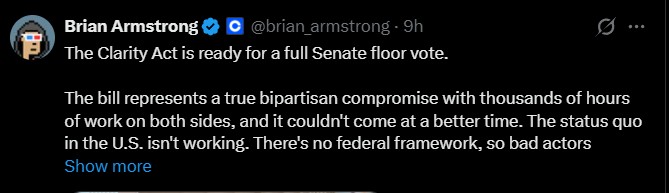
Source: Coinbase CEO Brian X
a16z Partner Chris Dixon Calls for CLARITY Act Approval
US Cryptocurrency Innovation Could Benefit From Clear Federal Regulations. Dixon argued that passing the bill would let the US lead the next wave of internet-era innovation, similar to its early dominance of the commercial internet. He warned that continued delay risks pushing crypto rule-making leadership to other countries.
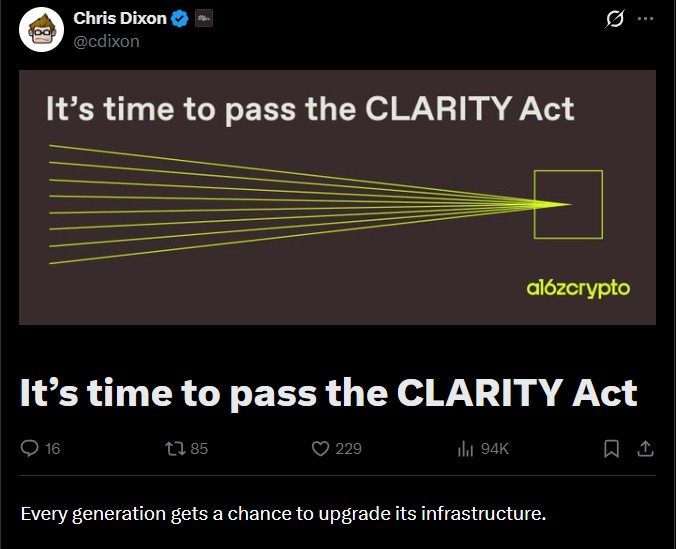
Source: Chris Dixon X
What Happens Next? CLARITY Act Timeline
The ethics section remains the biggest sticking point. Democrats say they still haven't reviewed the full text and object to DOJ-only enforcement. Bipartisan talks are expected in the coming days before any floor vote is scheduled.
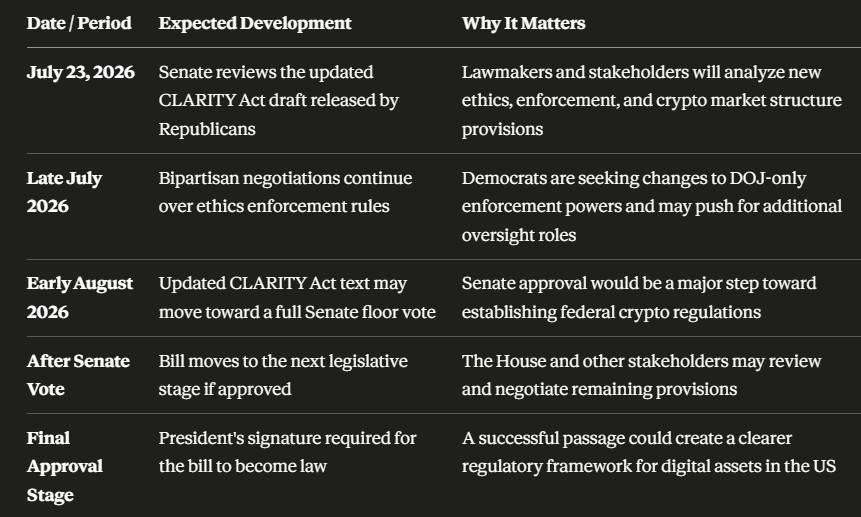
CLARITY Act Update: Key Takeaways for Crypto Investors
The update introduces major changes that could impact the US market, including stricter ethics rules, clearer regulatory responsibilities, stablecoin guidelines, and stronger enforcement measures.
For investors, the bill may bring greater transparency, improved consumer protections, and a more defined legal framework, but ongoing Senate negotiations and potential amendments remain important factors to watch.
Conclusion
The updated CLARITY Act news today signals real momentum toward a US crypto market structure law, but the ethics and enforcement fight isn't settled. Whether DOJ-only enforcement survives bipartisan negotiation could determine how fast this bill actually reaches the Senate floor.
Disclaimer: This article is for informational purposes only and should not be considered financial, investment, legal, or regulatory advice. Cryptocurrency markets and regulations are highly volatile and may change without notice. Readers should conduct their own research and consult with qualified professionals before making any investment or financial decisions.
Also read:







