CLARITY Act News: Grayscale and Strategy Back Bill As Senate Vote Near


CLARITY Act News Today: Trump Rules, Grayscale, Strategy, Senate Vote
The effort to pass the U.S. digital asset market structure bill has entered a crucial stage as lawmakers work against the Senate's August recess. The latest CLARITY Act news centers on updated ethics provisions, continued bipartisan negotiations, and growing calls from major crypto firms for Senate action. While no floor vote has been officially scheduled, industry leaders warn that delaying the legislation could postpone long-awaited regulatory clarity for the U.S. digital asset market.
The next few days matter because once the Senate breaks for recess, momentum on major legislation often stalls for weeks. Senator Cynthia Lummis has been vocal in defending the bill's updated ethics framework, while some Democratic lawmakers argue the safeguards don't go far enough. Meanwhile, companies like Grayscale and Strategy are publicly urging leadership to schedule a vote before time runs out.
At a Glance
Item | Updated |
Ethics Rules | According to Senator Cynthia Lummis, the updated ethics rules would require President Trump to divest certain digital asset holdings or place them into a blind trust. |
Coverage | President, Vice President, Congress, Federal Judiciary |
Senates Status | Grayscale and Strategy urge Senate vote before August recess |
Supporters | Grayscale, Strategy, Sen. Cynthia Lummis |
Opponents | Some Senate Democrats |
Key Provisions | SEC/CFTC jurisdiction, investor protection, developer safeguards |
Next Milestone | Senators consideration before August recess |
Senator Cynthia Lummis Defends New Ethics Rules in CLARITY Act
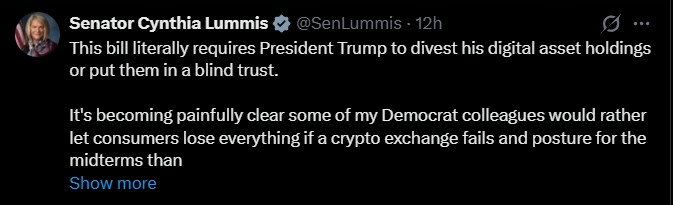
According to Senator Cynthia Lummis, the latest Senate draft includes ethics provisions that would require President Donald Trump to divest certain digital asset holdings or place them into a blind trust. Lummis described the proposal as one of the broadest ethics frameworks included in crypto legislation, although the exact legal language remains subject to Senate negotiations.
Lummis pushed back against Democratic lawmakers who she said were slowing the bill's progress over conflict-of-interest concerns tied to Trump's crypto ventures.
According to her comments, some Democrats appear more focused on messaging ahead of the midterms than on passing legislation that includes what she described as unprecedented ethics coverage across multiple branches of government.
She framed the delay as risky for everyday crypto users, arguing that stalling market structure legislation leaves consumers exposed if an exchange were to fail.
Source: SenLummis X Post
Why Some Democrats Still Oppose the Updated US Crypto Bill
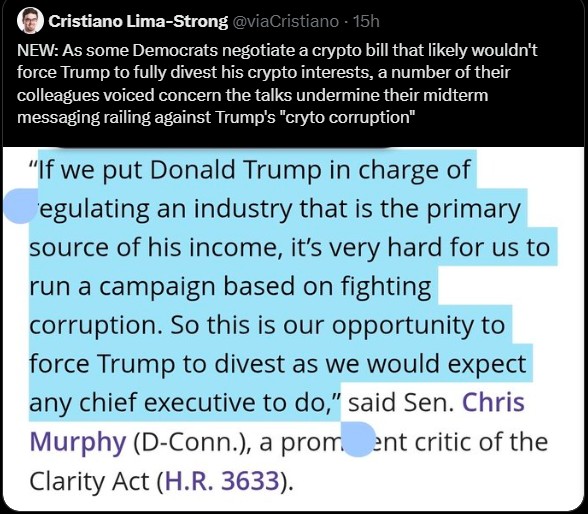
Not everyone in the Senate is convinced the new ethics language solves the underlying problem. Some Democratic senators maintain that even with divestment or blind-trust requirements, the existing ethical provisions in the bill are not strong enough to fully eliminate conflicts of interest stemming from Trump's crypto business dealings.
Reporting also suggests that as Democratic negotiators work through the bill's details, some within the party worry that a version that doesn't force complete divestment could undercut their own political messaging heading into the midterms, particularly criticism aimed at what they've called crypto-related corruption.
This tension between negotiating a workable bipartisan bill and maintaining a consistent political narrative appears to be one of the central sticking points slowing final passage.
Source: Cristiano Lima-Strong X Post
Grayscale Urges Senate Leaders to Hold CLARITY Act Vote
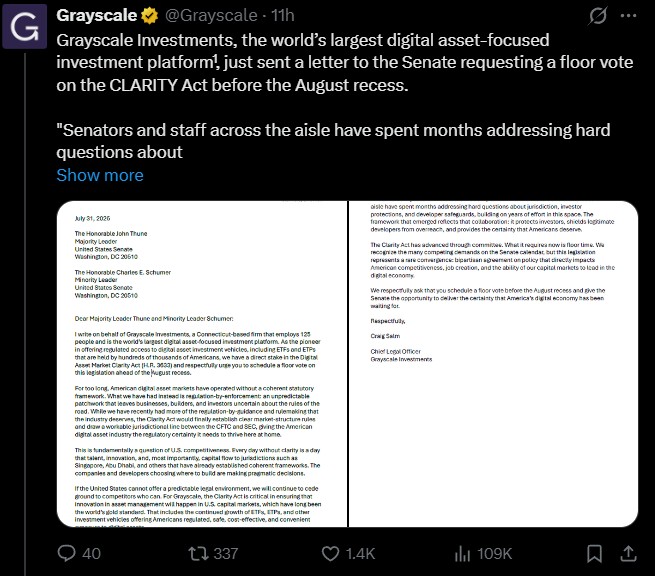
Adding pressure to the timeline, digital asset manager Grayscale Investments sent a formal letter to Senate Majority Leader John Thune and Minority Leader Chuck Schumer, requesting a full Senate floor vote on the Act before lawmakers leave for the August recess.
In the letter, Grayscale noted that bipartisan negotiations have continued for months, working through complex issues including regulatory jurisdiction, investor protection standards, and safeguards for developers.
The firm argued that the current draft strikes a balance, protecting both investors and compliant builders while finally giving the U.S. digital asset industry the regulatory clarity it has long lacked. Grayscale's intervention reflects growing impatience from major industry players who see the current legislative window as a rare opportunity.
Source: Grayscale Investments X Post
Strategy Joins Industry Leaders in Supporting the CLARITY Act
On August 1, 2026, Bitcoin treasury company Strategy issued its own statement backing the Act. The firm said a clear and durable market structure framework would help accelerate development across the digital asset industry and encourage wider adoption by U.S. institutions.
Strategy's public support adds to a growing list of companies signaling that regulatory clarity, not further delay, is what the industry needs most right now. For institutional players holding large digital asset positions, a stable legal framework reduces uncertainty and could open the door to broader participation from traditional finance. Apart from these, 5 more firms support the Act to come into existence.

Source: Strategy X Post
Key Changes in the Latest Version of the CLARITY Act
The updated bill includes several notable shifts. Ethics provisions have been expanded to cover top government officials, not just the president. Regulatory jurisdiction between the SEC and CFTC remains a central focus, aiming to clarify which agency oversees which digital assets.
Investor protection measures and developer safeguards have also been strengthened, with the goal of giving both retail users and builders more confidence in operating within U.S. markets. Overall, the bill aims to create a functional compliance framework rather than leaving the industry in regulatory limbo.
What If the CLARITY Act Is Delayed Until September?
If the Senate does not hold a final vote before the August recess, the CLARITY Act is expected to return to the legislative agenda when Congress reconvenes in September.
Lawmakers could continue bipartisan negotiations, debate additional amendments, and work toward securing the 60 votes needed for passage. A delay would also postpone much-needed regulatory clarity for the U.S. crypto industry, leaving digital asset firms and investors waiting for a finalized market structure framework.
Timeline: CLARITY Act Latest Events
-
July 31, 2026: Sen. Cynthia Lummis says the updated bill requires Trump to divest crypto holdings or use a blind trust.
-
July 31, 2026: Lummis criticizes Democratic lawmakers for delaying the legislation despite new ethics standards.
-
July 31, 2026: Grayscale sends a letter to Senate leaders urging a full Senate vote before the August recess.
-
August 1, 2026: Strategy publicly announces support, citing benefits for institutional digital asset adoption.
-
Next Milestone: Senate expected to decide whether to advance before the August recess.
What Happens Next?
The leaders must first decide whether to bring the amended CLARITY Act to the floor before the August recess. If senators approve an amended version, the House and Senate must agree on identical legislative text before the bill can be sent to the president for signature. If lawmakers fail to act before recess, negotiations could continue later in the year, potentially delaying regulatory clarity for the U.S. digital asset industry.
Conclusion
The CLARITY Act has reached a pivotal moment, with ethics reforms, industry pressure, and political disagreement all colliding just before the Senate recess. Whether lawmakers act now or let the bill slip past the deadline will shape the near-term future of U.S. crypto regulation.
Disclaimer: This article is for informational purposes only and does not constitute financial, legal, or investment advice. Cryptocurrency markets are volatile and involve significant risk. Always conduct your own research and consult a qualified professional before making financial decisions.









