DTCC Tokenization Service Starts Trading Real Wall Street Assets

DTCC Tokenization Service Highlights Growing RWA Ecosystem Demand 2026
The DTCC tokenization service launches today, and it isn't running on fake test assets. On July 15, 2026, the Depository Trust and Clearing Corporation confirmed that limited production trades will go live in hours on real securities, including Russell 1000 stocks, major ETFs, and Treasury bonds.

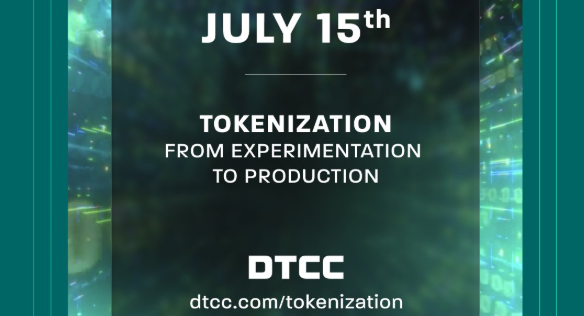
A full DTCC tokenization platform launch follows in October 2026.
What Is the DTCC Tokenization Service and How Does It Really Work
DTC, the DTCC subsidiary that custodies more than $114 trillion in securities, already holds these assets. The service simply creates a digital token that mirrors ownership already recorded in DTC's regulated system.
Nothing new gets minted out of nowhere here. The legal ownership record stays inside the depository, and the token carries the same rights and protections as the paper-based version.
The company operates this pilot under a No-Action Letter granted by the Securities and Exchange Commission in December 2025. That letter gives DTC a three-year window to run the program for a defined set of instruments.
Source: DTCC Official Press Release
Which Securities Qualify for the New DTCC Tokenized Asset Service Pilot
The DTC tokenization service eligible list stays narrow but covers a huge slice of daily trading volume:
Constituents of the Russell 1000, covering the 1,000 largest US public companies by market cap
ETFs that track major indices
US Treasury bills, notes, and bonds
Sticking to these liquid instruments lets DTCC stress-test settlement without touching exotic or illiquid markets.
ComposerX Platform Powers DTCC Tokenization Service Trades
DTCC built the service on its ComposerX platform suite. ComposerX handles minting, management, and settlement of tokenized securities, while legal ownership stays anchored at DTC, keeping existing investor protections in place.
Multi-chain expansion is already mapped out. The company selected Chainlink to:
power its Collateral AppChain,
targeting a fourth-quarter 2026 launch for pricing,
valuation, margin, and settlement of tokenized collateral.
Separately, the firm named Stellar as its first public blockchain partner, with tokenized assets expected there in the first half of 2027.
Over 50 Wall Street Firms Back the DTCC Tokenized Asset Service Plan
More than 50 firms sit inside DTCC's Industry Working Group, spanning
banks like Bank of America, Citi, Goldman Sachs, and J.P. Morgan,
trading venues like Nasdaq and Robinhood,
asset managers like BlackRock and Franklin Templeton, and
digital asset firms like Circle and Ripple.
The firm’s President and CEO Frank La Salla called the effort a bridge between TradFi and DeFi. Clearing and Securities Services lead Brian Steele said the design targets systemic scale where deep liquidity already sits.
Tokenization Market 2026: Wall Street Now Joining the RWA Race
The real-world asset tokenization market has grown fast, reaching somewhere between $26 billion in the first half of 2026, roughly 5 to 10 times its size back in 2022. Bonds alone, including Tokenized Treasuries, account for more than $15 billion of that total, alongside private credit and funds like BlackRock's BUIDL.
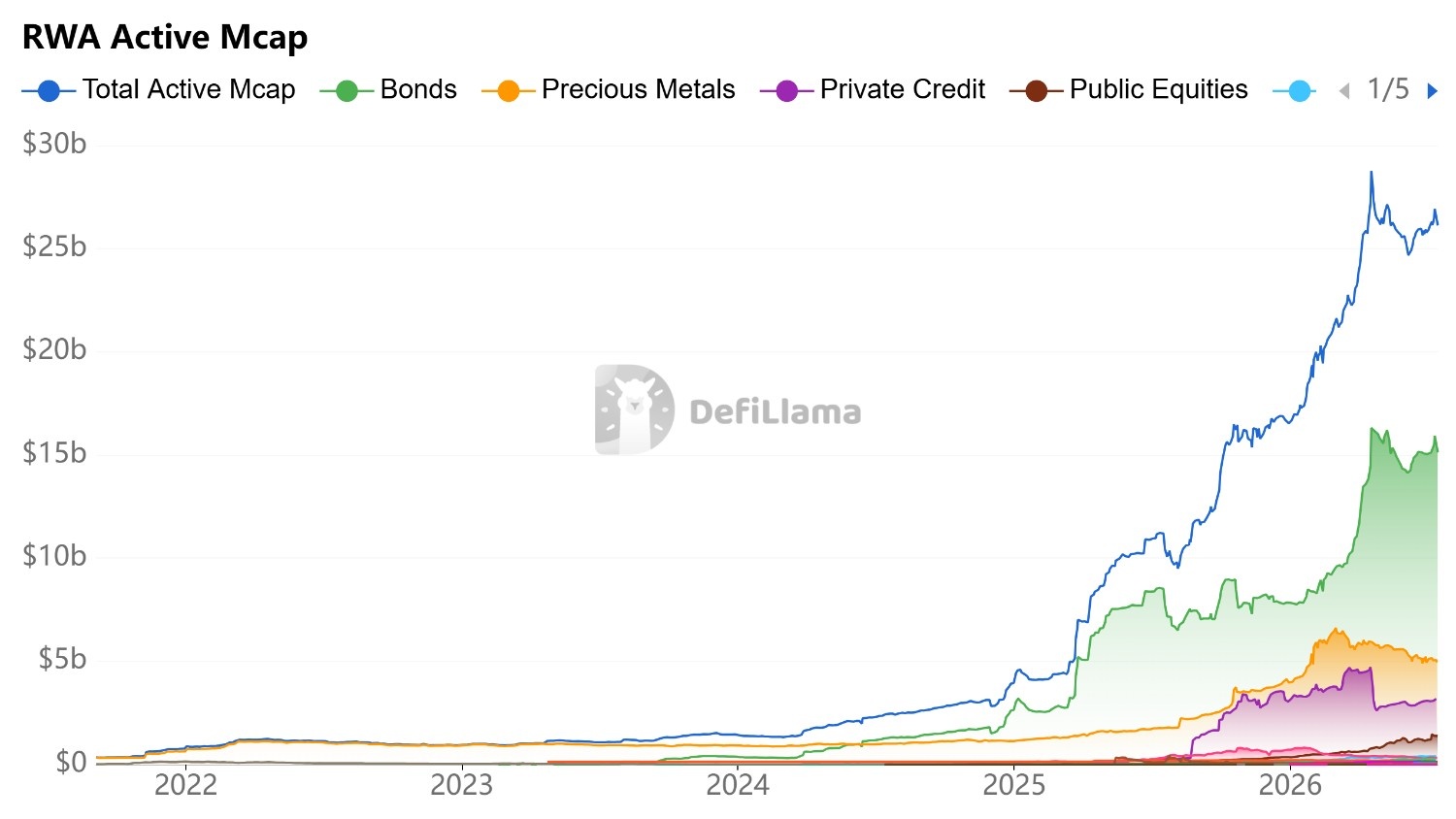
Source: DefiLlama Official
This growth effect is clear on adoption now. Many of the world’s largest financial institutions are now expanding their tokenized securities initiatives.
Nasdaq is building a blockchain-based share issuance framework with Kraken's parent company Payward for a 2027 launch. Intercontinental Exchange and NYSE work with OKX on tokenized stock trading.
Asset managers and banks already active in DTC's working group are also moving on their own. BlackRock, Franklin Templeton, and J.P. Morgan have each launched their own tokenized funds.
Platforms like Securitize, which has reached $5 billion in assets under management, along with Ondo Finance and Circle, focus squarely on real-world asset tokenizations.
Traditional custodians like State Street and BNY, plus crypto-native firms like Ripple, keep integrating deeper into this space.
Similar tokenization pushes are also taking shape in Europe through the ECB and DSB, along with parallel initiatives across Asia, pointing to a broader industry-wide shift toward on-chain capital markets.
What’s Next for the DTCC Asset Tokenization System: The October Launch
July's limited trades test settlement, custody, and reconciliation on real assets. October expands participation and volume once any integration issues from the pilot get resolved, following what market structure experts call a deliberate crawl, walk, run sequence.
DTCC's edge stays structural in this crowded field. Because it already clears and custodies most US equity activity, its tokenization touches the underlying assets directly, rather than adding just another trading layer on top of markets that already exist.
Disclaimer: This article is for informational purposes only and does not constitute financial or investment advice. Crypto markets carry significant risk. Always do your own research before making any investment decisions.
Also read:









