Little Pepe Missed Its April 30 Launch, and Investors Want Answers


Little Pepe raised $28.19 million from real people. It sold 16.98 billion tokens across 13 presale stages. It built a community of over 222,000 participants.
Then it set April 30, 2026, as its official launch date, confirmed on its own X account and presale dashboard.
April 30 came. The launch did not.
Twenty-five days later, no major exchange has gone public with a confirmed LILPEPE listing. No new launch date exists.
The team has not named a single exchange partner by name. And the questions from the community are getting harder to ignore.
Here is everything that is verified, everything that is missing, and what investors should be watching right now.
The Presale Numbers Are Real. The Launch Is Not Yet.
Start with what actually happened. The Little Pepe presale launched on June 10, 2025, at $0.001 per token. It moved through 13 stages, with each one selling faster than the last.
The current Stage 13 price is $0.0022, with the next stage confirmed at $0.0023. The confirmed listing price is $0.003, giving Stage 13 buyers a 36% paper gain the moment real trading opens.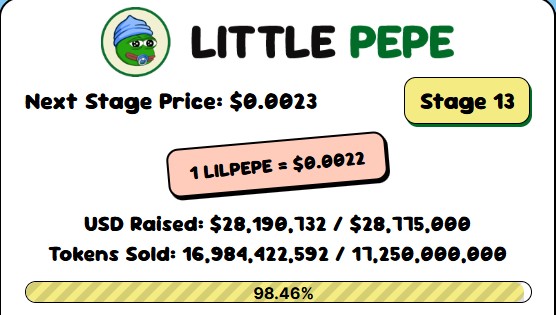
The CertiK smart contract audit returned a score of 95.49 out of 100 with no critical vulnerabilities. CoinMarketCap listed the project during the presale phase. These are not small things. Most presale tokens never reach either milestone.
But a strong presale and a clean audit do not automatically mean a clean launch. The gap between what was promised and what has been delivered so far is where this story gets complicated.
What the Team Has Said and What It Has Not
After missing the April 30 date, the team released a statement saying several exchanges had already approved LILPEPE, but a small number of larger platforms were still completing due diligence.
That process typically involves smart contract review, team identity verification, and legal compliance checks. The team chose to hold back rather than list only on smaller platforms immediately.
That explanation is reasonable. Holding for a stronger exchange rather than rushing onto a low-volume platform is a legitimate strategy.
What the team has not said is which exchanges approved the token, what the new timeline looks like, or when investors should expect any confirmed announcement.
That silence is harder to explain, and it is the reason community trust has started to slip.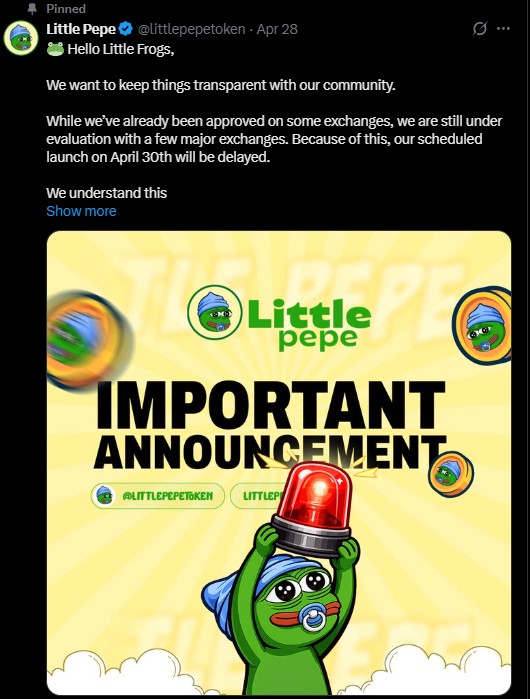
A Data Problem Nobody Has Officially Fixed
One of the most important unresolved issues right now has nothing to do with the delay itself.
CoinMarketCap currently shows LILPEPE with a circulating supply of 100 billion tokens. The project's own vesting documentation states that only 20 billion tokens enter circulation at the Token Generation Event.
That is a five times discrepancy between what the world's most-used crypto data tracker shows and what the project's official documents say.
This matters for two reasons. First, every market cap figure circulating online is inflated five times over because of this mismatch. Second, exchange screening tools check exactly this kind of data inconsistency before approving a listing. It is very possible that this discrepancy is one reason Tier-1 platforms are taking longer than expected to confirm. The team has not addressed this publicly as of today.
The Whitepaper Deadline Was Also Missed
The listing delay is not the first deadline this project has missed. The original whitepaper set a Layer 2 mainnet launch for Q1 2026. That date passed without any public update from the team.
No testnet announcement followed. No GitHub activity was shared publicly. No live demonstration of the chain was offered to investors.
The entire investment case for LILPEPE rests on the Layer 2 chain being real and functional. Without it, the token is a meme coin with a good story.
With it, the token has genuine utility in a market that genuinely needs a dedicated meme trading infrastructure.
Investors have every right to ask for proof that the technology exists and is progressing.
What Investors Are Locked Into Right Now
Anyone who bought in the presale needs to understand the vesting structure clearly. There is a zero percent release at the Token Generation Event, followed by a three-month cliff, then a five percent monthly release over 20 months.
In plain terms, no presale buyer can sell a single token for at least 90 days after the listing goes live.
This actually reduces day-one sell pressure, which is good for price stability at launch. But it also means over $28 million in investor capital is sitting locked, with no liquid exit available, no confirmed trading market, and no date on the calendar.
One additional risk worth flagging. A fake LILPEPE token on the Solana network already collapsed on OKX DEX. The Little Pepe team issued a warning about it on their own website. The real LILPEPE contract address on Ethereum is 0xa2209a2b7cdb0a15457322199fe45bdbad72c48f. Verify the address before interacting with anything claiming to be Little Pepe.
Where Things Stand Today
Little Pepe is not a collapsed project. The presale ran cleanly. The audit is legitimate. The community is still active. And the deliberate choice to hold back from smaller exchanges suggests the team believes a significant listing is within reach.
But two missed deadlines without a detailed public explanation is a pattern that matters. The Layer 2 mainnet was due in Q1 2026. The token listing was due April 30. Both passed without verified delivery or a transparent update.
Five Things Little Pepe Owes Its Investors Right Now
The community has waited long enough. Here are the five answers Little Pepe must give its investors to earn back their trust.
Name the exchange. The team needs to do more than hint at it or say approvals are coming. Name it, show the proof, and give a date that means something. The community has been patient. Patience has a limit.
Set a new date. April 30 is gone, and everyone knows it. A new launch date needs to go on the record, one that the team is publicly committed to and willing to be held accountable for
Not a rumor. Not a Telegram estimate. A date with the team's name behind it.
Fix the CoinMarketCap number. The tracker shows 100 billion tokens in circulation. The project's own documents say 20 billion at launch. That is a five times difference, and every market cap figure online is built on that wrong number right now.
Exchange screening tools check exactly this kind of data. It may already be slowing the listing process down.
Show the Layer 2 chain is real. The whitepaper promised a mainnet launch in Q1 2026. That deadline passed without a single public update. No testnet link. No GitHub activity shared openly. No developer demo.
A testnet, a commit, anything an outside person can independently verify. The Layer 2 chain is not a bonus feature. It is the entire reason people put money into this project.
Answer the GoPlus flag. An independent security scan found a function in the smart contract that allows the contract creator to disable token sales. That finding has no public response from the team. No explanation of what triggers it.
No confirmation that it will never be used. Over $28 million of investor money is sitting in a locked presale right now. That silence is not acceptable. It needs a direct answer.
Little Pepe raised the money. It built the community. The next move is entirely on the team.
This article is for informational purposes only and does not constitute financial or investment advice. Always conduct your own research before making any investment decision in cryptocurrency markets.







