US Trump-Iran War Update: Peace Deal Signed, Strait of Hormuz Reopens

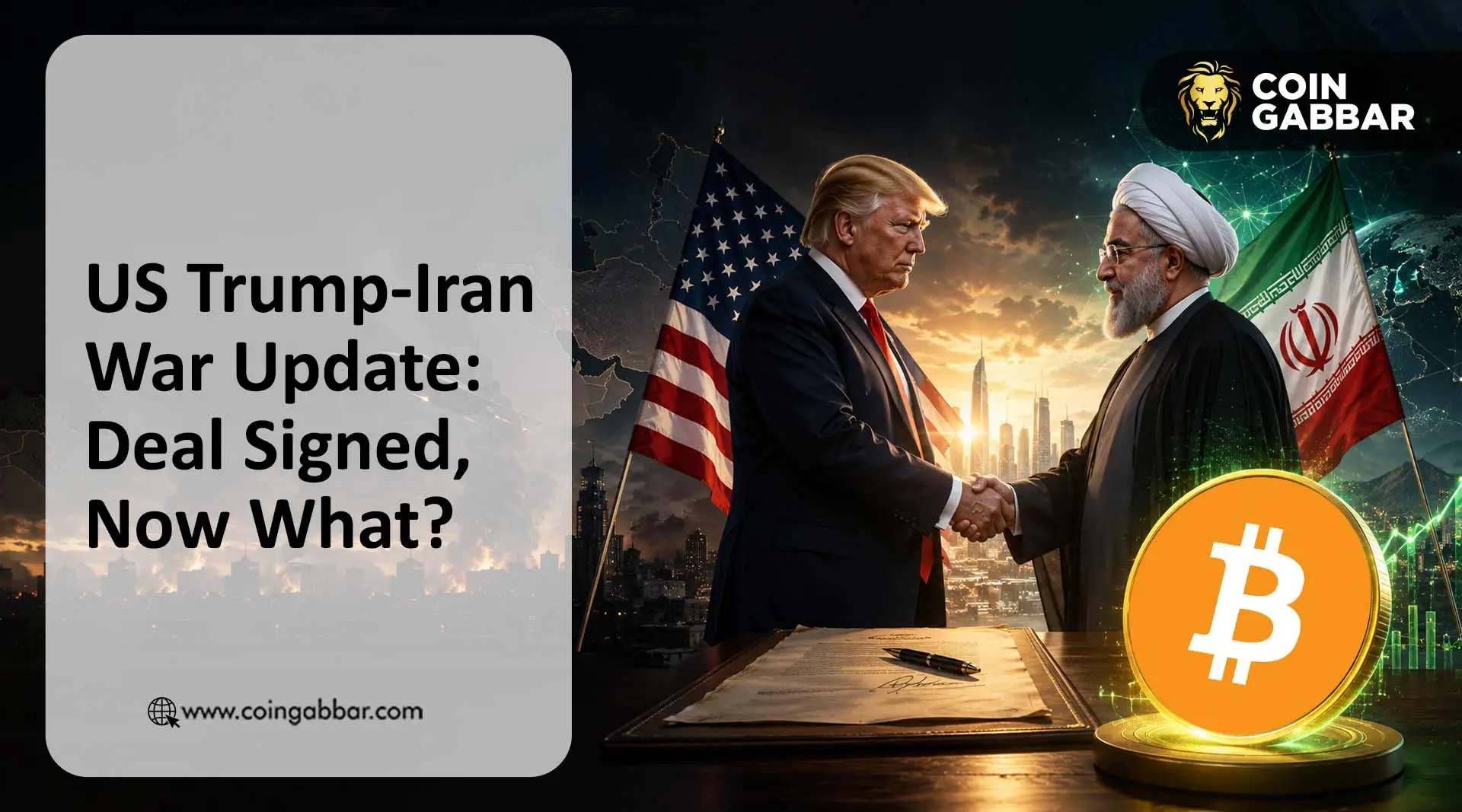
Oil Price Drops 4% in Hours After US Trump-Iran Deal Signed and Agreed
U.S. crude oil slid more than 4% to near $80 a barrel within hours of one social media post from Pakistan's prime minister. If you're trading anything tied to oil, inflation expectations, or risk sentiment, a move that size before lunch is the kind of signal you don't want to read about a day late.
But the headline everyone's sharing — "war over" — skips the one date that actually decides whether this holds: June 19. Here's what's really on the table.
What Happened in This US-Iran War Update
On June 14, the United States and Iran announced they had reached a framework agreement to end nearly four months of fighting that began on February 28, when U.S.-Israeli strikes killed Iran's Supreme Leader and hit military and government sites across the country.
President Trump confirmed the agreement on Truth Social, authorizing the reopening of the Strait of Hormuz and the removal of the U.S. naval blockade. Pakistani Prime Minister Shehbaz Sharif, who mediated the talks, announced the deal separately just minutes earlier.
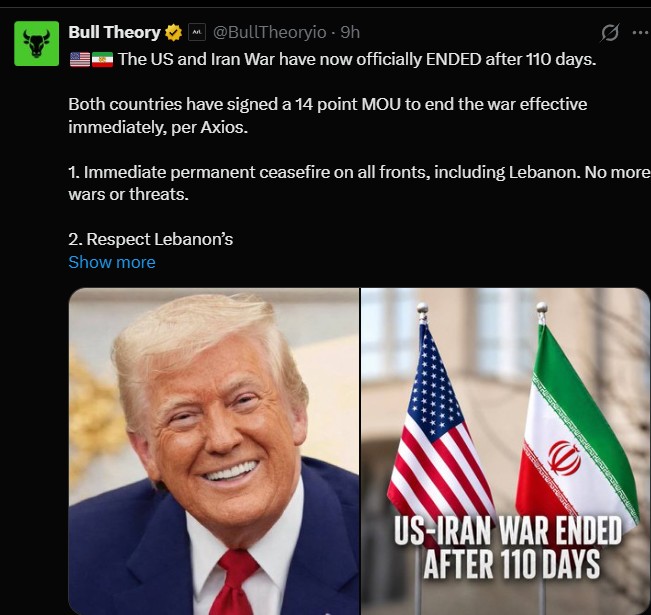
Iranian state media described the document as a roughly 14-point memorandum of understanding. It is an interim framework, not a signed final treaty — and that distinction matters for anyone trying to price this into a trade. These are 14 key points of the reported US-Iran Islamabad MoU:
-
Immediate permanent ceasefire across all active fronts.
-
No further military attacks or threats between both sides.
-
Respect for Lebanon's sovereignty and territorial integrity.
-
Reopening of the Strait of Hormuz for commercial shipping.
-
Removal of the U.S. naval blockade on Iran.
-
Release of frozen Iranian assets held abroad.
-
Waivers for Iranian oil exports and international sales.
-
Iran commits not to develop or acquire nuclear weapons.
-
IAEA monitoring of Iran's nuclear activities and stockpiles.
-
60-day negotiations toward a comprehensive final agreement.
-
Creation of a proposed $300 billion reconstruction fund for Iran.
-
Joint monitoring and compliance mechanism to oversee implementation.
-
Support from allies and partners to uphold the ceasefire.
-
Implementation roadmap and enforcement timelines for all commitments.
Source: Bull Theory X
Key Numbers and Dates Behind the Deal
The war's timeline runs from the February 28 strikes, through an April 8 Pakistan-brokered ceasefire that repeatedly broke down, to the U.S. naval blockade imposed April 13. The June 14 framework set up a 60-day window for follow-on talks on Iran's nuclear program, sanctions relief, and reparations.
The official signing ceremony is scheduled for Friday, June 19, in Switzerland. U.S. crude fell to around $80 a barrel on the news, its lowest level since early March, as roughly 20% of global oil flow had been routed around the blocked strait.
One figure worth a gut-check: crypto Twitter has circulated claims of a $300 billion Iran reconstruction fund. That number isn't in mainstream reporting yet. What is documented is talk of releasing close to $24 billion in frozen Iranian assets as part of unlocking the talks.
The conflict lasted roughly 110 days from late February through mid-June, making it one of the most closely watched geopolitical crises of 2026. The reported ceasefire framework aims to halt hostilities immediately while providing a roadmap for longer-term negotiations on sanctions, nuclear oversight, and regional security issues.
Source: DailyIranNews X
Why This Matters for Crypto Traders and Investors
Major geopolitical de-escalation tends to pull risk premium out of markets broadly, and a sharp oil drop eases the inflation story that's been shaping rate expectations — both are themes that have historically lined up with risk-on moves in crypto.
That's the bull case crypto influencers are running with. The catch: between March and June, Trump reportedly claimed a peace deal was imminent more than three dozen times before this one actually materialized. Traders who got burned positioning early on those false starts are treating June 19 as the real test, not June 14.
European governments, including the UK, Germany, France, and Italy, have separately said they're willing to lift their own sanctions on Iran once concrete steps are taken on its nuclear program — a sign the broader economic unwind, if it happens, plays out over months rather than overnight. For crypto specifically, that points to a slower, choppier repricing rather than a single decisive catalyst.
What's Still Unresolved
Israel has said it will not withdraw from territory it holds in Lebanon, directly contradicting Sharif's claim that the ceasefire covers "all fronts." Hours before the deal was announced, Israeli strikes in Beirut nearly derailed it entirely.
Iran's missile program and its support for regional armed groups are absent from the immediate agreement — both are pushed into the 60-day negotiation window, alongside the harder question of uranium stockpiles and enrichment limits.
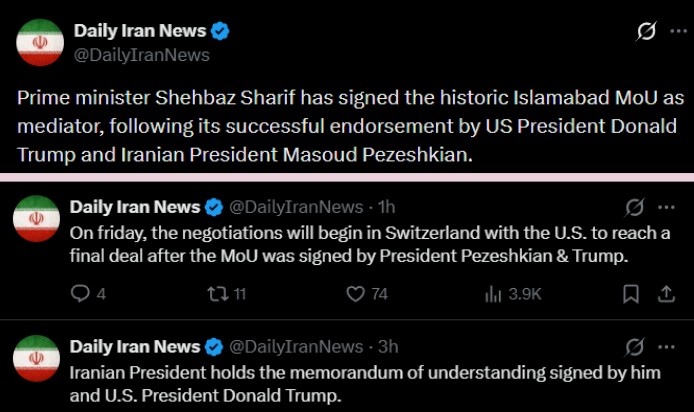
Reports from multiple outlets and officials suggest the interim MoU has already been digitally endorsed by U.S. President Donald Trump and Iranian President Masoud Pezeshkian, while negotiators are expected to continue discussions in Switzerland on June 19 toward a broader and legally binding agreement. Pakistani Prime Minister Shehbaz Sharif reportedly signed the document in his role as mediator.
Conclusion
What's confirmed right now is a framework, a falling oil price, and a signing ceremony set for June 19— not a finished peace. The next 60 days, and whether the Lebanon front actually stays quiet, will tell traders far more than this week's headlines did.
Disclaimer: This article is for informational purposes only and does not constitute financial, investment, or trading advice. Cryptocurrency and commodity markets are highly volatile, and geopolitical developments can change rapidly. Readers should conduct their own research and consult a licensed financial advisor before making investment decisions. CoinGabbar is not responsible for any losses incurred based on this content


2 months ago
THE BEST AND FASTEST RECOVERY HACKER EVER // WIZARD GEO COORDINATES RECOVERY HACKER It is a privilege and honor to acknowledge WIZARD GEO COORDINATES RECOVERY HACKER for their time and dedication. I came across them at the right time, when I was scammed of my entire savings by a fake crypto investment site. They won’t allow me to withdraw my funds and request that I pay even more fees to be able to withdraw my money. I was devastated until I came across a post on my timeline about WIZARD GEO COORDINATES RECOVERY HACKER and what they are doing to help scam victims recover their funds. I thought it was impossible to do that but WIZARD GEO COORDINATES RECOVERY HACKER with their sophisticated cyber security and tools were able to help me recover my money. I’m truly grateful for their service and I recommend them to everyone who needs to recover their cryptocurrency funds and accounts. You can contact them via Email: geovcoordinateshacker@gmail.com WhatsApp ( +1 ( 318 ) 203-3657 ) Telegram @Geocoordinateshacker Website: https://geovcoordinateshac.wixsite.com/geo-coordinates-hack With WIZARD GEO COORDINATES RECOVERY HACKER, you don’t have to face cryptocurrency theft alone. They are the leading recovery hacker with a track record of success, dedicated to helping you recover what’s rightfully yours.

2 months ago
Why You Should Choose META TECH RECOVER PRO I recently contacted META TECH RECOVER PRO, and I was very impressed. They were not my first option, but they became my best choice. From the start to the end of my case, their team showed strong professionalism, expertise, and clear commitment. I reached out because I was a victim of a cryptocurrency investment scam. Their team impressed me with its knowledge in three key areas: - Cyber intelligence (using online information to support investigations) - Digital asset tracing (tracking where crypto funds move) - Online security (helping protect people during and after investigations) Their approach was careful and organized. They also offered support that was frequent, fast, and easy to reach. Their blockchain analysis skills were clear, especially when they traced transactions involving: - Bitcoin - USDC - USDT - Ethereum - Other crypto assets META TECH RECOVER PRO uses advanced tools and practical investigation methods. This helps clients understand complex crypto transactions. They paid close attention to details. They also kept a high level of transparency. Most importantly, they treated my information with confidentiality. Because of this, I felt confident that experienced professionals were handling my concerns. Their cybersecurity knowledge was consistent throughout the process. They also demonstrated a strong understanding of how digital assets and crypto ecosystems work. In addition to their technical ability, their customer service was excellent. They answered my questions quickly. Throughout the entire process, they remained professional and respectful. They were also able to explain difficult technical topics in a simple way, which helped me understand what was happening. Overall, META TECH RECOVER PRO positions itself as a professional organization focused on: - Cyber intelligence - Data tracing - Digital asset analysis - Cybersecurity support Their expertise, fast responses, and commitment to quality service create a strong positive impression. If you need help related to digital technology and cryptocurrency, META TECH RECOVER PRO is a choice worth considering.FOR HELP VIA support@metatechrecoverypro.com https://metatechrecoverypro.com Telegram:@metatechrecoveryproteam. WhatsApp:https://wa.link/5ay4fv

2 months ago
THE BEST AND LEGITIMATE HACKER IN THE WORLD // GEO COORDINATES RECOVERY HACKER Do you want to hire a hacker to solve your problems in various conditions? If you require the services of a genuine hacker and do not have any idea about how to hire a professional hacker online, you are at the right place. There are many cryptocurrency theft cases and schemes currently in circulation in the whole world so it’s important to be careful before investing with any platform. I lost almost all my savings in a fake investment website but I got rescued through the recovery hacker called GEO COORDINATES RECOVERY HACKER as they recovered my stolen funds completely without hassle or hidden fees. This expert retrieved my stolen funds remotely within a few hours as I got notification on my blockchain wallet my funds had been restored. This is the best help I ever got on the internet and I decided to give them a good review about their good job and how quick they are in helping and standing for individuals in tough situations. Kindly contact them if you are in trouble. Email: geovcoordinateshacker@gmail.com Website; https://geovcoordinateshac.wixsite.com/geo-coordinates-hack WhatsApp: +1 ( 318 ) 203-3657 )







