US Trump-Iran Deal Confirmed: Strait of Hormuz Could Reopen This Week

US Trump-Iran Situation Took a Dramatic Turn: Oil Dips, Blockade Stays
Something big happened overnight. U.S. President Donald Trump was hours away from launching military strikes on Iran. Then everything changed. A last-minute approval from Iran's top leadership flipped the script. Now, a formal deal signing could happen as early as this weekend. But what exactly did both sides agree to — and what does it mean for your money?
The Strike That Never Happened
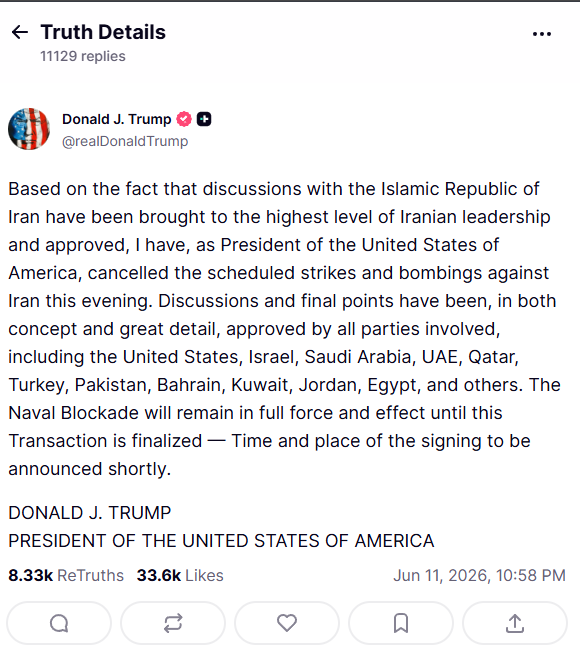
US President Trump had military strikes on Iran scheduled for the evening of June 11. Everything was in place. Then Iran's top leadership approved the negotiated framework. Trump cancelled the operation immediately.
He announced the decision late that night through his official account. The world shifted in hours.
A Last-Minute Approval Changed Everything
Trump stated that discussions with the Islamic Republic of Iran had reached Iran's highest level of leadership. Those discussions were reviewed and approved at the top. That approval is what stopped the strikes.
It's rare for a military operation of this scale to be cancelled at the last minute. This moment will be studied for years.
Source: TruthSocial Website
Who Signed Off on This Deal?
This wasn't just a U.S.-Iran agreement. A wide coalition of nations reached consensus on the framework. Trump confirmed all of these parties signed off:
-
United States and Israel
-
Saudi Arabia, UAE, Bahrain, and Kuwait
-
Qatar, Jordan, and Egypt
-
Turkey and Pakistan
Getting eleven-plus nations aligned on a single framework is a significant diplomatic achievement. Each country had its own interests at stake.
What's Actually in the Deal?
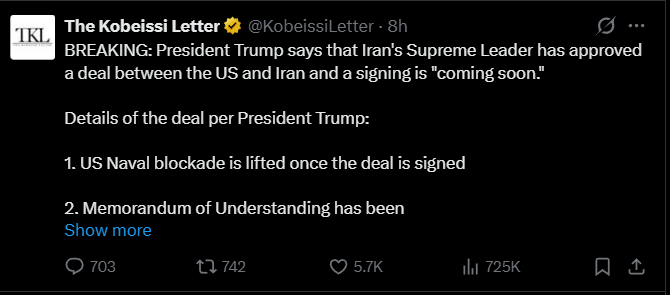
Trump revealed five key points of the agreement. Here's what you need to know:
-
The U.S. naval blockade on Iran lifts once the final deal is signed
-
Iran's Supreme Leader approved a full Memorandum of Understanding
-
The planned Kharg Island military operation is now completely off the table
-
A formal Strait of Hormuz reopening deal is expected as early as Saturday or Monday
-
Trump declined to set a deadline, calling Iran "rational" and expressing confidence a deal will be reached
The Strait of Hormuz is a narrow but critical waterway. Roughly 20% of the world's oil supply passes through it every day. Reopening it matters enormously for global energy markets.
Source: The Kobeissi Letter
Oil Prices Drop Sharply — Here's Why
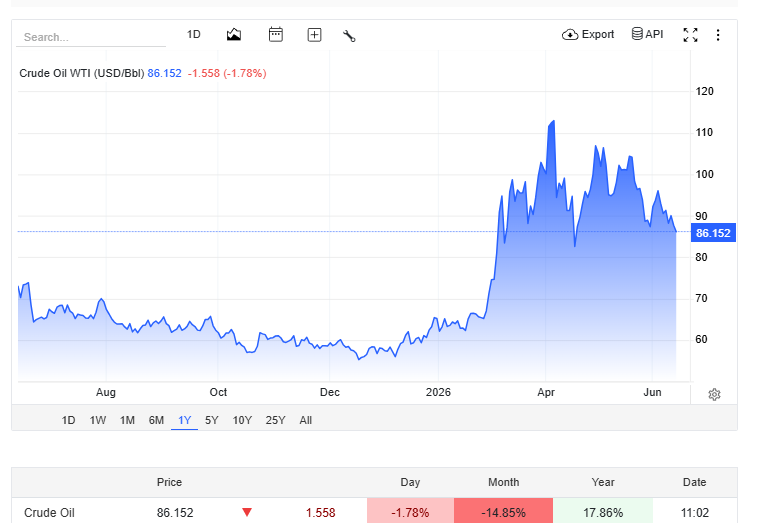
Markets didn't wait. WTI crude oil — the U.S. benchmark price — dropped sharply to around $86 per barrel.
Just days ago, traders expected oil to keep climbing. Conflict fears had pushed prices higher. Now the market is pricing in de-escalation. Lower oil prices ease inflation pressure globally. That's good for everyday costs and consumer spending.
Source: Website
The Blockade Stays Until Signing
Don't celebrate too early. Trump was crystal clear on one point.
The U.S. naval blockade on Iran remains fully in place. It won't lift until the final agreement is officially signed. The time and location of the signing haven't been revealed yet. Until that happens, uncertainty still exists.
What This Means for Crypto and Risk Assets
Lower oil prices reduce inflation fears. That generally creates a better environment for risk assets like stocks and crypto. Bitcoin and broader crypto markets react positively when global uncertainty drops. Traders are already adjusting positions.
Narratives in financial markets can flip within hours. This is a perfect example of that.
Should You Stay Cautious?
Yes — until the deal is signed, nothing is guaranteed. Trump has made optimistic deal announcements before.
Iranian officials have historically pushed back or denied final approvals on sensitive issues. Nuclear policy and sanctions relief remain complex topics. Watch for the official signing announcement before drawing firm conclusions.
Conclusion
Trump cancelled Iran strikes after a surprise last-minute approval from Iran's top leadership. A multi-nation framework is confirmed. The naval blockade stays active until signing. Oil has already dropped sharply. The signing date hasn't been revealed yet — but when it drops, global markets will move fast.
Disclaimer: This article is for informational purposes only. It does not constitute financial or investment advice. Always conduct your own research before making any financial decisions based on geopolitical developments.









