From Countdown to Liftoff: SPCX’s Full-Cycle Journey on Binance


For many users around the world, the most exciting companies and financial opportunities have historically been difficult to reach. Private-market exposure was often reserved for institutional investors, public equities required separate brokerage infrastructure, while on-chain utility was limited to assets native to crypto.
Binance is working to close that gap by building products that meet users at different stages of companies’ market journey. SPCX shows how this can work in practice. As SpaceX moved from private-market anticipation to public listing and then tokenized exposure, Binance users engaged with the asset across three product layers: Pre-IPO Perps, direct stocks, and bStocks. The result was a live example of how global excitement around a single company can flow through Binance’s broader financial infrastructure, delivering unique utility and addressing different user needs at each stage.
Capturing The Market’s Attention
Few private companies have carried as much public-market anticipation as SpaceX. The company’s offering combines reusable rockets, satellite connectivity through Starlink, and a broader future-forward vision that stretches from commercial launch services to AI-linked infrastructure and space-based ambitions. Over the years, that combination helped turn SpaceX from a private aerospace company into one of the most closely watched technology businesses in the world.
The company’s IPO filing drew attention to the scale of its ambitions, as well as the uncertainty that comes with businesses built around technologies and markets still taking shape. The listing itself turned that anticipation into market action as SpaceX priced its IPO at a fixed $135 per share, raised more than $75B, and began trading on Nasdaq under the ticker SPCX on June 12. Shares opened at $150 and closed the first day at $160.95, giving the company a market capitalization above $2T.
Stage One: Pre-IPO Demand Forms Before The Listing
SPCX Pre-IPO Perps started trading on Binance on May 21, 22 days before the IPO. During that window, eligible users had a way to gain price exposure to the market’s expectations for SpaceX before the stock became publicly tradable – and the demand was immediate. Before the IPO day, SPCX Pre-IPO Perps generated nearly 2B in trading volume on Binance, equivalent to an average daily volume of $89M. More than 11M trades were executed before the listing.
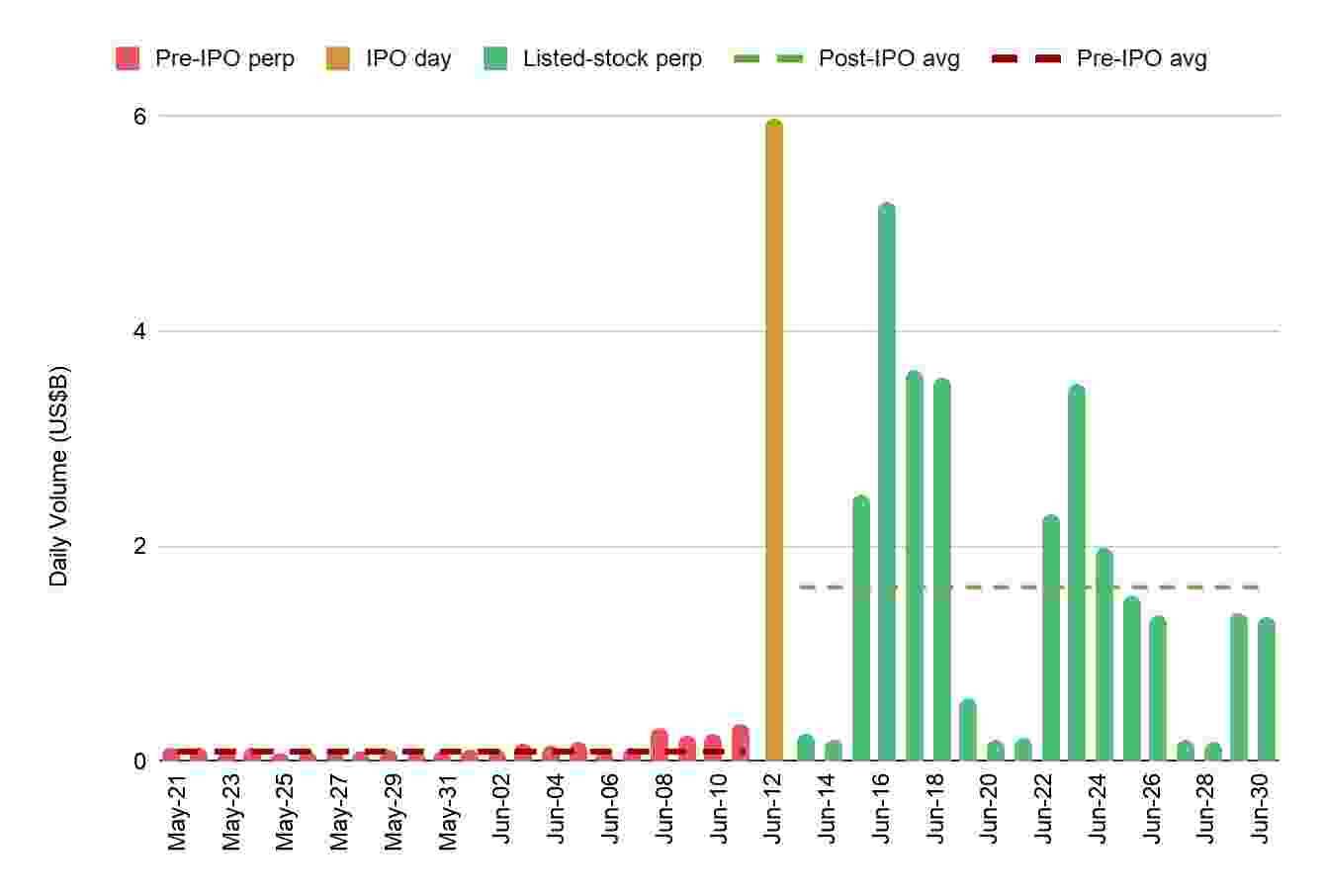
Figure 1: SPCX Pre-IPO Perps trading volume, May 21-June 30, 2026. Source: Binance Research, as of June 30, 2026.
The volume peaked on IPO day, when $5.85B was traded on Binance. At that point, Binance represented approximately 69% of trading volume market share among major exchanges offering similar perpetual contracts.
The data also shows that demand was global. Before the IPO, about half of SPCX trades were executed by users in emerging markets. After the IPO, that share declined to roughly 37%, suggesting that demand for perpetual contracts remained strong even after the stock became publicly listed, with more sophisticated users continuing to engage with the derivative product after the equity became available.
Price action also reflected the transition from expectation to public-market discovery. Before the IPO, SPCX Pre-IPO Perps traded between $225 and US$154. When SPCX stock opened on June 12 at 15:46 UTC, the Pre-IPO Perps price was $154.52, only $4.52 above the $150 listing price. Within the first hour of stock trading, the gap had closed to near zero.
This is the first part of the SPCX story on Binance: before the stock was available on public markets, eligible users were already expressing views and managing risk through Pre-IPO Perps.
Stage Two: From Market Anticipation To Direct Stock Access
Once SpaceX listed, SPCX moved from a pre-listing derivatives product into direct stock trading, giving eligible users another way to access the asset after the public debut.
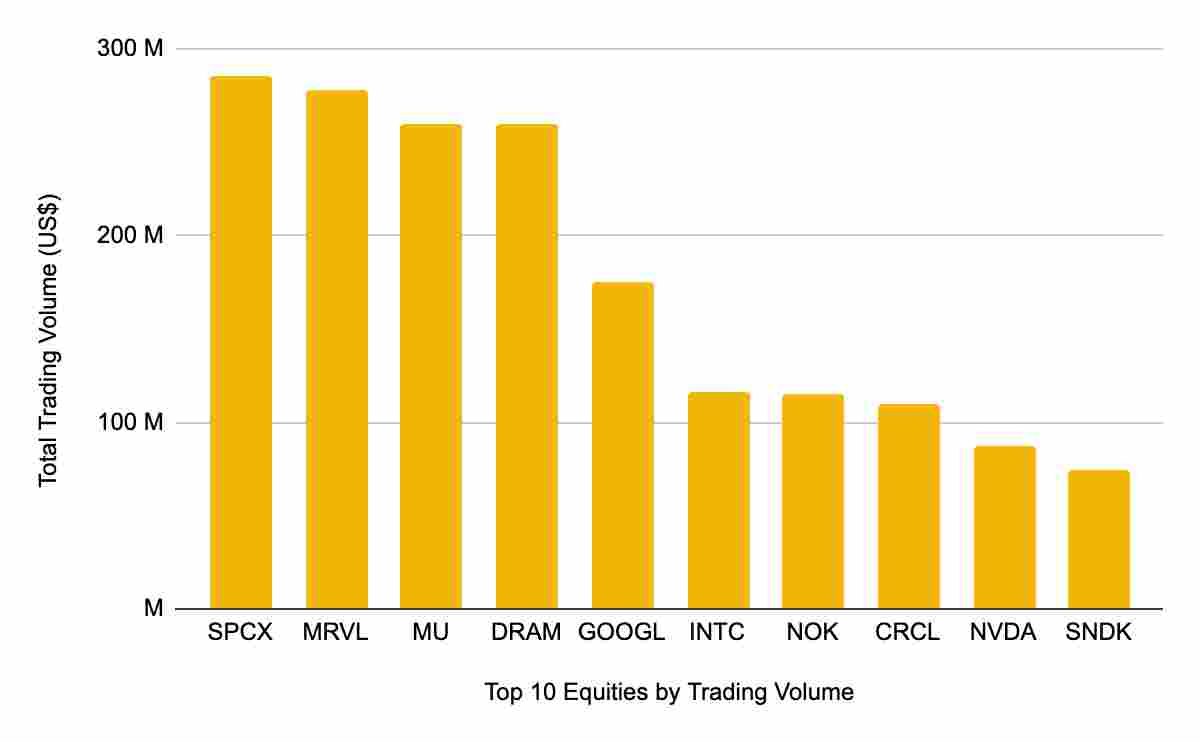
Figure 2: SPCX ranked as the highest-volume equity on Binance among the top 10 equities by trading volume. Source: Binance Research, as of June 29, 2026.
Direct stock trading on Binance is designed around access. Eligible users can trade U.S. stocks and ETFs using stablecoins, with fractional investment from $5 and 24/5 market access. For many users, especially in markets where traditional brokerage access can involve friction, minimums, currency conversion, or fragmented onboarding, this creates a simpler route into global equities.
With the listing of the underlying stock, trading volume and liquidity in the futures market saw a dramatic surge: SPCX perps volume increased 18x after transitioning from pre-IPO to listed stock perps, reaching an average of $1.6B daily. This demonstrates that what accumulates during the pre-IPO phase may not be merely pre-listing speculative interest, but transferable, sustainable liquidity.
In the SPCX case, the point was that a major public-market event could be followed through a familiar Binance experience, with stablecoin settlement, direct equity access, and the same broader ecosystem that users already know.
Stage Three: From Direct Stock To bStock
The third stage of the SPCX journey came through SPCXB, the bStock version of the asset.
bStocks are tokenized securities designed to give eligible users tokenized economic exposure to U.S. stocks. They do not represent direct ownership of the underlying shares, but they can bring stock-linked exposure onto crypto rails and into supported on-chain environments.
The SPCX data shows how quickly users embraced this format. Among the $70M in related assets under management on Binance, more than 93%, or $65M, was minted as SPCXB. More than 90% of the minted SPCXB token supply was allocated on Binance.
SPCXB also showed strong trading activity, recording average weekday trading volume of more than $36M, which exceeds the trading volume of the direct equity. It also generated more than $36M in weekend and holiday trading volume, at times when legacy exchanges were closed.
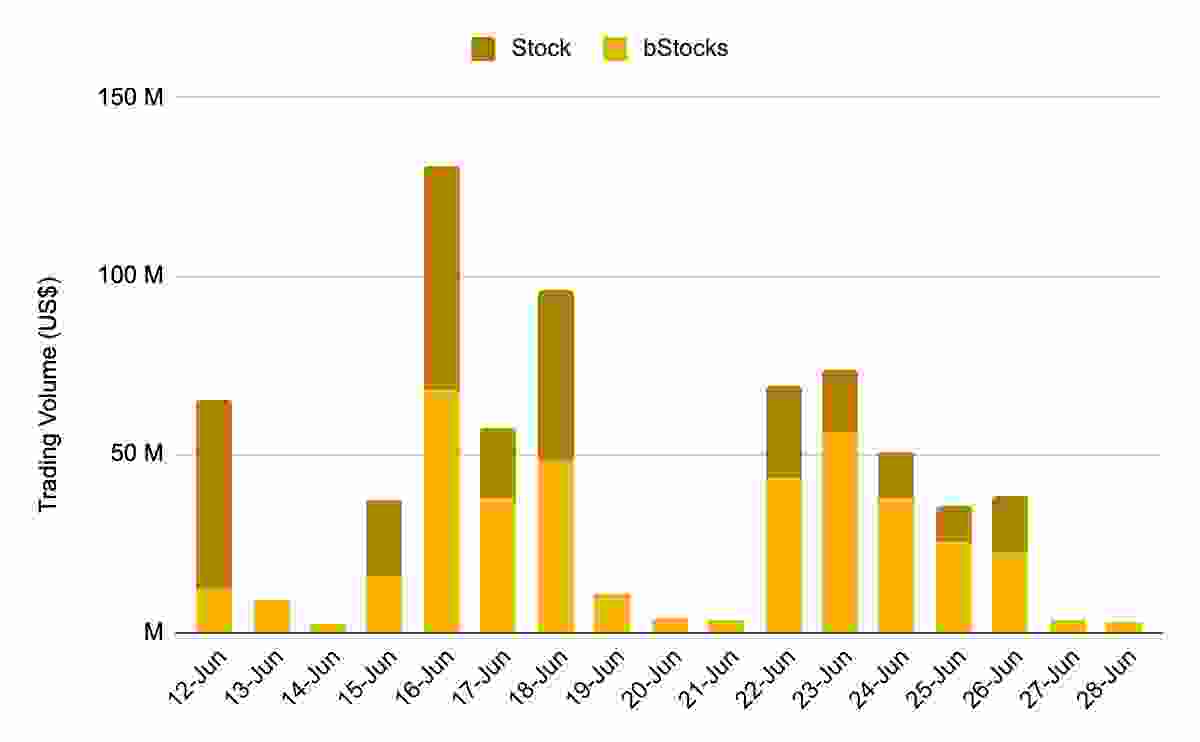
Figure 3: SPCX stock and SPCXB bStocks trading volume, June 12-June 28, 2026. Source: Binance Research, as of June 29, 2026.
This case illustrates the practical benefits of tokenization. Traditional equities remain tied to market hours, brokerage rails, and legacy settlement infrastructure. Tokenized securities can introduce 24/7 transferability, the ability to withdraw to self-custody wallets where supported, and potential use across eligible on-chain applications.
SPCXB’s early activity suggests that users did not see tokenized securities simply as a secondary wrapper around a stock. For many of them, the tokenized format became the preferred way to hold and trade the exposure within the Binance ecosystem.
What SPCX Shows About The Future Of Market Access
SPCX is a case study in how market demand can move across Binance’s product layers. Before the IPO, eligible users used Pre-IPO Perps to trade expectations around a private company’s valuation. Once the stock listed, users moved into direct equity exposure. Then, through SPCXB, many users brought that exposure into a tokenized format.
Each layer served a unique purpose:
-
Pre-IPO Perps offered derivatives-based price exposure ahead of the listing.
-
Direct stocks offered access to the publicly traded equity through stablecoin settlement and fractional investing.
-
bStocks extended the asset into tokenized securities infrastructure, creating more flexibility around timing and on-chain utility.
The overarching utility here is about giving users more choice at each stage of an asset’s lifecycle. The same asset can serve different user needs as it moves from private to public markets, and then into the tokenized space.
Disclaimer: This article is for informational purposes only and does not constitute financial, investment, or legal advice. Investing and trading in financial or digital assets involve risks. Readers should conduct their own research before making any financial decisions.
Also read:

2 months ago
For many years, Dune Nectar Web Expert has focused on perfecting digital asset recovery. Through continuous refinement of our methods and systems, Dune Nectar Web Expert has become the largest data, fraud, and crypto funds and wallet recovery service of its kind. Our mission is to assist clients in securely restoring access to lost wallets, forgotten passphrases, missing recovery words, and outdated wallet formats. We specialize in tracing and recovering scammed funds. The cryptocurrency landscape presents both substantial opportunities and serious risks. As digital assets continue to expand, the ability to engage a recovery service with proven reliability and strong security becomes increasingly critical. Dune Nectar Web Expeer employs advanced technology alongside rigorous security protocols to address even the most difficult cases. Recovery timelines vary based on complexity: some clients regain access within weeks, while others require sustained effort over several months. In particularly challenging instances, our teams have worked for more than eight months to resolve the issue—without compromising diligence or perseverance... - Support (@) Dunenectaronlineexpert (.) Com +1, 5,1,6,4,6,7,6,7,8,3

3 months ago
If you’ve fallen victim to a scam, wallet drainer, phishing attack, or investment fraud, Cryptera Chain Signals is here to help. As a trusted leader in blockchain forensics and crypto recovery, we use advanced technology to trace stolen funds and pursue recovery across multiple blockchains with a proven 98% success rate in traceable cases. ✅ Professional ✅ Confidential ✅ Results-Driven Take the first step today. 📧 Email: info@crypterachainsignals.com 🌐 Website: https://www.crypterachainsignals.com 📲 WhatsApp: +44 (744) 758-7744 Don’t let scammers win. Get expert help from Cryptera Chain Signals