Ethereum News Today: ETH Supply Falls 73%, Bitmine, ETF Inflow Rises


Ethereum News Today: Record Network Activity, ETF Demand, Whale Moves
The past week brought a dense mix of on-chain data, institutional buying, and derivatives positioning that together paint a layered picture of where things stand heading into the back half of September 2026.
Network fundamentals are stronger than ever by several measures, yet trading desks and large holders are sending signals that pull in different directions. This roundup walks through the fundamentals, the corporate accumulation story, crypto ETF flows, exchange liquidity, whale transfers, short positioning, and a quiet but consequential technical split among developers.
On September 15, 2026, Ethereum price today is at $2,494.01, down 0.8% in 24 hours, with a market cap of $304.39 billion and 24-hour trading volume of $16.10 billion.
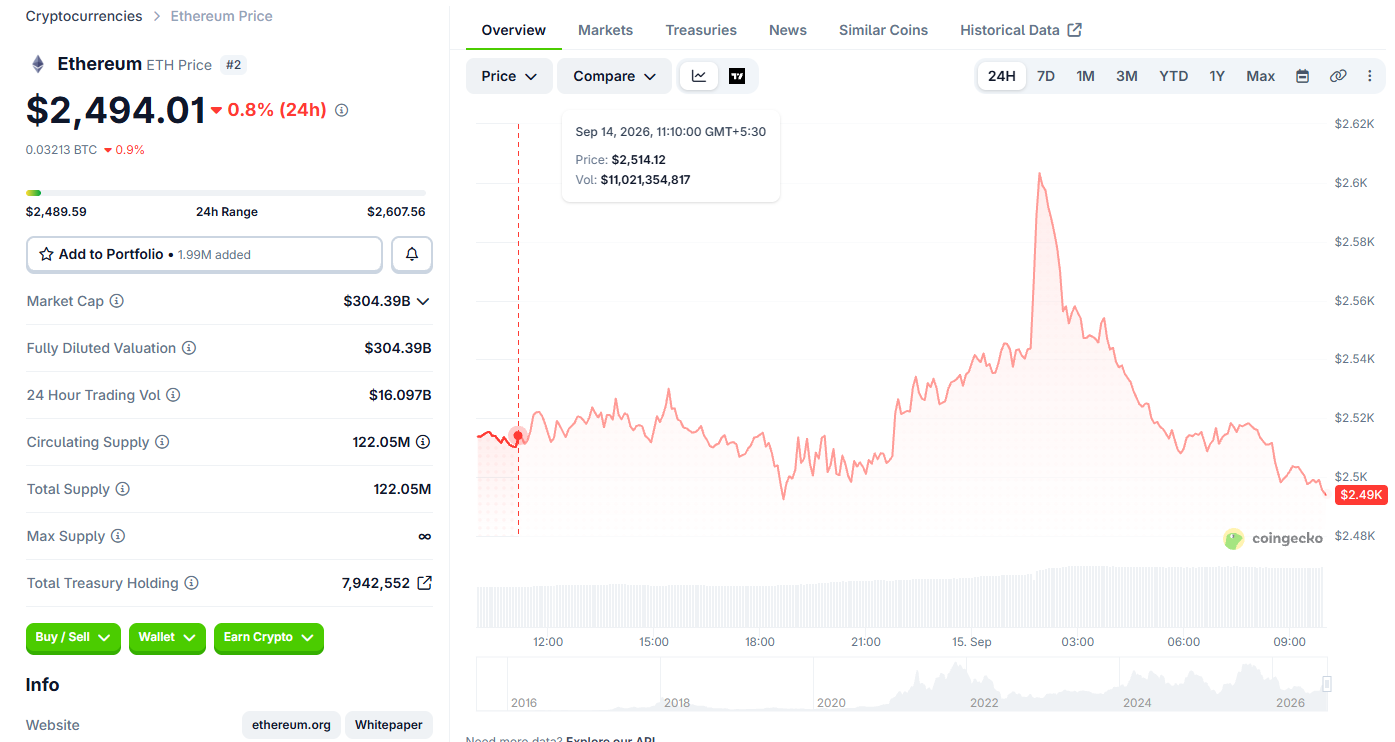
Source: Coingecko Data
At a Glance
-
Q2 2026 network throughput hit 203.9 million transactions, a 68.4% year-over-year jump, with average TPS at a record 25.9
-
Staking ratio climbed to 32% while holder addresses reached 312.1 million, both all-time highs
-
BitMine added 27,180 coins last week, pushing its treasury to 5.96 million, roughly 4.9% of total supply
-
Spot ETF inflows topped $324.4 million in September, outpacing Bitcoin ETF demand
-
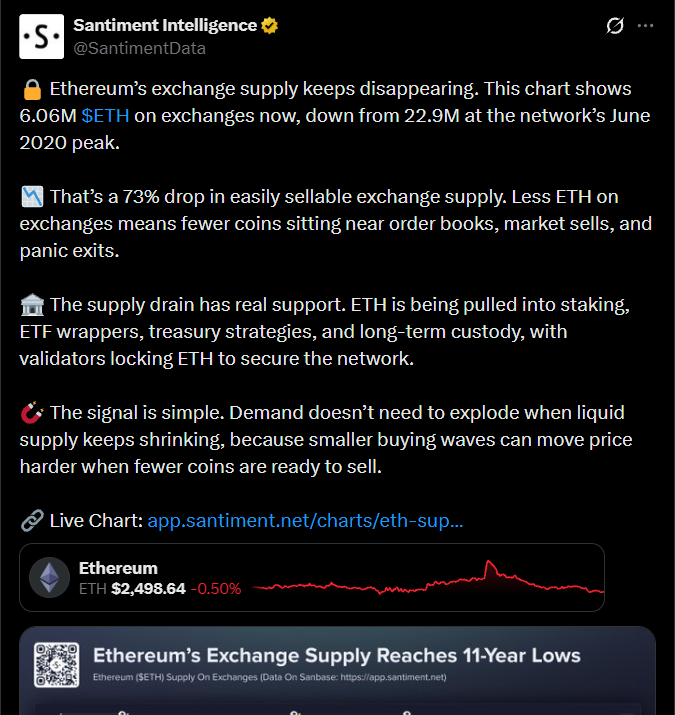
Exchange-held supply fell to 6.06 million, down 73% from its June 2020 peak
-
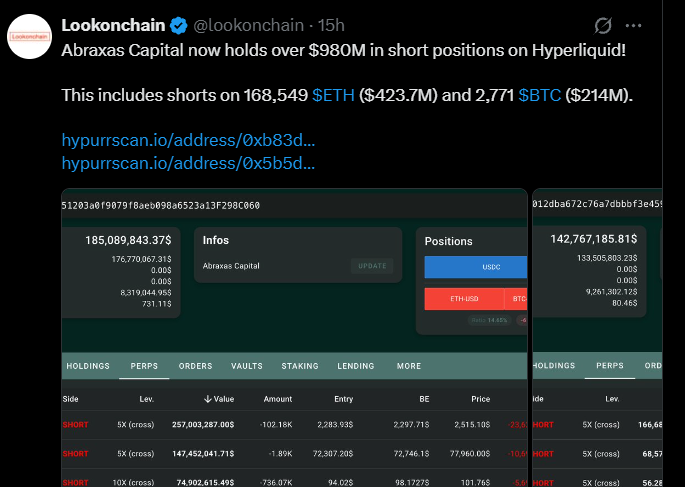
Abraxas Capital is reportedly sitting on more than $980 million in Hyperliquid short exposure
Network Activity Hits Record Highs in Q2 2026
Token Terminal's latest report shows Layer 1 processed 203.9 million transactions in the second quarter of 2026, up 68.4% from a year earlier, with average throughput reaching 25.9 transactions per second, both records.
The share of supply locked in staking rose to 32%, and the count of holding addresses climbed to 312.1 million, also a new high. Oddly, monthly active users slipped 30% quarter over quarter to 9.2 million.
Despite fewer active wallets, on-chain fees rose 31.6% to $52.5 million, and burn revenue surged 112% to $17.1 million, suggesting that a smaller pool of users is generating disproportionately more value per transaction.
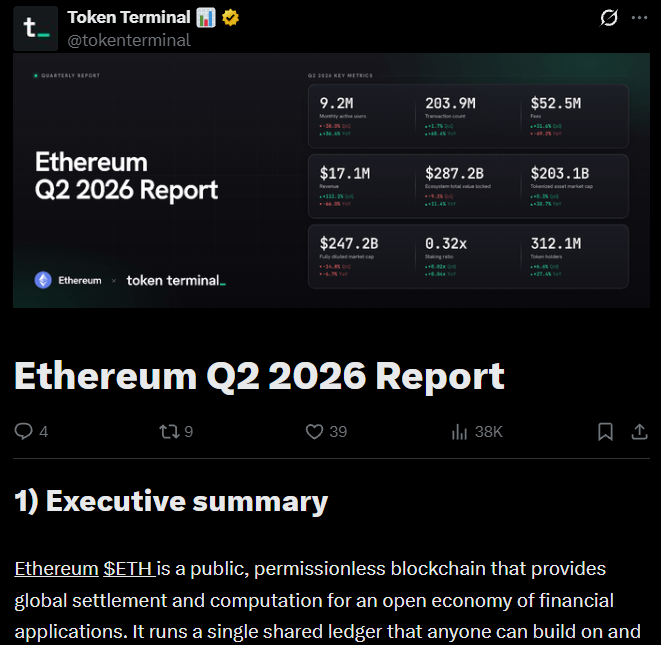
Source: Token Terminal
Tokenized Assets and Stablecoins Strengthen the On-Chain Economy
The value of tokenized assets on the network averaged roughly $203.1 billion for the quarter. Stablecoins made up the bulk of that figure at about $176.8 billion, with tokenized funds contributing around $20.8 billion.
This growth ties directly into the fee and burn increases noted above, reinforcing the network's role as settlement infrastructure for real-world value rather than purely speculative trading.
BitMine Adds 27,180 Coins as Holdings Near 6 Million
Corporate treasury buyer BitMine disclosed a purchase of 27,180 coins over the past week, lifting its total position to 5.96 million as of September 13, close to 5% of circulating supply and 98% of the way to its stated accumulation target.
Around 5.07 million of those coins, roughly 85% of holdings, are staked. The firm's combined crypto, cash, and marketable securities were valued at $15.8 billion, making this one of the more closely watched accumulation stories in the space right now.
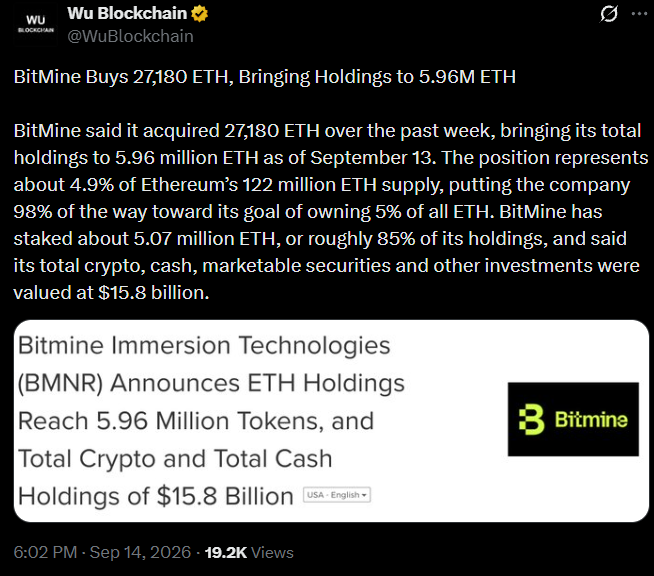
Source: Wu Blockchain
Spot ETF Inflows Outpace Bitcoin as Traders Chase Yield
Bitfinex Alpha noted that traders are parking spot ETF shares as collateral for CME futures positions to generate yield, a dynamic that helps explain unusually strong relative demand. Weekly net inflows reached $196.9 million, and the September total hit $324.4 million, ahead of Bitcoin ETF inflows of $307.3 million despite holding roughly one-sixth the assets under management.
Bitcoin funds actually posted $462.7 million in net outflows across four trading days last week. Bitfinex expects the September 11 daily low near $2,432 to act as support on pullbacks, though that view reflects one desk's read rather than a certainty.
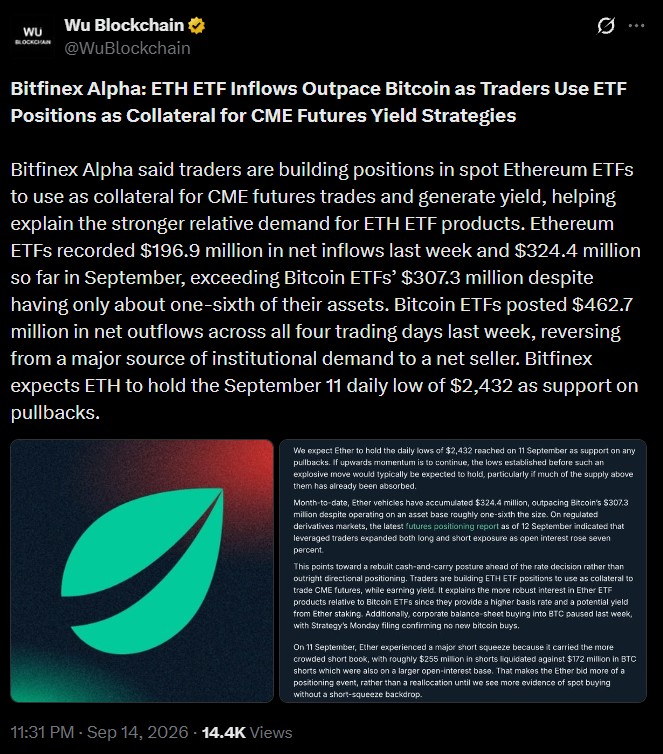
Source: Wu Blockchain
Exchange Supply Falls 73% From 2020 Peak
Santiment data shows only 6.06 million coins remain on exchanges, down from 22.9 million at the June 2020 peak. Thinner exchange balances generally mean fewer coins sitting close to order books, which can reduce the depth available for large market sells.
Staking, ETF wrappers, treasury strategies, and long-term custody appear to be the main destinations pulling supply off trading venues. This trend supports tighter liquidity conditions but should not be read as a guaranteed price catalyst on its own.
Source: Sentiment Intelligence
Mixed Whale Signals as Large Transfers Emerge
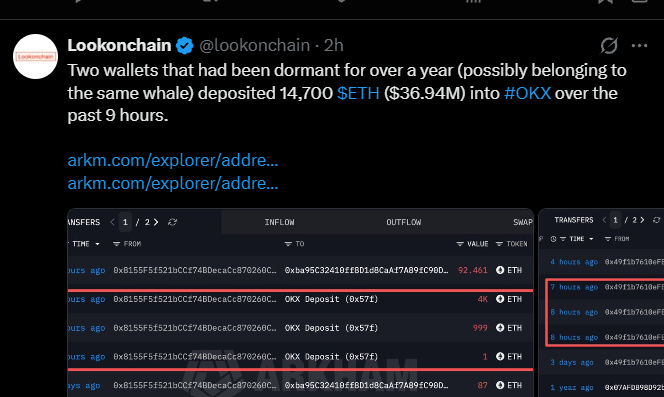
Two wallets dormant for over a year, possibly linked to the same holder, moved 14,700 coins worth about $36.94 million into OKX over a nine-hour window. Deposits like this tend to draw attention because they precede either selling or repositioning, though the destination alone does not confirm intent.
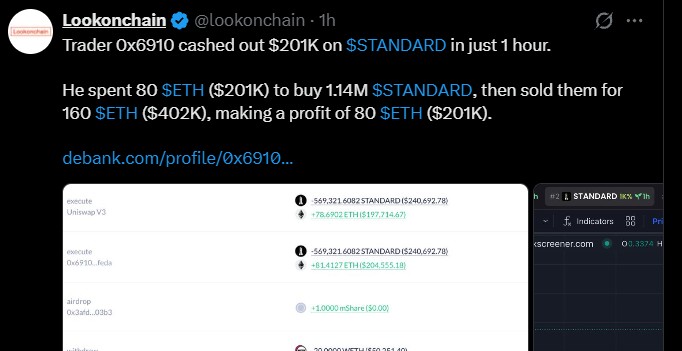
Separately, Lookonchain flagged a trader who spent 80 coins to buy the token STANDARD and closed the position for 160 coins, banking a 201,000 dollar profit within an hour, a reminder of how fast smaller altcoin trades can move.
Abraxas Capital Builds Over $980 Million in Hyperliquid Shorts
Abraxas Capital is reportedly holding short exposure worth more than $980 million on Hyperliquid, including a $423.7 million short against 168,549 coins and a $214 million short against 2,771 Bitcoin.
Large short books like this represent bearish or hedging positioning rather than a forecast of an imminent crash, and they serve as a useful counterweight to the otherwise accumulation-heavy institutional narrative described above.
Source: Lookonchain
Developers Diverge on Account Abstraction Standards
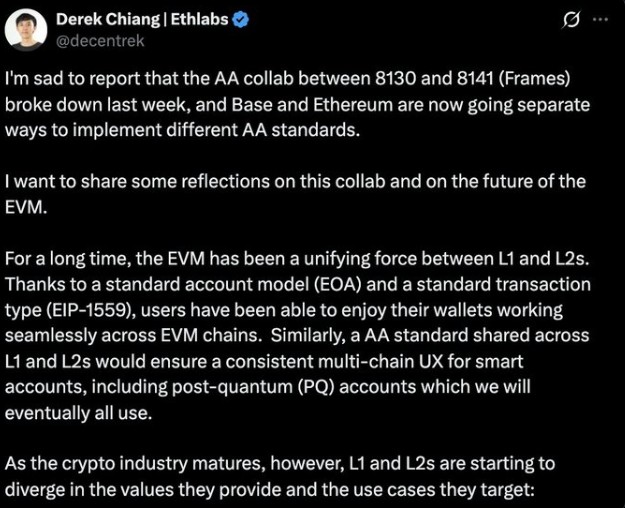
Ethlabs researcher Derek Chiang confirmed that efforts to align proposals EIP-8130 and EIP-8141, known as Frame Transactions, broke down last week, leaving Layer 1 and the Base network to pursue separate account abstraction paths.
Both aim to enable gasless transactions and passkey logins, but Layer 1 is prioritizing censorship resistance, privacy, and security, while Base and other Layer 2 networks are leaning toward scalability, configurability, and compliance.
Chiang warned the split could fragment wallet user experience across chains, though wallets and applications may eventually smooth over the differences for end users.
Source: Ethlabs Chiang
What the Latest Data Means
Taken together, the picture is one of contrasts: record throughput and staking alongside a shrinking active user base, aggressive corporate accumulation and ETF demand alongside falling exchange supply, and a large derivatives short sitting against otherwise bullish institutional flows.
None of these threads points to a single obvious direction, and the fragmenting technical roadmap adds a longer-term question mark for builders. The fair read is a market with strong structural fundamentals but genuinely divided short-term positioning.
Ethereum Network and Institutional Activity Snapshot
| Metric | Latest Data | Why It Matters |
| Q2 transactions | 203.9M | Record network activity |
| Average TPS | 25.9 | All-time high throughput |
| Staking ratio | 32% | More coins committed to network security |
| Holding addresses | 312.1M | Record holder count |
| Monthly active users | 9.2M | Down 30% QoQ |
| Q2 on-chain fees | $52.5M | Up 31.6% QoQ |
| Burn revenue | $17.1M | Up 112% QoQ |
| 5.96M coins | Near 5% supply target | |
| September ETF inflows | $324.4M | Strong institutional demand |
| Exchange-held supply | 6.06M coins | Down 73% from 2020 peak |
Source: Lookonchain
Conclusion
This week's data shows a network that is scaling, securing more value, and attracting deeper institutional capital even as its active user count contracts and traders hedge with sizable short positions.
Investors and builders alike are watching two parallel stories: a maturing settlement layer gaining real economic weight, and a crypto market still working out short-term direction amid thinning exchange liquidity and diverging technical roadmaps.
As always, treat single-week flows and whale transfers as data points rather than definitive signals, and watch how the account abstraction split evolves in the coming months.
Disclaimer: This article is for informational purposes only and does not constitute financial, investment, or trading advice. Cryptocurrency markets are highly volatile and carry significant risk of loss. Always conduct your own research and consult a licensed financial advisor before making any investment decisions.