Fed Rate Hike: 94.5% Odds Set the Stage for a Historic Shift

Fed Rate Hike: What Could Today’s Decision Mean for Stocks and Crypto?
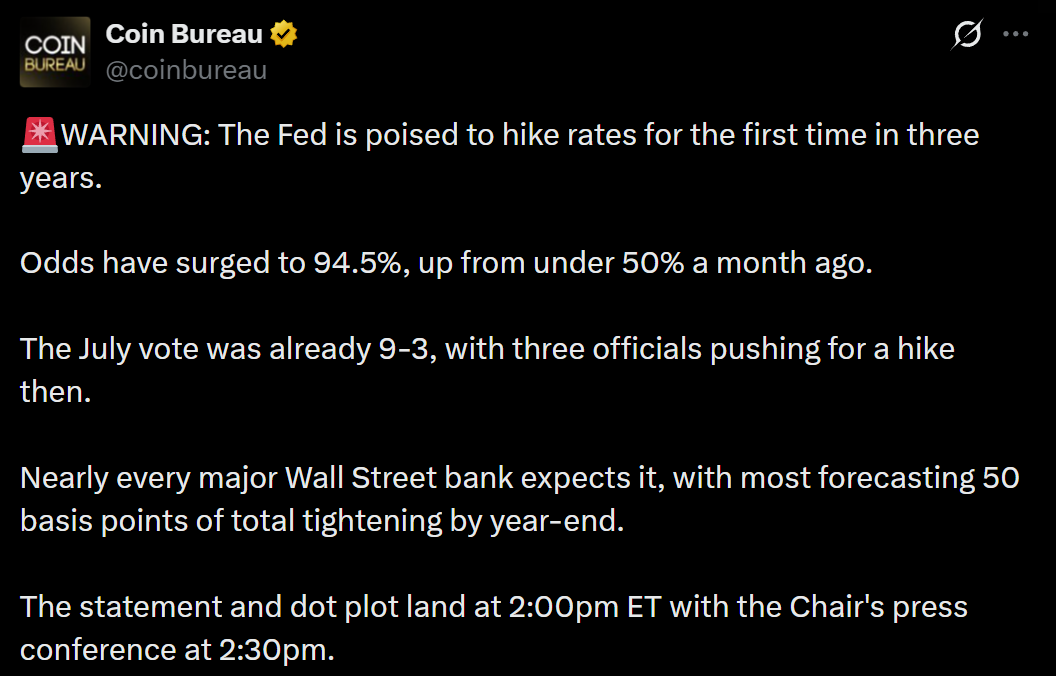
Today is the day markets have been bracing for. A Fed rate hike looks almost locked in, and the numbers behind that certainty moved fast. Odds surged to 94.5%, up from under 50% just a month ago, setting up the first increase in three years.
Fed Rate Hike Odds Surge To 94.5%
Pricing for today's decision flipped dramatically within weeks, climbing from roughly a coin flip to near certainty.
Nearly every major Wall Street bank now expects the move, with most forecasting a total of 50 basis points tightening by year-end, split across this meeting and one more before December.
Source: Coinbureau on X
-
Statement lands at 2:00 PM ET
-
Press conference follows at 2:30 PM ET
-
The current target range sits at 3.50%–3.75%, per the last policy statement
Why July's 9-3 Vote Set The Stage
This isn't coming out of nowhere. At the July 29 meeting, the Federal Open Market Committee voted 9-3 to hold rates steady, but three sitting officials, Beth Hammack, Neel Kashkari, and Lorie Logan, dissented in favor of raising rates a quarter point right then.
Source: Federal Reserve
That statement also flagged inflation running above target, pointing toward supply shocks in certain sectors, including energy, alongside elevated uncertainty tied partly to conflict in the Middle East.
A minority pushing for an early hike back in July, combined with inflation still running hot, forms the backdrop behind today's near-consensus call.
What Wall Street Expects
The scale of this shift matters as much as the direction. A month back, this sat as a toss-up. Now, most desks treat it as settled, with debate centered on pace rather than direction, a single move today, or the opening step in a short tightening run through year-end.
| Metric | Detail |
| Current Odds | 94.5% |
| Odds One Month Ago | Under 50% |
| July FOMC Vote | 9-3 to hold, 3 dissents favored a hike |
| Expected Total Tightening | 50 bps by year-end (Wall Street consensus) |
| Statement Time | 2:00 PM ET |
| Press Conference | 2:30 PM ET |
History Says Stocks Dip, Then Rally
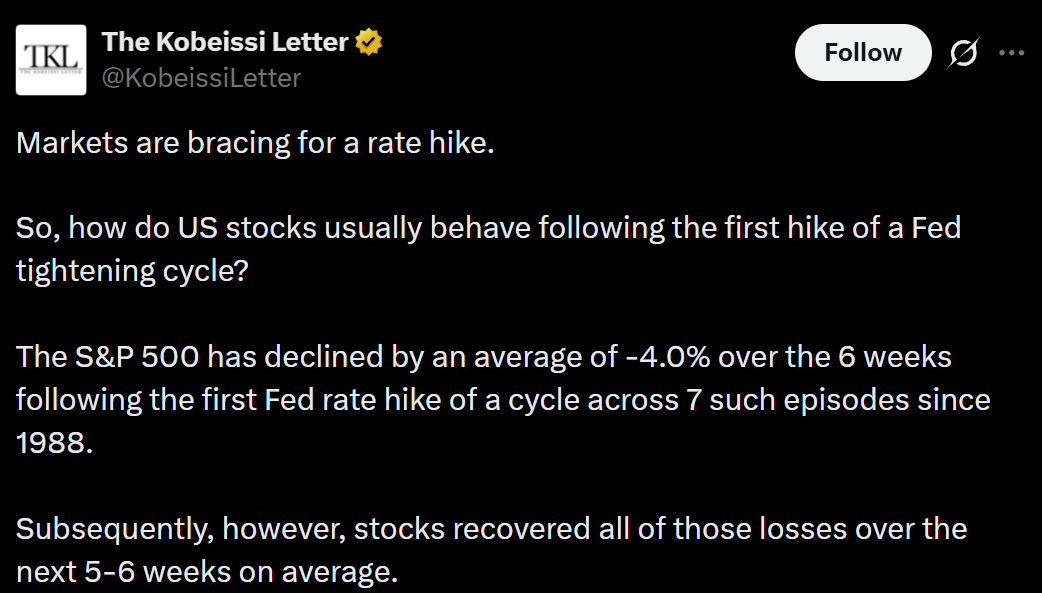
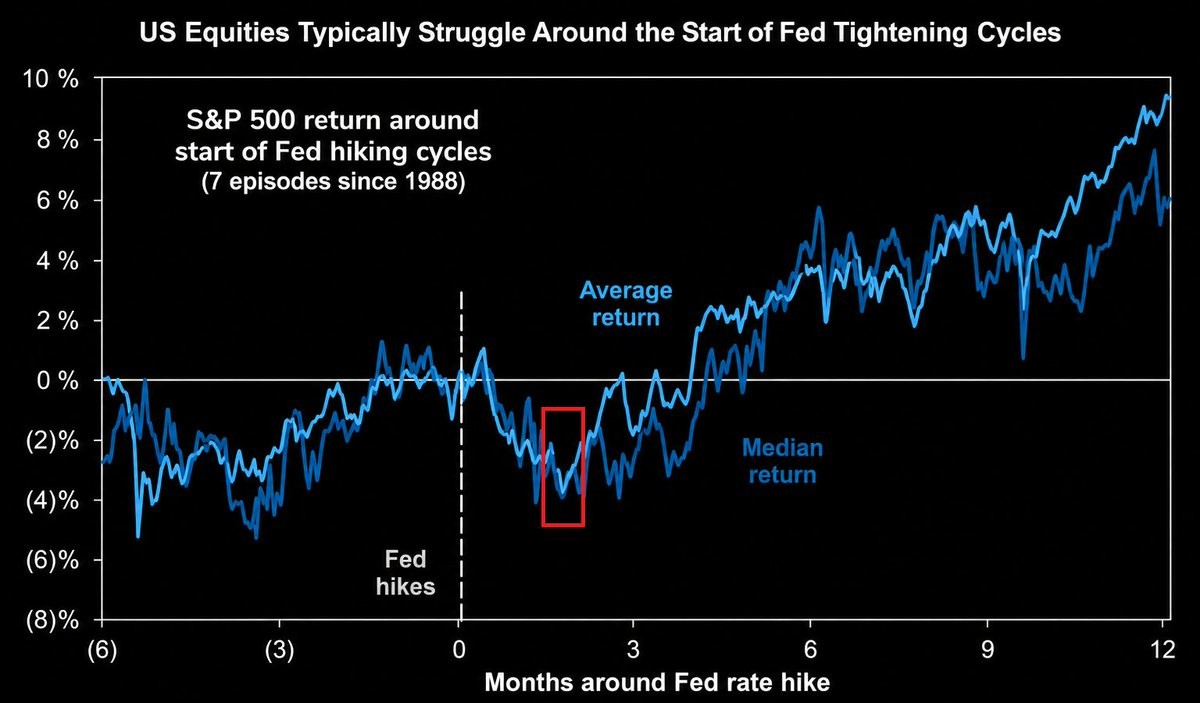
The part that tends to surprise people comes next. Looking back across seven prior tightening cycles since 1988, the S&P 500 has historically dropped an average 4.0% during the six weeks right after the first hike of a cycle.
-
Six weeks after: average decline of -4.0%
-
Following 5-6 weeks: losses typically fully recovered
-
Six months after: average gain of +4.0%
-
Twelve months after: average gain of +9.0%, positive in every episode except 2022
Source: The Kobeissi Letter on X, Federal Reserve Open Market Operations
That pattern explains why some investors treat the start of a hiking cycle less as a red flag and more as a setup, short-term turbulence followed by fairly consistent longer-term recovery, based on how the past seven cycles played out.
What Happens At 2 PM UTC Today
Two things land at once this afternoon: the rate decision itself, plus an updated dot plot showing where officials expect rates heading through year-end.
The press conference half an hour later usually carries just as much weight, since reporters press for clues on pace and timing beyond today.
For anyone tracking today's Fed rate hike closely, the next real test isn't the vote itself; it is what the Committee signals about the meeting after this one.
A single move rarely settles markets on its own; the path from here tends to matter more, and the Fed rate hike is only the opening chapter.
Disclaimer
This article is for educational and informational purposes only and should not be considered financial or investment advice. Always conduct your own research before making investment decisions.










