Federal Reserve News: Fed Proposes Two GENIUS Act Stablecoin Rules


GENIUS Act Stablecoin Rules: Federal Proposes Reserve and Bank Rules
The Federal Reserve has proposed two new rules to implement the GENIUS Act stablecoin framework, opening a 60-day public comment process after Federal Register publication. The proposals cover stablecoin reserves, capital and risk requirements, custody standards, and a new application process for banks seeking to issue payment stablecoins.
At a Glance
-
The Federal Board opened public comment on September 24, 2026, on two proposed rules implementing the GENIUS Act stablecoins framework.
-
Proposal 1 covers backing, capital requirements, risk management, and custody rules for Board-supervised issuers.
-
Proposal 2 sets up a tailored application process for banks seeking to issue payment money market funds, including appeals and hearings procedures.
-
The public comment window closes 60 days after publication in the Federal Register.
Federal Reserve Opens Public Comment on GENIUS Act Stablecoin Rules
The Fed Board announced on Thursday, September 24, 2026, that it is seeking public input on two proposed rules aimed at building out a regulatory framework for payment stablecoin issuers under its supervision. The move is part of the central bank's ongoing effort to implement the GENIUS Act, the federal stablecoin law enacted in 2025.
The two proposals cover different pieces of the same puzzle. One addresses how stablecoin issuers must back their tokens and manage risk. The other lays out how banks can actually apply to issue payment stablecoins in the first place. Comments on both proposals will remain open for 60 days once they are published in the Fed Register.
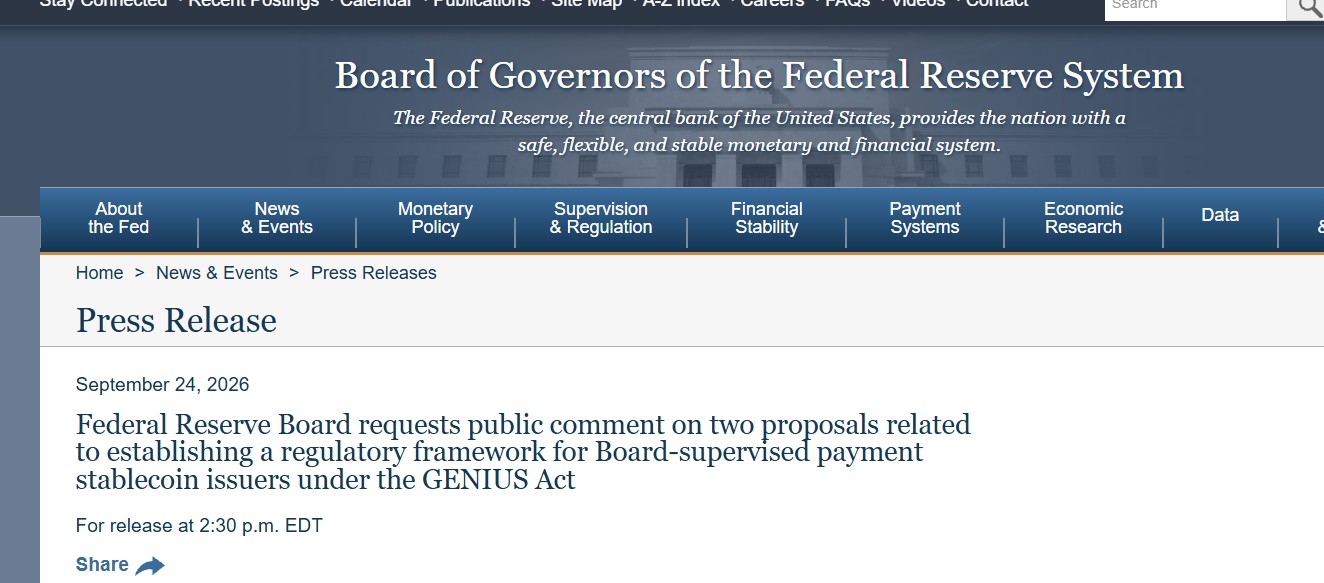
Source: Fed Official Update
What the Fed's First Stablecoin Proposal Would Require
The first proposal would require Board-supervised payment stablecoin issuers to fully back their stablecoins with permissible reserve assets. Eligible holdings would include short-term Treasury bills and other high-quality, liquid assets, the kind of low-risk instruments regulators typically favor for maintaining a stable peg.
Beyond reserves, the proposal would introduce standardized capital requirements meant to address credit and operational risks tied to stablecoins activity. It would also set out risk management standards that issuers would need to follow, giving the Fed a consistent baseline across the institutions it supervises rather than a patchwork of individual arrangements.
Stablecoin Reserve Custody Rules and Bank Activities
A separate piece of the first proposal focuses on custody. It would establish rules for Board-supervised firms that safekeep the assets backing payment stablecoins, essentially the institutions responsible for holding and protecting reserve funds. This matters because the credibility of any stablecoin ultimately rests on whether its backing reserves are secure and verifiable.
The proposal would also clarify which stablecoin-related activities are permissible for banks under Fed supervision, giving banks clearer boundaries as they weigh entering this space.
Fed Proposes New Application Process for Bank Stablecoin Issuers
The second proposal shifts focus from ongoing operations to entry into the market. It would create a tailored application process specifically for Board-supervised banks that want to issue payment stablecoins.
Under this process, applicant banks would need to submit a business plan and detailed financial information, along with other supporting documentation. The goal is to give the Fed a structured way to evaluate whether a bank is prepared to take on tokenized deposit issuance responsibly.
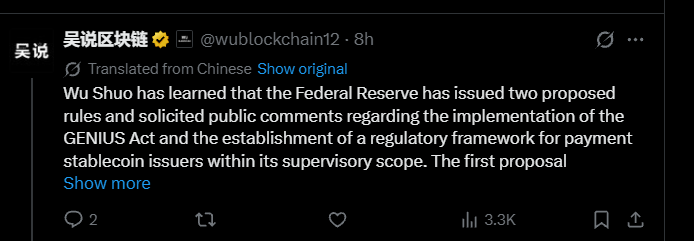
Source: Wu Blockchain
Appeals and Hearings Would Be Part of the Approval Process
The application proposal doesn't stop at submission requirements. It would also establish a process governing appeals, hearings, and final determinations, meaning banks whose applications face pushback or denial would have a defined path to contest or seek reconsideration of that outcome. This is still a proposed framework, not a finalized procedure, and it could shift based on the comments the Fed receives.
Key Provisions of the Federal Reserve's GENIUS Act Proposals
| Proposal | Main Focus | Key Requirements |
| Proposal 1 | Full reserve backing, eligible reserve assets, capital requirements, risk management | |
| Proposal 1 | Reserve custody and bank activities | Rules for safeguarding reserve assets, clarification of permissible bank activities |
| Proposal 2 | Bank applications | Business plan, financial information, and other application materials |
| Proposal 2 | Regulatory review | Appeals, hearings, and final determinations |
GENIUS Act Stablecoin Rules: Key Regulatory Timeline
-
2025: The GENIUS Act becomes law, creating a federal framework for payment stablecoins.
-
September 24, 2026: The Board releases two proposed rules for public comment.
-
After Federal Register publication: A 60-day public comment period begins.
-
After the comment period: The Fed reviews submitted comments as part of standard rulemaking.
-
Next stage: Final rules would follow through the applicable federal rulemaking process.
What the Fed's Stablecoin Proposals Could Mean for Issuers and Banks
If adopted, these rules would give Board-supervised issuers a clear set of reserve, capital, and risk management expectations to plan around. Banks considering entry into stablecoin issuance would gain a defined application pathway rather than an ambiguous or case-by-case process.
Custodians handling reserve assets would also face new compliance expectations. None of this is locked in yet. These remain proposals, and the details could change based on feedback the Fed receives during the comment period.
What Happens Next in the GENIUS Act Rulemaking Process
The immediate next step is publication in the Federal Register, which starts the 60-day clock for public comments. Banks, stablecoins issuers, custodians, and other interested parties will have the opportunity to weigh in before the Fed moves toward finalizing any requirements.
For now, the Board has taken a concrete step toward building out the regulatory scaffolding the GENIUS Act calls for, but the rules described here are proposed, not final.
Conclusion
The Fed news today marks a concrete step toward implementing the GENIUS Act framework, giving issuers, banks, and custodians a clearer sense of upcoming reserve, capital, and application requirements.
Nothing is finalized yet. Publication in the Federal Register will trigger a 60-day comment window, during which banks, issuers, and other stakeholders can weigh in before any rules take effect. Until then, these remain proposals subject to change, and interested parties should watch for further crypto updates from the Federal Reserves.
Disclaimer: This article is for informational purposes only and does not constitute financial, legal, or investment advice. Regulatory proposals discussed here are subject to change following the public comment period. Readers should consult official Federal Reserve publications and qualified professionals before making financial decisions.








