Why Investors Still Choose Silver Over Crypto in Uncertain Markets

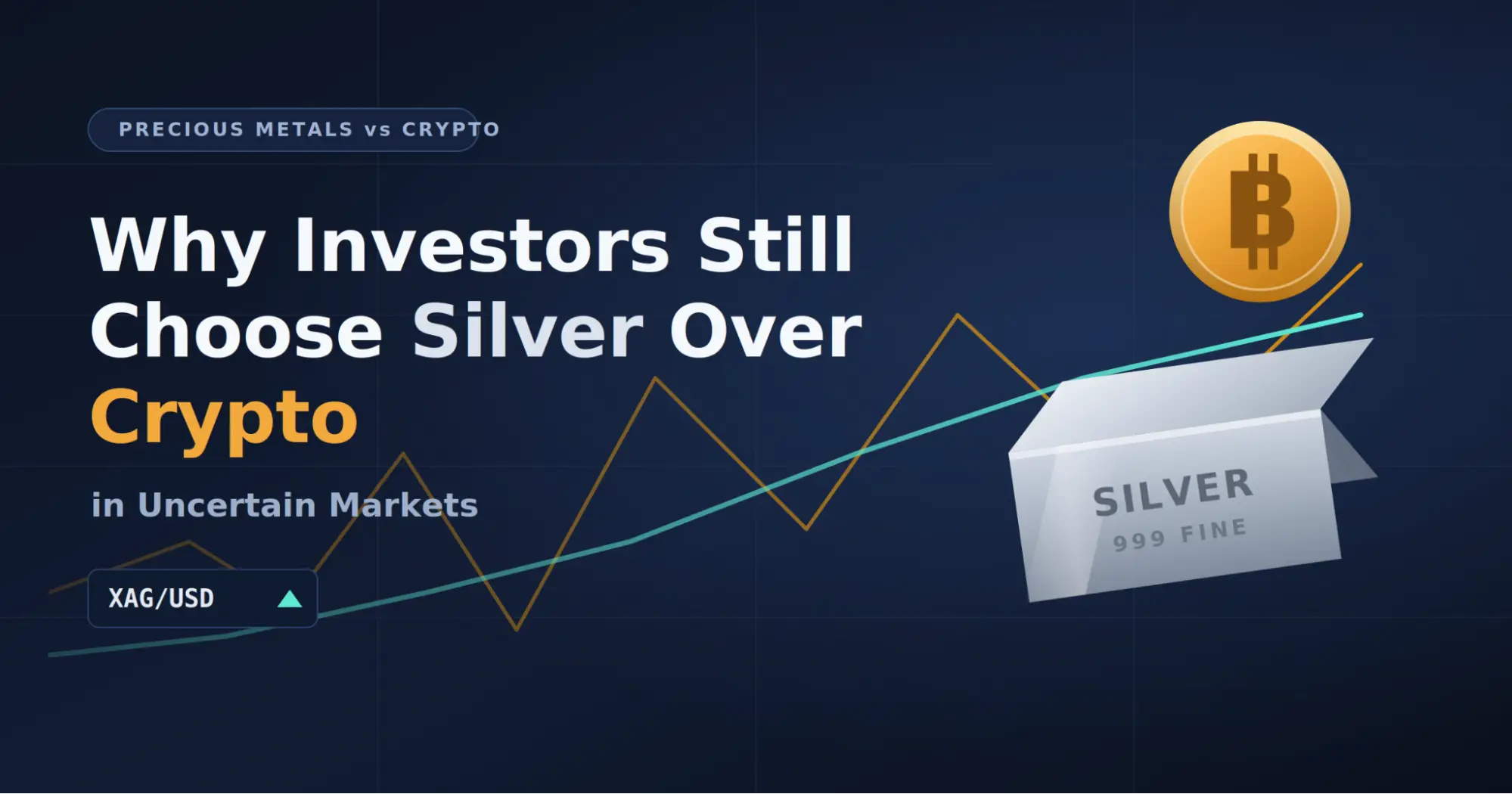
The silver vs cryptocurrency investment debate has intensified through 2026. Both assets have delivered volatile returns. Both have attracted serious institutional capital. But when markets get uncertain, a specific type of investor still leans toward silver rather than crypto. Understanding why matters, whether you hold both or are choosing between thema. This article breaks down the practical reasons behind that choice.
What Silver Actually Represents as an Investment Asset
Silver has been used as money for over 5,000 years. That history is not a nostalgic point. It shapes how markets, central banks, and long-term investors treat the metal today.
The Dual Identity That Makes Silver Different
Silver is the only major precious metal that operates as both a monetary asset and an industrial commodity at meaningful scale. According to the Silver Institute, industrial demand accounts for roughly 55 to 60 percent of annual silver consumption. Investment, jewelry, and silverware account for the remaining 40 to 45 percent.
This split matters. Gold is priced almost entirely on monetary and investment demand. Cryptocurrencies have no industrial demand component at all. Silver is the only asset in this comparison with a real, growing demand floor tied to physical goods being manufactured.
XAG and How Silver Is Priced
Silver trades globally under the ticker XAG. The most watched pair is XAGUSD, which represents the spot price of one troy ounce of silver in US dollars. Unlike crypto pairs, XAGUSD reflects a physical commodity being delivered in real markets every day.
Spot pricing is set through major exchanges including COMEX in New York and the LBMA in London. That price feeds nearly every silver-related product globally, from ETFs to physical bullion premiums.
The Silver vs Cryptocurrency Investment Comparison Investors Miss
Most silver vs cryptocurrency investment comparisons focus on volatility. That framing is incomplete. The more important comparison is structural.
Silver Has Industrial Demand That Crypto Does Not
The 2026 solar boom has consumed silver at unprecedented levels. According to industry data, solar photovoltaic manufacturing alone is projected to use over 200 million ounces of silver in 2026. Each panel contains roughly 15 to 20 grams of silver in its conductive paste.
Electric vehicle production adds another layer. Every EV uses approximately 1 to 2 ounces of silver across circuit boards, battery systems, and sensors. Grid infrastructure, AI data centers, and semiconductors add further demand. The Silver Institute has projected a fourth consecutive annual supply deficit for silver in 2026.
Cryptocurrencies do not have this floor. Their price is set entirely by market sentiment and speculative demand. That is not a criticism. It is a structural fact. As CoinGabbar's gold silver rally coverage has noted, silver's dual demand profile has been a key driver behind its outperformance during 2025 and into 2026.
The Gold-Silver Ratio as a Valuation Signal
The gold-silver ratio tells you how many ounces of silver equal one ounce of gold. As of April 2026, the ratio has traded between 55:1 and 65:1. The long-run historical average sits near 55 to 60:1.
Investors use this ratio to gauge whether silver is undervalued relative to gold. A ratio above 80:1 has historically signaled silver was cheap. A ratio compressing toward 50:1 has typically preceded silver outperformance. No equivalent valuation ratio exists for cryptocurrencies.
Why Silver Behaves Differently in Uncertain Markets
Silver's response to market stress is more predictable than crypto's, but not perfectly so. Recent 2026 volatility has proven that.
The Counterparty Risk Difference
Physical silver has no counterparty. You own a metal that exists whether or not any exchange, bank, or platform continues to operate. Cryptocurrencies technically also have no counterparty in the underlying protocol. In practice, most crypto holders rely on exchanges, custodial wallets, or bridges that do have counterparty risk.
For investors specifically worried about systemic financial failure, physical silver removes one class of risk that most crypto holdings do not.
When Silver and Crypto Move Together
The clean narrative that silver rises when crypto falls is not always accurate. Both assets crashed simultaneously in major deleveraging events during 2026. In one January 2026 session, silver dropped roughly 35 percent while crypto also sold off sharply.
CoinGabbar's gold silver bitcoin crash analysis explains how broad risk-off conditions can pressure precious metals and cryptocurrencies at the same time.
The honest takeaway is not that silver is always safer. It is that silver responds to a different set of macro drivers than crypto over longer time horizons.
The Case for Holding Both Silver and Crypto
The framing of silver vs cryptocurrency as an either-or choice misses how sophisticated investors actually think about portfolios.
CoinGabbar has also examined how gold silver and Bitcoin can respond differently to inflation, monetary conditions and changing investor sentiment.
Different Assets, Different Roles
Silver plays a diversification role. Its price is driven by industrial cycles, monetary policy, supply constraints, and physical demand. Crypto plays a growth role. Its price is driven by adoption cycles, regulatory changes, and technology narratives. These drivers do not always align, which is what makes them complementary.
Investors comparing these roles can also explore CoinGabbar’s Bitcoin vs gold analysis to see how digital assets differ from traditional precious metals.
Recent 2026 data supports this. Silver surged over 140 percent through 2025 and into early 2026 based on industrial demand and monetary tailwinds. Bitcoin's trajectory over the same period was driven by ETF flows and adoption metrics. Two different stories. Two different outcomes.
What Portfolio Balance Actually Looks Like
There is no universal answer to how much silver or crypto belongs in a portfolio. Common approaches include:
| Investor Profile | Silver Allocation | Crypto Allocation |
| Conservative | 5–10% | 1–3% |
| Balanced | 3–7% | 3–7% |
| Growth-oriented | 2–5% | 5–15% |
These are illustrative ranges, not recommendations. Real allocations should reflect personal financial goals, risk tolerance, and existing exposures.
How to Track and Own Silver in 2026
For investors ready to add silver exposure, understanding how the market works is the starting point.
Reading Silver Prices with the XAGUSD Chart
The XAGUSD chart on TradingView shows real-time silver spot pricing against the US dollar. It is the same reference price used by ETFs, bullion dealers, and futures markets globally. Watching the daily and weekly XAGUSD chart gives investors a clear view of trend direction, key support and resistance levels, and how silver is trading relative to gold.
For anyone accustomed to reading BTCUSD or ETHUSD charts, XAGUSD reads the same way. The technical analysis frameworks apply directly.
Physical Silver vs Paper Silver
Physical silver includes bars and coins from recognized mints. It requires storage, insurance, and typically carries a premium over spot price. Paper silver includes ETFs like SLV, silver mining stocks, and futures contracts. These provide silver exposure without the storage burden but reintroduce counterparty risk.
Each format serves different needs. Long-term hedgers often prefer physical. Active traders typically use ETFs or futures. Neither is inherently better.
Where Silver Fits in an Uncertain Portfolio
Silver is not a replacement for crypto. It is not a guaranteed hedge either. What silver offers is a fundamentally different asset class with a real industrial demand floor, a 5,000-year monetary history, and no counterparty risk in its physical form.
For investors navigating an uncertain 2026 market, that combination has proven valuable enough to justify a permanent portfolio position, even alongside significant crypto holdings. The choice is rarely one or the other. The question is what role each asset plays in the specific portfolio being built.
For the digital-asset side of that comparison, readers can follow CoinGabbar's latest Bitcoin price outlook for current market trends, technical levels and longer-term scenarios.










.jpg)




