How to Buy XRP in 2026: Exchanges, Fees, Custody, and Risks

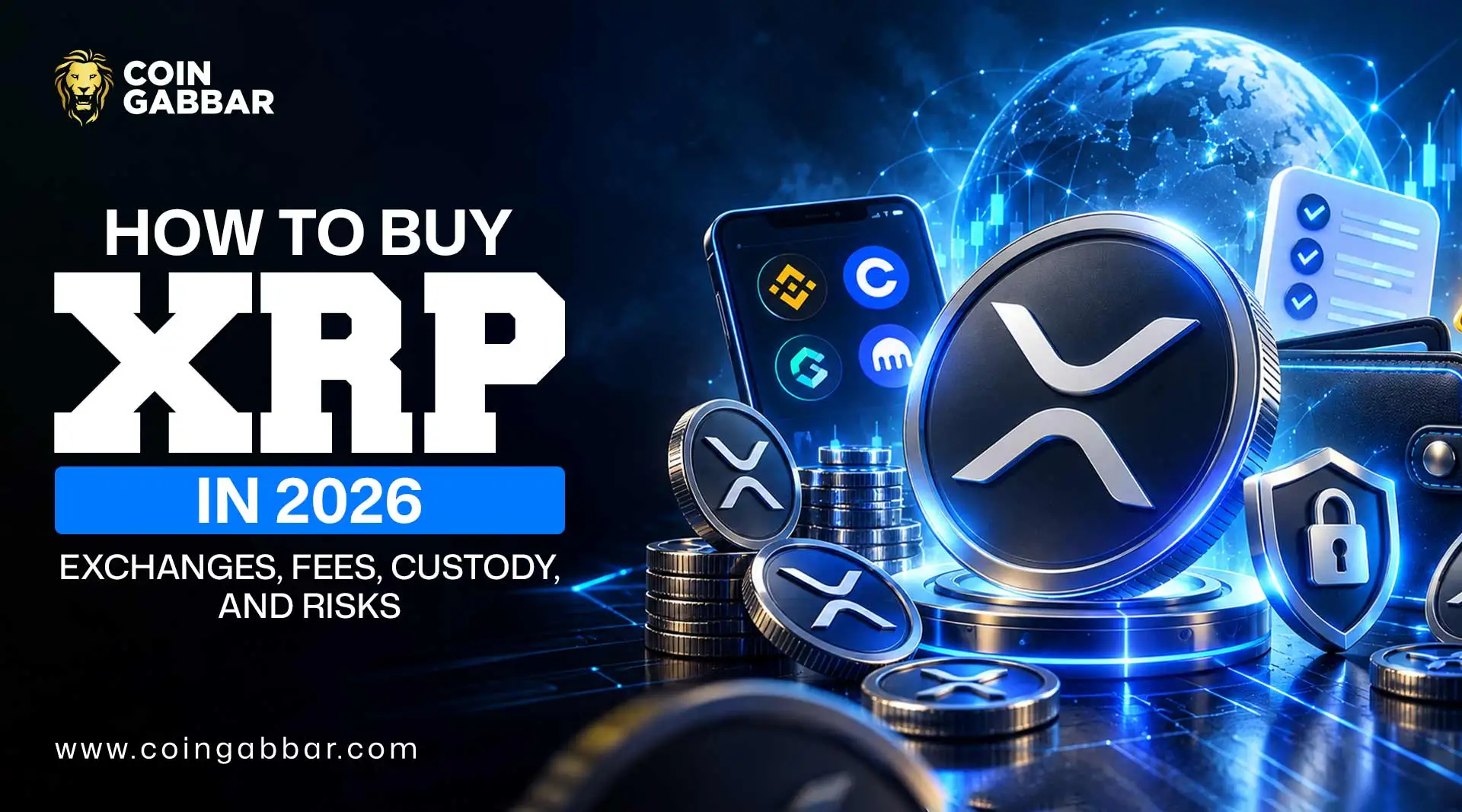
The Basic Path for How to Buy XRP
Honestly, figuring out how to buy XRP isn't nearly as complicated as some guides make it sound. Strip away the jargon and it comes down to five steps: pick a platform, verify who you are, fund the account, place the order, and figure out where the XRP actually ends up living afterward.
That last part, weirdly, is where most people trip up. It deserves its own moment of thought rather than getting decided on autopilot at the end. CoinGabbar's own step-by-step breakdown of How to Buy XRP walks through this same process with platform screenshots, if a more visual version helps.
Choosing Where to Buy XRP
Most people learning how to buy XRP start with a centralized exchange, and fair enough, there's a good reason for that. These platforms usually offer the deepest liquidity and the least confusing onboarding for someone doing this for the first time.
Popular centralized options include:
Coinbase, widely used in the US, with maker fees around 0.00% to 0.40% and taker fees up to 0.60%
Kraken, often mentioned for its lower fee structure, with roughly 0.16% maker and 0.26% taker
Binance, running some of the tightest spot fees out there, typically 0.10% or lower
Bitstamp, one of the oldest exchanges still standing, with competitive fees and solid fiat support
Decentralized exchanges exist too, for anyone who'd rather skip centralized custody from the start, though liquidity and trading pairs tend to be noticeably thinner than what the big centralized platforms offer.
What Fees Actually Look Like
Fees add up in more places than most beginners expect, and the trading fee is usually just the beginning.
Fee Type | Typical Range |
Spot trading fees | 0.01% to 0.60%, depending on the exchange |
Card deposit fees | 2% to 8%, notably higher than bank transfers |
Bank transfer fees | Often $0 to $5 flat, sometimes free |
Withdrawal fees | Usually 0.1 to 1 XRP per transfer, flat rate |
Bank transfers pretty much always come out cheaper than card purchases. So anyone figuring out how to buy XRP on a tight budget is usually better off waiting the extra day or two for a bank transfer than paying that card premium.
Step by Step: How to Buy XRP
1. Choose a platform.
Make sure it actually serves your location, supports XRP withdrawals, and shows the total order cost upfront, not just whatever fee number gets advertised loudest.
2. Create and verify an account
Most platforms want standard identity checks, a government ID, and proof of address before letting any money in the door.
3. Fund the account.
Compare funding methods by fee, speed, and any withdrawal holds attached, since these details differ more than people assume going in.
4. Place the order.
Check the fee, the spread, and exactly how much XRP you're getting before hitting confirm. The preview screen has a habit of revealing costs the headline fee never mentioned.
5. Choose a custody method
Decide whether the XRP stays on the exchange or moves over to self-custody w allet. A roundup of the best XRP wallets is worth a look before making that call, since not every wallet handles XRP's destination-tag system equally well.
Exchange Custody vs Self-Custody
This is arguably the bigger decision out of the whole process, and it's where convenience and risk start pulling in opposite directions.
Leave XRP on an exchange, and the platform holds the private keys. That's simpler day-to-day, but it ties those funds to how secure, or not, that exchange turns out to be.
Move it to a self-custody wallet, and full control comes back, but losing that wallet's recovery phrase means losing the funds for good, with nobody to call and beg. Recent coverage of how the XRP price dropped 2%, draining millions, is a pretty sobering, real-world example of exactly what can go wrong on the self-custody side when a wallet provider gets compromised.
One detail worth flagging bluntly: sending XRP to an exchange almost always needs a destination tag alongside the wallet address. Skip that tag, and the funds can technically arrive but never get credited to the right account. Sometimes that's permanent.
The ETF Route for Traditional Brokerage Accounts
For anyone who'd rather not touch a wallet or exchange at all, spot XRP ETFs offer a workaround through a regular brokerage account instead. A few ETFs, Franklin Templeton's product among them, now carry annual fees somewhere between 0.19% and 0.75%.
Ongoing XRP News coverage tracks ETF flow data and XRPL upgrades as they happen, which is handy context before picking between the ETF route and actually holding the token.
The tradeoff is worth being clear about, though. ETF shares aren't real XRP. Nothing to withdraw, nothing that ever touches the ledger, no self-custody option at all, which matters a lot if the actual token is the point rather than just price exposure.
Common Mistakes to Avoid
Skipping the destination tag when sending XRP to an exchange
Paying for a large purchase with a card when a bank transfer would cost a fraction as much
Assuming the advertised trading fee is the whole story, cost-wise
Leaving big holdings parked on an exchange indefinitely without ever weighing self-custody
For a deeper look at what XRP's actually used for beyond just buying and holding it, along with the risks that come with that utility, XRP Utility and Risk Guide is a solid next read.
and the broader XRP Investor Guide covers what comes after the initial purchase.
Is XRP Legal to Buy?
Yes, in the US at least. A 2023 court ruling settled that XRP sales on exchanges to retail buyers don't count as securities transactions, and that ruling is really what opened the door to the exchange listings and ETF products available today.
Anyone wanting the actual regulatory detail can check the SEC's public filings directly, and Ripple's own newsroom posts updates on the company's regulatory standing as things move.
The Bottom Line
At the end of the day, how to buy XRP comes down less to which button to click and more to comparing total cost honestly, not just the headline trading fee, and deciding early whether exchange custody or self-custody actually fits how that XRP is going to get used.
A quick check on live prices through something like CoinMarketCap before placing an order helps confirm the numbers on screen still match reality.
Whatever platform ends up getting picked, the buying part takes minutes. It's the fee and custody decisions that are genuinely worth slowing down for.
Disclaimer: This article is for informational purposes only and isn't financial advice. Cryptocurrency investments carry risk, and independent research is recommended before buying XRP or any digital asset.




.webp)