IMF Global Debt News: World Debt Hits a Record as Crisis Deepens


IMF Global Debt News: Why Is World Debt Nearing Historic Levels?
Fresh IMF Global Debt News paints a sobering picture of the world's finances: government borrowing has climbed to levels not seen in generations, with emerging market economies approaching a debt-to-GDP ratio the world hasn't recorded since data collection began in 1880.
Advanced economie aren't faring much better, sitting above 100% of GDP for a full decade running.
Together, these numbers point to what analysts are now calling a global deficit spending crisis.
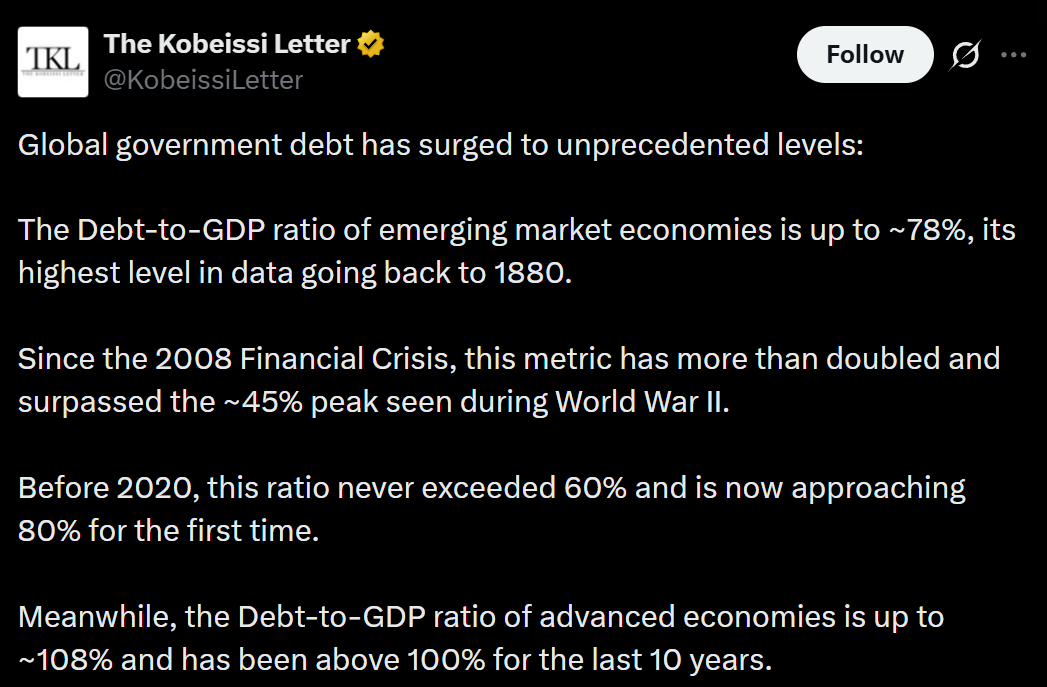
Source: Kobeissi Letter
Emerging Markets Are Approaching Historic Territory
The most striking figure in this round of IMF Global Debt News involves developing economies.
According to the IMF's April 2026 Fiscal Monitor, emerging market and middle-income economies carried a debt-to-GDP ratio of 75.3% in 2025, projected to climb to 78.9% in 2026, brushing right up against the roughly 78% level being widely cited this week.
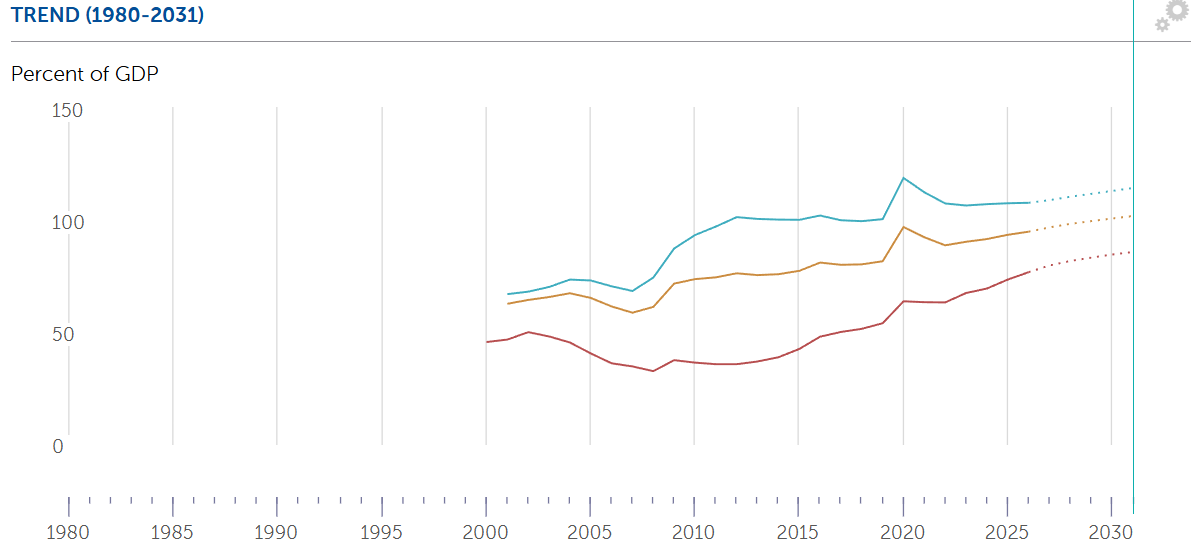
What makes this genuinely historic is the trajectory, not just the number itself:
-
This ratio has more than doubled since the 2008 Financial Crisis
-
It has now surpassed the roughly 45% peak these economies carried during World War II
-
Before 2020, the ratio had never crossed 60% in recorded history
-
It is now approaching 80% for the first time ever
For context , back in 2019, the comparable IMF figure sat at just 55.4%. Getting from there to nearly 79% in six years represents one of the sharpest debt build-ups on record for this group of countries.
Advanced Economies Have Been Above 100% for a Decade
The picture in wealthier nations tells a similarly concerning, if less dramatic, story.
IMF data puts advanced economy debt-to-GDP at 108.0% for 2025, with projections rising to 108.2% in 2026 and continuing upward toward nearly 115% by 2031.
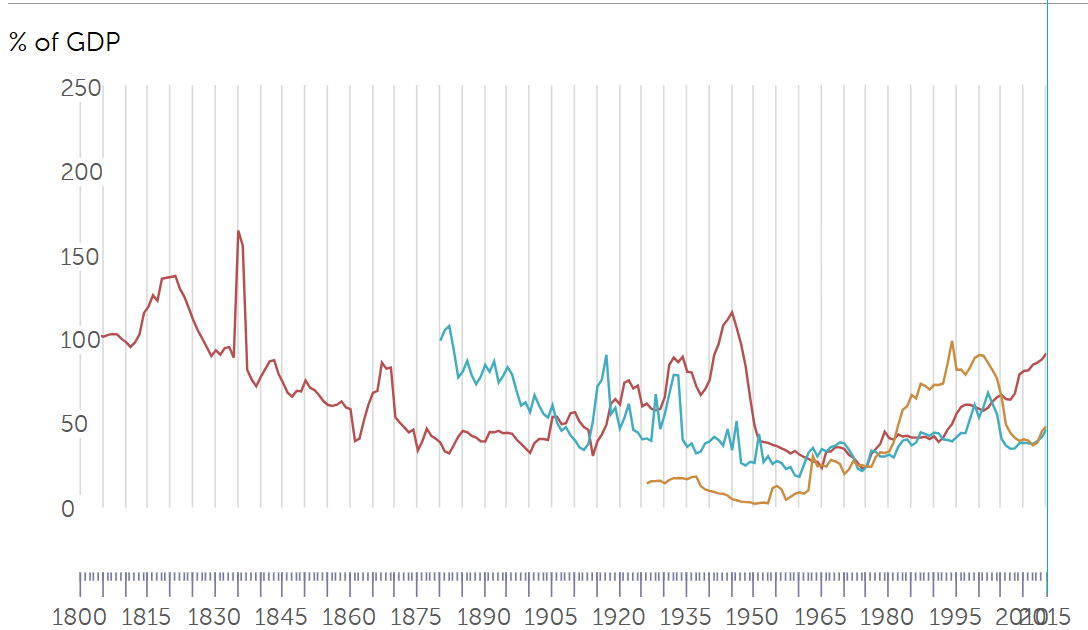
A few things stand out here:
-
Advanced economies have stayed above the 100% threshold for roughly the last ten years
-
Before the 2008 Financial Crisis, this same figure sat below 80%
-
The United States specifically is projected to climb from 108.3% in 2025 toward 115.4% by 2027, among the steepest increases in the group
Unlike emerging markets, where the recent climb has been sudden, advanced economy debt has been on a slower, steadier upward grind since the 2008 crisis, interrupted only briefly by post-pandemic revenue windfalls before resuming its climb.
What's Actually Driving This Debt Build-Up?
The IMF's own Fiscal Monitor points to several structural forces behind these numbers, beyond just the headline percentages.
Rodrigo Valdés, the IMF's Director of Fiscal Affairs, described governments as navigating "a narrowing window for policy flexibility as borrowing costs rise and fiscal space diminishes."
Some of the key pressures identified in the report include:
-
Shifting composition of debt buyers, with the domestic official sector absorbing much of the increase in global debt since 2010
-
Shortening debt maturity structures, forcing governments to refinance more frequently at today's higher rates
-
Geopolitical fragmentation, which IMF staff analysis links to public debt ratios rising by about 1.5 percentage points of GDP in the medium term following major shocks
-
Demographic pressures in advanced economies adding long-term fiscal strain
Table: World Debt-to-GDP at a Glance (IMF April 2026 Data)
| Region | 2019 | 2025 | 2026 (Projected) |
| World | 82.1% | 93.9% | 95.3% |
| Advanced Economies | 100.9% | 108.0% | 108.2% |
| Emerging Market & Middle-Income Economies | 55.4% | 75.3% | 78.9% |
| United States | 108.8% | 123.9% | 125.8% |
| Low-Income Developing Countries | 38.5% | 48.2% | 47.2% |
Why This Matters Beyond Government Balance Sheets
This isn't just an abstract fiscal statistic, it has real consequences for borrowing costs, inflation risk, and how much room governments have to respond to future crises.
As the IMF's Fiscal Monitor notes, high debt levels today amplify the impact of weaker growth or tighter financial conditions on future debt trajectories, meaning the problem can compound rather than stay static.
Rising yields also spill over into other markets, disproportionately hitting countries that rely heavily on external financing.
Even outside traditional finance circles, this kind of macro pressure tends to ripple into risk assets broadly, and it's a big reason this story is getting attention.
In crypto news today, investors watch global liquidity conditions closely.
Conclusion
This latest IMF Global Debt News confirms that global government borrowing isn't just elevated; it's charting genuinely uncharted territory for emerging markets and sustaining historic highs across advanced economies.
With emerging market debt nearing 80% of GDP for the first time in recorded history and advanced economies locked above 100% for a full decade, the IMF's own language, a "narrowing window for policy flexibility", suggests governments worldwide are running out of easy options.
How policymakers respond in the coming years will likely shape borrowing costs, currency stability, and market sentiment well beyond traditional government bond markets.
Disclaimer
This article is for educational and informational purposes only and should not be considered financial or investment advice. Always conduct your own research before making investment decisions.










