Laptop Coin vs TRUMP Coin: Tokenomics and Key Differences

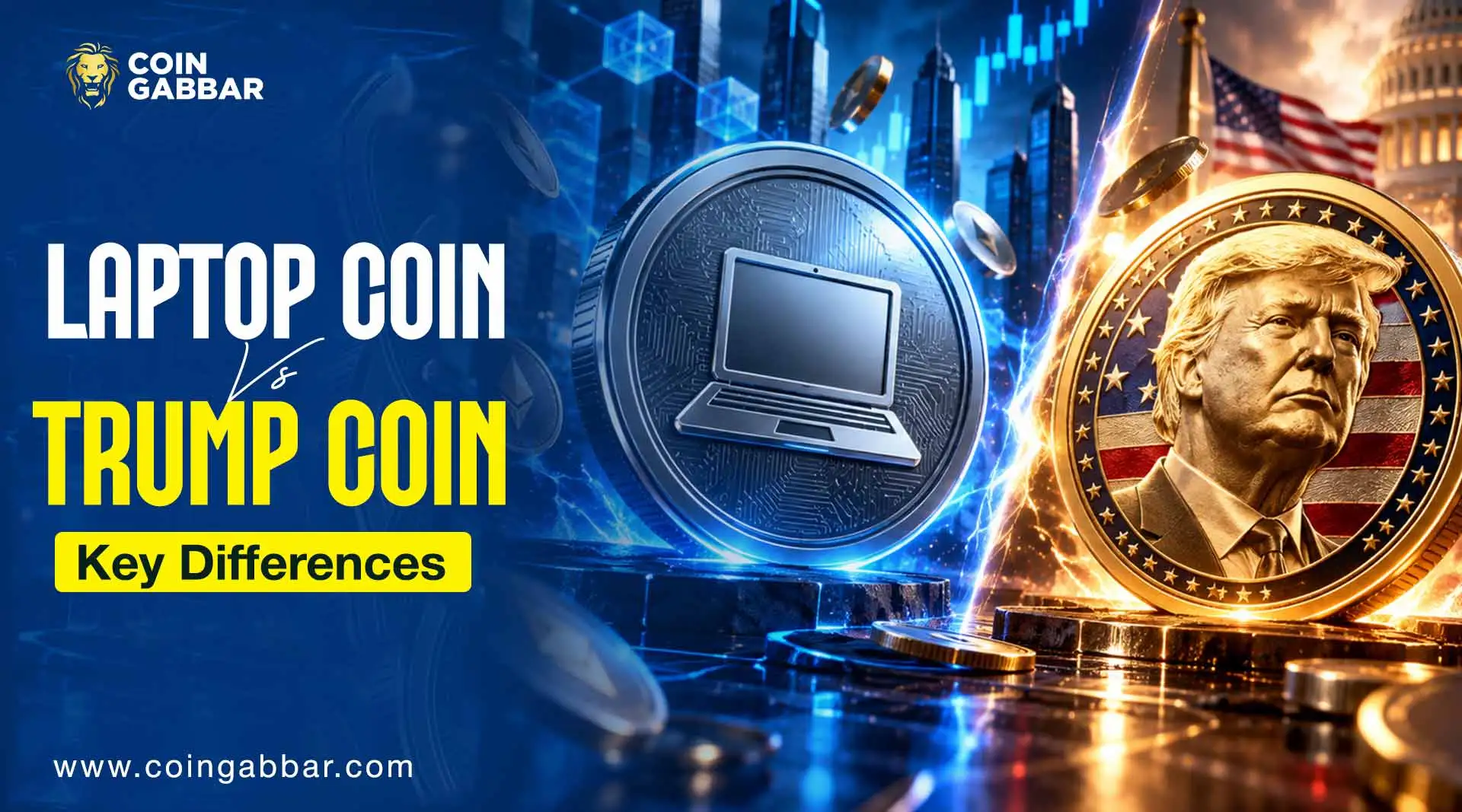
Laptop Coin vs TRUMP Coin: Comparing Their Tokenomics
Laptop Coin vs TRUMP Coin comparisons started spreading fast the moment Hunter Biden launched LAPTOP on Base, on September 9, 2026.
The timing wasn't random. LAPTOP's own branding leans directly on TRUMP, right down to an airdrop aimed at TRUMP's losing traders.
Both tokens ride political attention. Both cap out at one billion tokens. But that's about where the resemblance stops.
Here's the thing: once you open the actual allocation charts, LAPTOP tokenomics and TRUMP tokenomics tell two very different stories about who really holds the supply, and why.
One spreads control across founders, predictions, and charity. And the other hands 80% of everything to two affiliated companies.
What Is a LAPTOP Coin?
LAPTOP is a political meme coin co-founded by Hunter Biden, son of former U.S. President Joe Biden.
It launched on September 9, 2026 (UTC), on Base, Coinbase's layer-2 network built on top of Ethereum. A layer-2 network is basically a faster, cheaper add-on chain that still settles back to a bigger, more secure blockchain.
The name is deliberate. It calls back to the "Hunter Biden laptop" story from the 2020 U.S. election cycle, a moment that dogged him for years. Instead of avoiding that history, the project builds its entire identity around it.
LAPTOP isn't just another copy-paste memecoin, though. Its tokenomics wire in real-world political predictions, a conditional burn, and a charity carve-out, features most meme tokens never bother with.
What Is a TRUMP Coin?
TRUMP, officially called OFFICIAL TRUMP, is a memecoin tied to U.S. President Donald Trump.
It launched on January 17, 2025, on Solana, a high-speed blockchain known for low fees and fast settlement. Trump announced it himself on his own social platforms, just two days before his second inauguration.
Two entities run the show: CIC Digital LLC, an affiliate of the Trump Organization, and Fight Fight Fight LLC, led by longtime Trump associate Bill Zanker. Together, they hold the lion's share of the supply.
TRUMP has since folded in extra utility, things like token-gated events and prediction-market perks. But at its core, it's still a political meme coin riding one person's brand, not unlike LAPTOP in that one respect.
LAPTOP vs TRUMP Coin: Tokenomics at a Glance
The table below puts both supply structures next to each other. Read it once, and the gap becomes obvious.
Metric | LAPTOP | TRUMP |
Blockchain | Base | Solana |
Launch date | September 9, 2026 (UTC) | January 17, 2025 |
Total supply | 1,000,000,000 | 1,000,000,000 |
Founder/creator allocation | 30% | 80% |
Airdrop/public distribution | 20% (day-one + future airdrops) | 10% public distribution |
Liquidity | 10% | 10% |
Burn mechanism | Yes, conditional (prediction-linked) | No equivalent mechanism |
Prediction-linked supply | 30% | No |
Utility | Memecoin/community | Memecoin/community |
According to Hunter Biden's own tokenomics disclosure, LAPTOP's founder allocation sits at 30%, with a separate 30% tied to real-world prediction outcomes. TRUMP's documentation, tracked by tokenomics platforms including Tokenomist, confirms 80% sits with creator-affiliated entities, CIC Digital LLC and Fight Fight Fight LLC.
How Does LAPTOP Tokenomics Work?
LAPTOP Supply and Allocation
LAPTOP has a fixed supply of 1 billion tokens on Base, Coinbase's layer-2 network.
35% of that supply unlocked right at the token generation event (TGE). The rest follows separate vesting paths depending on which bucket it sits in.
Founder Allocation and Vesting
Founders, Hunter Biden included, control 30% of total supply.
That chunk is locked for six months first. Then it vests linearly over 24 more months, so the founder allocation fully unlocks around the 36-month mark.
Airdrop Allocation
20% of supply goes toward airdrop allocation, split into two halves.
Half went out on day one: 8% to subscribers of Biden's "Where's Hunter?" Substack, and 2% specifically to wallets that lost money trading Donald Trump's TRUMP memecoin. The other 10% is reserved for a future airdrop, details still unannounced.
One catch worth noting: day-one recipients get 30 days to claim. Tokens left unclaimed after that window get burned, not redistributed.
Prediction-Linked Burn and Charity Mechanism
This is the part that makes LAPTOP genuinely unusual among political meme coins.
30% of supply, 300 million tokens, is tied to 30 real-world predictions spanning politics, crypto, and culture. Think events like a Democrat winning the 2028 presidential race, or LAPTOP's valuation passing TRUMP's.
If a predicted event actually happens, the linked tokens get burned. If it doesn't, they're redirected to charity instead. Turns out, that's the LAPTOP burn mechanism in full: it's conditional, tied to outcomes nobody controls, not a fixed schedule.
This portion locks for 12 months, then vests over another 24. Beyond that, 10% goes to liquidity, 5% funds the Phoenix Veritas Foundation treasury, and a final 5% goes directly to charity.
How Does TRUMP Tokenomics Work?
TRUMP Supply and Allocation
TRUMP also caps out at 1 billion tokens, issued on Solana back in January 2025.
The split at launch was blunt: 20% public, 80% insiders. No prediction mechanics, no charity carve-out.
Creator and CIC Digital Holdings
The official TRUMP documentation states that 80% went to creators and affiliated entities, specifically CIC Digital LLC (a Trump Organization affiliate) and Fight Fight Fight LLC.
That 800 million tokens is split across six separate vesting groups, each with its own cliff, ranging from three to twelve months, followed by 24 months of daily linear vesting.
Public Distribution and Liquidity
10% of supply went to public distribution, fully unlocked at TGE.
Another 10% seeded liquidity, also unlocked at launch. Combined, that's the only 20% of TRUMP that wasn't locked away from day one.
TRUMP Unlock Schedule
The full release schedule stretches out to mid-2028.
As of mid-2026, roughly 23.7% of total supply had entered circulation, per Tokenomist tracking data. And there's no burn function anywhere in the design. Every unlocked token stays in circulation permanently, unless someone chooses to burn it manually.
7 Key Differences Between LAPTOP and TRUMP
1. Supply Is the Same, but Allocation Is Different
Both use a 1 billion maximum supply, but that's a surface-level match. The actual distribution structures diverge almost completely once you go one level deeper.
2. Founder Concentration Is Different
LAPTOP assigns 30% to founders. TRUMP's creator and CIC Digital allocation totals 80%, nearly triple.
3. LAPTOP Has a Prediction-Linked Supply Mechanism
This is probably the single biggest tokenomics distinction between the two. Nothing in TRUMP's structure resembles it.
4. LAPTOP Uses Targeted Airdrops
Especially the 2% slice aimed at wallets that lost money on TRUMP itself. TRUMP's own launch never targeted a rival project's losers this way.
5. Their Unlock Structures Differ
LAPTOP leans on a 6-to-12-month lock followed by 24-month linear vesting across most buckets. TRUMP staggers six separate cliff groups (3, 6, and 12 months) before starting its own 24-month daily vesting.
6. They Launch on Different Blockchains
LAPTOP runs on Base. TRUMP runs on Solana. Different fee structures, different transaction speeds, different ecosystems entirely.
7. Their Tokenomics Tell Different Stories
LAPTOP is built around airdrops, predictions, burns, and charity. It's messy, political, and honestly a little chaotic.
TRUMP is far more straightforward: public distribution plus liquidity plus creator-affiliated holdings under a long vesting clock. Simpler design. Heavier concentration.
What the Differences Mean
Here's what actually matters for anyone comparing insider allocation across these two.
TRUMP's 80% insider hold means the vast majority of supply can eventually reach the open market, controlled by two entities with a near-zero cost basis. That's a structural overhang that doesn't go away until 2028.
LAPTOP's insider slice is smaller at 30%. But its 30% prediction-linked bucket adds a layer of genuine uncertainty. Will events resolve toward burns, shrinking supply? Or toward charity, leaving supply-side pressure unclear?
We pulled up both vesting curves side by side, and the pattern was clear: TRUMP's unlock pressure is scheduled and predictable. LAPTOP's is partly scheduled, partly dependent on real-world outcomes nobody can control.
Similarities
Both tokens share more structural DNA than their headlines suggest.
Fixed 1 billion total supply, no inflation mechanism on either side
Direct link to a sitting or former political figure's public brand
A 10% liquidity allocation carved out at launch
Memecoin classification, community-driven utility, no formal securities framework claimed by either project
Multi-month lock periods before the largest allocation buckets begin vesting
Risks and Limitations
Concentration risk: TRUMP's 80% insider hold and LAPTOP's combined 60% (founders plus prediction-linked) both represent heavy control in few hands
Unlock pressure: New tokens enter circulation on both chains for years to come, which can weigh on price regardless of demand
Event uncertainty: LAPTOP's burn-or-charity outcome depends on unpredictable real-world events, not a fixed formula
Regulatory attention: Political meme coins tied to public figures have drawn ethics scrutiny before, and that scrutiny could resurface for either project
Limited precedent: Neither structure has a long multi-year track record yet, so how vesting actually plays out in practice remains partly untested
Final Takeaway
LAPTOP vs TRUMP comes down to one core contrast: concentration versus complexity.
TRUMP keeps it simple. Eighty% with insiders, twenty% public, a long vesting clock, no burns. LAPTOP spreads its supply across founders, predictions, airdrops, liquidity, a foundation, and charity, with a conditional burn mechanism layered on top.
Neither structure is inherently safer. They're just built differently, for different reasons, and readers comparing the two should weigh token unlocks and concentration on both sides before drawing conclusions.
Disclaimer
This article is for informational purposes only and isn't financial advice. Tokenomics figures come from each project's own published disclosures and third-party tracking data, and allocations or schedules may change. Always verify current figures on official sources before making any decisions.





.jpg)