Polygon News: Why POL Rewards Hit 7.7% as Volume Reaches $3T

Why Are POL Staking Rewards Suddenly Rising?
Polygon news today centers on a two-month boost for stakers. The Polygon Foundation said PIP-92 is now officially activated. Higher POL staking rewards will run until December 1, 2026, according to the Polygon Foundation announcement.
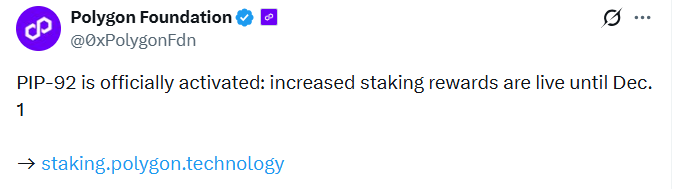
Source: Polygon Foundation X Post
The estimated gross reward rate is about 7.7% a year. The baseline sits near 3%. On the same day, Polygon shared a second milestone about stablecoin transfers. This Polygon latest news covers both items.
What Is PIP-92, and Why Is Polygon Boosting POL Rewards?
PIP-92 is a Polygon Improvement Proposal. It temporarily raises the reward rate for POL holders who stake on the Polygon proof-of-stake network.
The aim is straightforward. Higher rewards give more people a reason to stake, and staked tokens help secure the network. Live rates are listed on the official Polygon staking portal.
How Long Will the Higher POL Staking Rewards Last?
The window runs from October 1 to December 1. After that date, rewards are scheduled to return to the baseline near 3%.
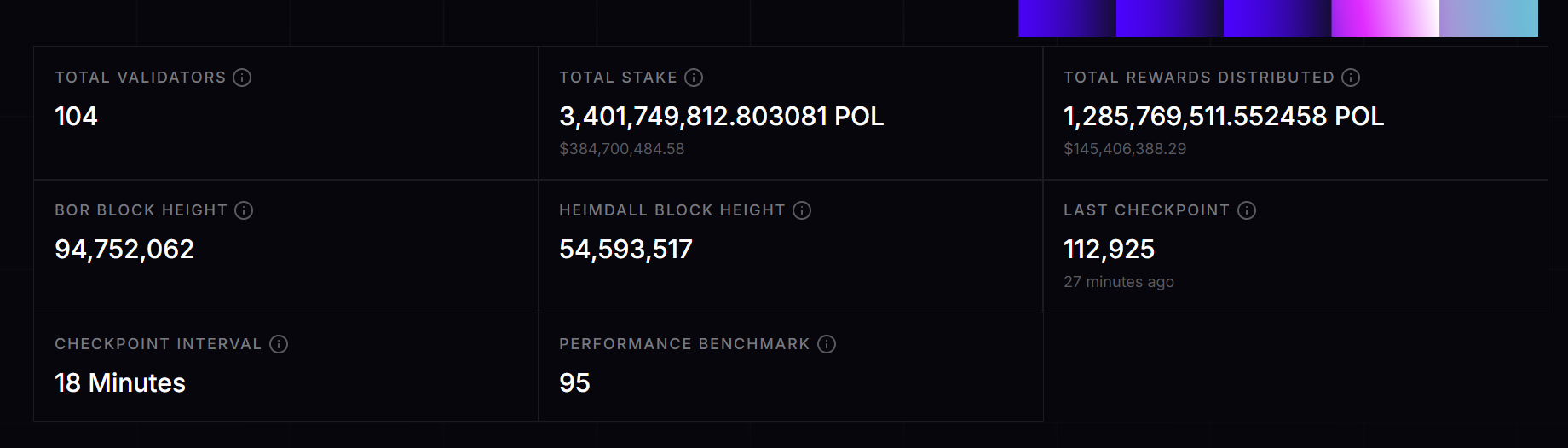
The 7.7% figure is an estimate. Actual returns depend on how much POL is staked across the network.
Where Does the 27.3 Million POL Reward Boost Come From?
The boost uses 27.3 million POL in priority fees. The network collected these fees earlier. They will now go toward staker rewards over the next two months.
That detail matters because the source is network revenue. Whether Polygon repeats a similar boost later has not been confirmed.
Could Higher Staking Rewards Change the Polygon Price?
The Polygon price has stayed in a narrow range. Market trackers showed POL between roughly $0.11 and $0.12 in recent sessions. One tracker showed a daily dip of about 2.6%.
Higher rewards can encourage more staking, and staked tokens are locked. Still, no confirmed data links PIP-92 to any POL price move. Broader market conditions also play a large role in this Polygon update.
What Does Polygon's $3 Trillion Stablecoin Milestone Mean?
Polygon's second announcement came in a post titled "a trillion here. a trillion there." It included three charts. They show lifetime stablecoin transfer volume reaching $3 trillion, as shown in the Polygon X post.
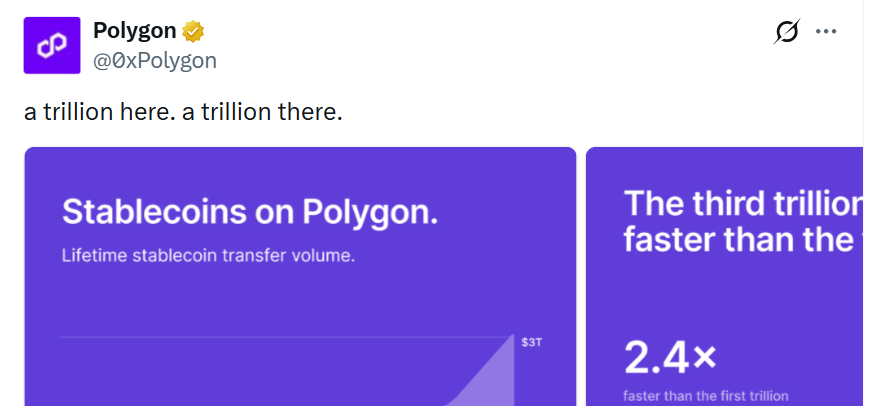
These figures are company-reported. Polygon did not publish its full method in the charts. Transfer volume also differs from stablecoin supply, so the number reflects movement, not deposits alone.
How Quickly Did Polygon Reach Its $3 Trillion?
Each trillion arrived faster than the last, per Polygon's charts:
First $1 trillion: 34 months, about $29 billion per month
Second $1 trillion: 24 months, about $42 billion per month
Third $1 trillion: 14 months, about $71 billion per month
Polygon says the third trillion came 2.4 times faster than the first. The monthly pace more than doubled between those two milestones.
Did Most of Polygon's Stablecoin Growth Happen Recently?
Yes, based on Polygon's data. About $1.67 trillion moved in 2025 and 2026 so far, roughly 55% of the lifetime total. The year 2025 saw $933 billion. The year 2026 has seen $741 billion to date.
Earlier years were smaller. From 2020 to 2024, volume totaled about $1.35 trillion. Background on how these networks handle payments is covered in our stablecoin payment networks guide.
What Does the Latest Polygon News Say About Network Demand?
The two stories connect. Staking rewards attract holders who help secure the chain. Stablecoin flows show how much the chain is used for payments.
Together, they give a fuller view of this Polygon crypto news cycle. The open question is whether activity holds once the extra incentives end on December 1.
What Should Readers Watch After the PIP-92 Reward Boost?
The data suggests Polygon is pushing on staking and payments at the same time. Several signals will show how durable that push is.
Staked POL: A higher staked share can lower the reward each staker earns.
December 1 reset: The move back to a baseline near 3% is the next test.
Stablecoin pace: Monthly volume needs to stay near recent levels for the trend to hold.
Volume quality: Transfer volume can include repeated or automated movement, so it does not map directly to user demand.
The main uncertainty remains how much of the activity depends on incentives. Daily coverage of this topic appears in our crypto news today feed.
Conclusion
This Polygon news shows a network working on two fronts. PIP-92 gives stakers a temporary reward lift through December 1. The $3 trillion stablecoin milestone points to growing payment use.
Neither item guarantees a price move. December 1 is the next clear checkpoint.
Disclaimer: This article is for information only and is not financial advice. Crypto assets are volatile and carry risk. Do your own research before making any decision.