Why Is Crypto Crashing Today? Bitcoin, Ethereum, XRP, and Solana Drop


The market did not break quietly. Bitcoin punched through $73,000, Ethereum lost the $2,000 floor, and nearly a billion dollars in bullish bets got wiped out in a single day. If you woke up to red screens this morning, here is exactly what happened and why it hit this hard.
What Is Causing the Crypto Market to Crash Today?
Why is Crypto Crashing? The short answer is war risk. Fresh U.S. airstrikes on Iran, near the Strait of Hormuz, rattled global markets overnight. It is the second round of strikes within days, and Iran has already signalled it will respond.
Investors who had been quietly pricing in a 60-day ceasefire got that assumption ripped away fast, and they sold first without waiting to see what came next.
That geopolitical shock is the headline. But the real story of why this drop cut so deep lies underneath it.
How Much Has Crypto Fallen Today?
The total crypto market cap has dropped to roughly $2.54 trillion, down around 3.1% in 24 hours, according to CoinGecko data. Every major coin took damage:
Bitcoin fell below $73,000 — a level it had held for weeks
Ethereum lost the key $2,000 psychological support
XRP slipped under $1.30
Solana dropped back near $80
The Crypto Fear and Greed Index has collapsed to 22, deep inside fear territory. At that level, traders are not bargain hunting. They are cutting exposure and waiting for clearer skies.
Why Did the Iran Strikes Hit Crypto So Hard?
Why is Crypto Crashing? The connection between U.S.-Iran tensions and Bitcoin prices runs through oil. The Strait of Hormuz handles a massive share of global crude shipments. Any threat to that route pushes oil prices higher.
Higher oil feeds inflation. And when inflation climbs, the Federal Reserve has less room to cut interest rates, which keeps pressure on every risk asset from tech stocks down to meme coins.
This is the part that long-term holders find maddening. Crypto was sold for years as an uncorrelated asset, the thing that would hold its ground when traditional markets panicked.
Instead, it now moves in lockstep with equities the moment fear spikes. Wednesday proved that again.
What made this particular drop worse is that Bitcoin had actually shrugged off earlier Iran headlines for weeks, holding above $75,000 through multiple rounds of bad news.
This time, the floor gave out. That shift says as much about the underlying market structure as it does about the geopolitics.
Why Were the Losses So Severe? ETF Outflows and Mass Liquidations
Why Is Crypto Crashing? Two forces turned a bad news cycle into a brutal session.
ETF money was already walking out the door. Spot Bitcoin ETFs recorded outflows of $733.43 million in a single day, their worst reading in months, and have bled over $2 billion across the past month, according to SoSoValue data.
Ethereum ETFs have posted outflows for 11 consecutive days. The institutional buyers who had been providing a steady floor under prices were already gone before the Iran news even landed.
Then came the liquidation cascade. According to CoinGlass data, total liquidations across the crypto market hit $930.55 million in 24 hours, wiping out over 165,000 traders.
Long positions took almost the entire hit — more than $871 million in bullish bets were forcibly closed. Bitcoin alone saw $366.35 million in liquidations, with Ethereum close behind at $239.41 million.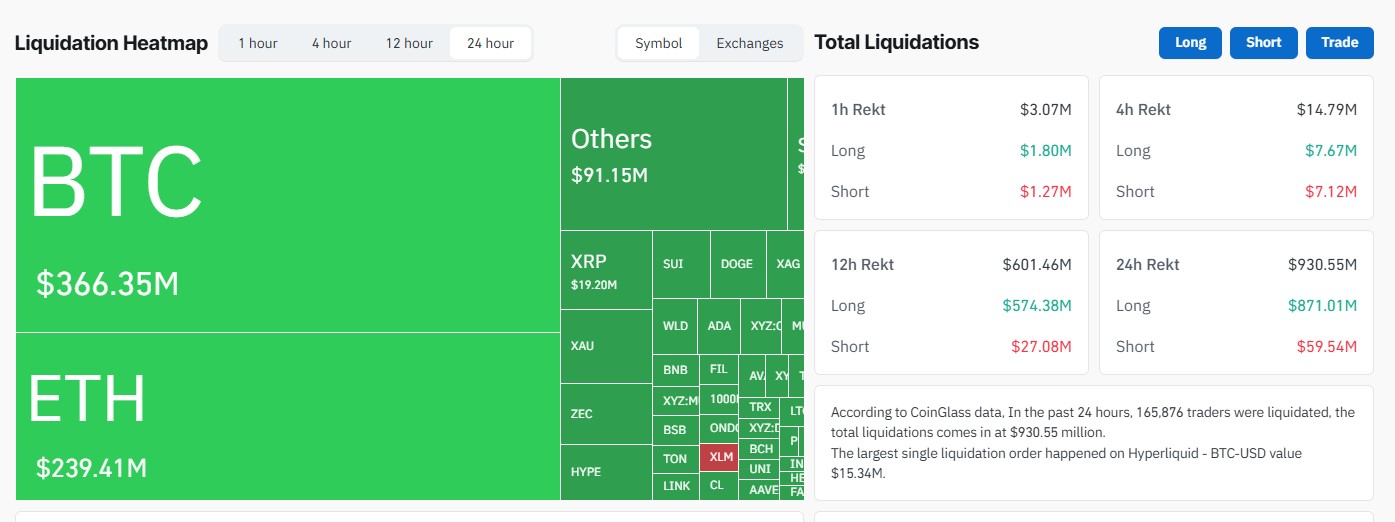
That is how a 3% price move turns into a near-billion-dollar wipeout. Traders were heavily stacked on the long side, betting on a bounce.
When the strikes hit and prices moved against them, their positions got liquidated automatically. Each forced sale pushed prices slightly lower, which triggered the next round of liquidations, and so on down the chain.
Where Are Bitcoin, Ethereum, SOL, and XRP Headed Next?
Why Is Crypto Crashing? Bitcoin is holding near the lower edge of its ascending channel. The $72,000–$70,000 zone is the line in the sand.
As long as the price stays above that band, the broader bullish setup remains technically intact, with a potential recovery toward $80,000–$84,000 over the coming weeks.
A confirmed break below that range, however, opens the door to mid-$60,000 territory. RSI is approaching oversold levels, which suggests the selling momentum may start to slow.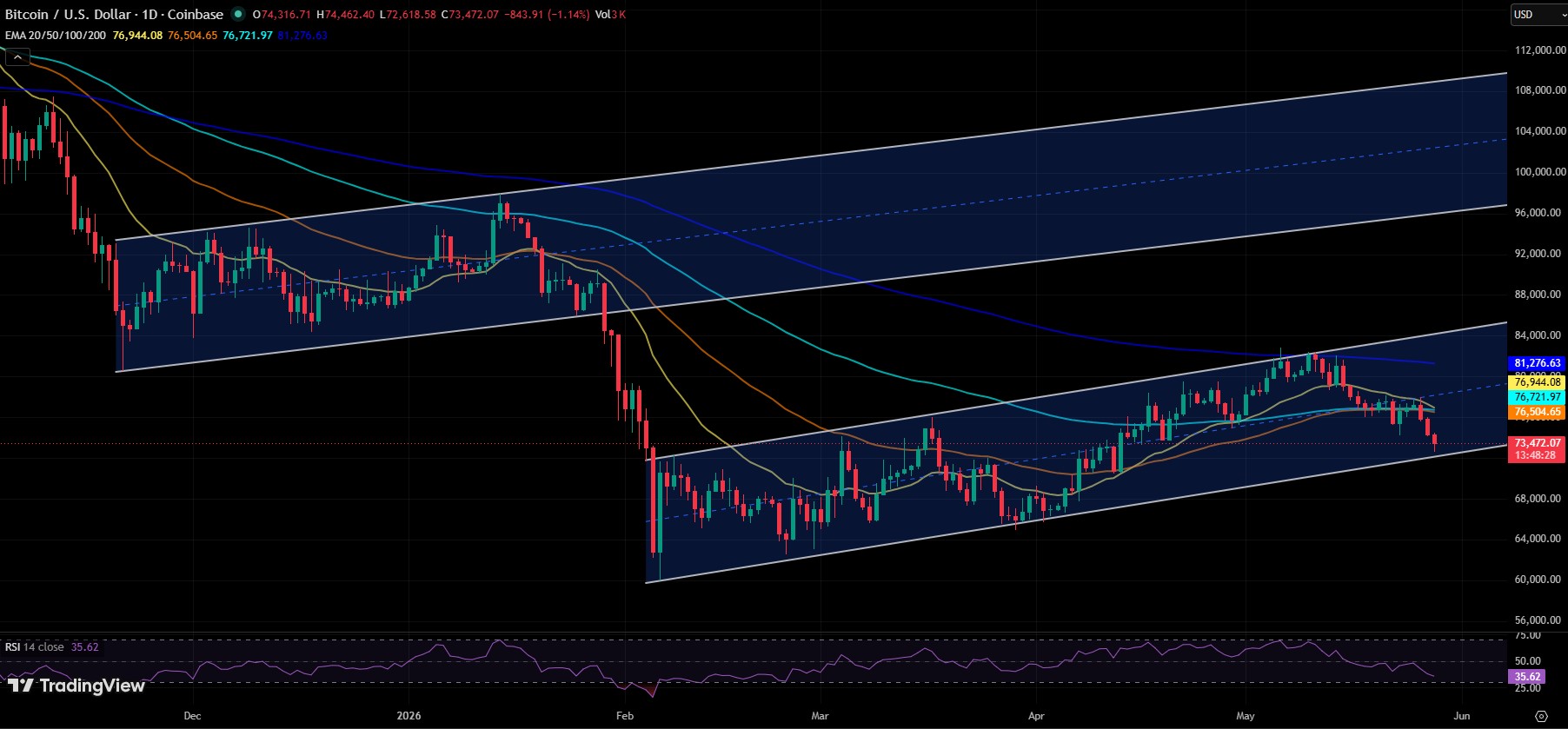
Ethereum broke both the $2,000 level and its rising channel in the same move, which is a more damaging technical picture than Bitcoin's.
If ETH closes the day below $1,980, the next meaningful support sits around $1,850, and below that, near $1,700.
A reclaim of $2,100 on strong volume could trigger a relief bounce toward $2,250–$2,300, but sellers currently control the trend.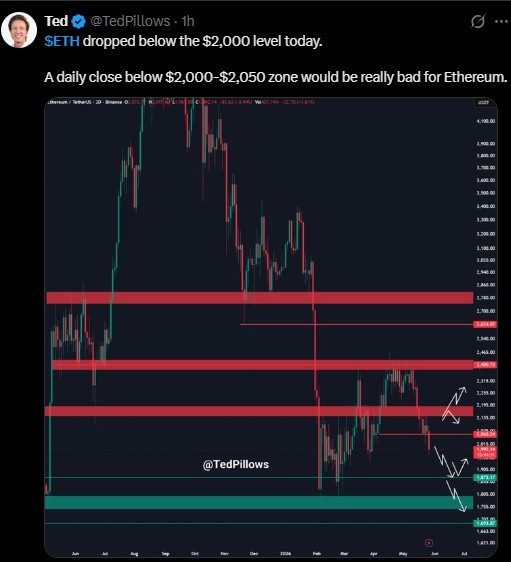
Solana is now below its 20, 50, and 100-day moving averages, with the 200-day EMA sitting far above, near $107.
The critical level to watch is the $76–$78 support zone, which has held as a base multiple times since February.
If that breaks on heavy volume, $72 and $68 become the next targets. A defence of that zone could spark a short-term bounce toward $85–$90.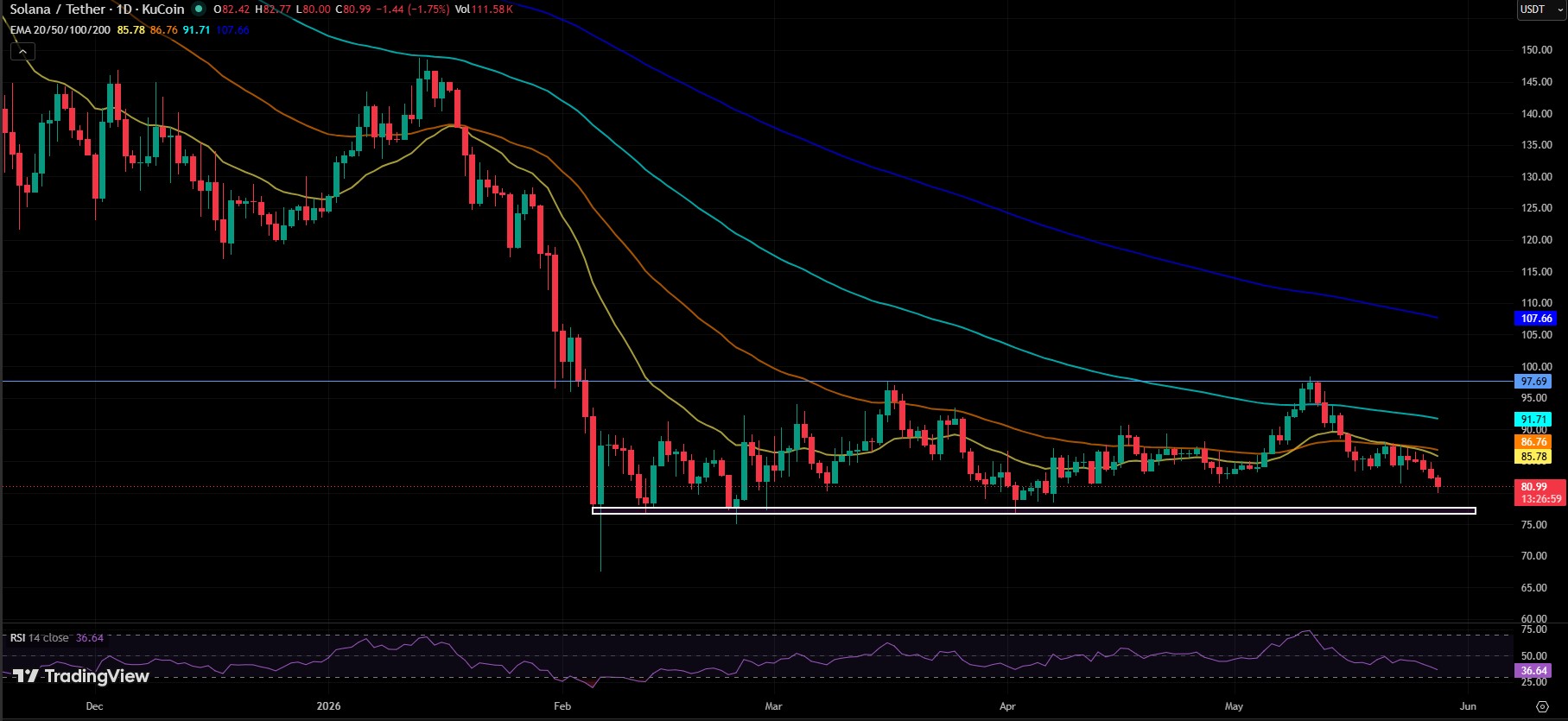
XRP is trading inside a long-term descending triangle and has failed to hold above the $1.40–$1.46 resistance cluster.
It is below all key moving averages, and RSI has dropped to around 33. The next support to watch is the $1.20–$1.15 range.
A breakdown there puts the psychological $1.00 level in play. Any recovery attempt will face heavy resistance before $1.60.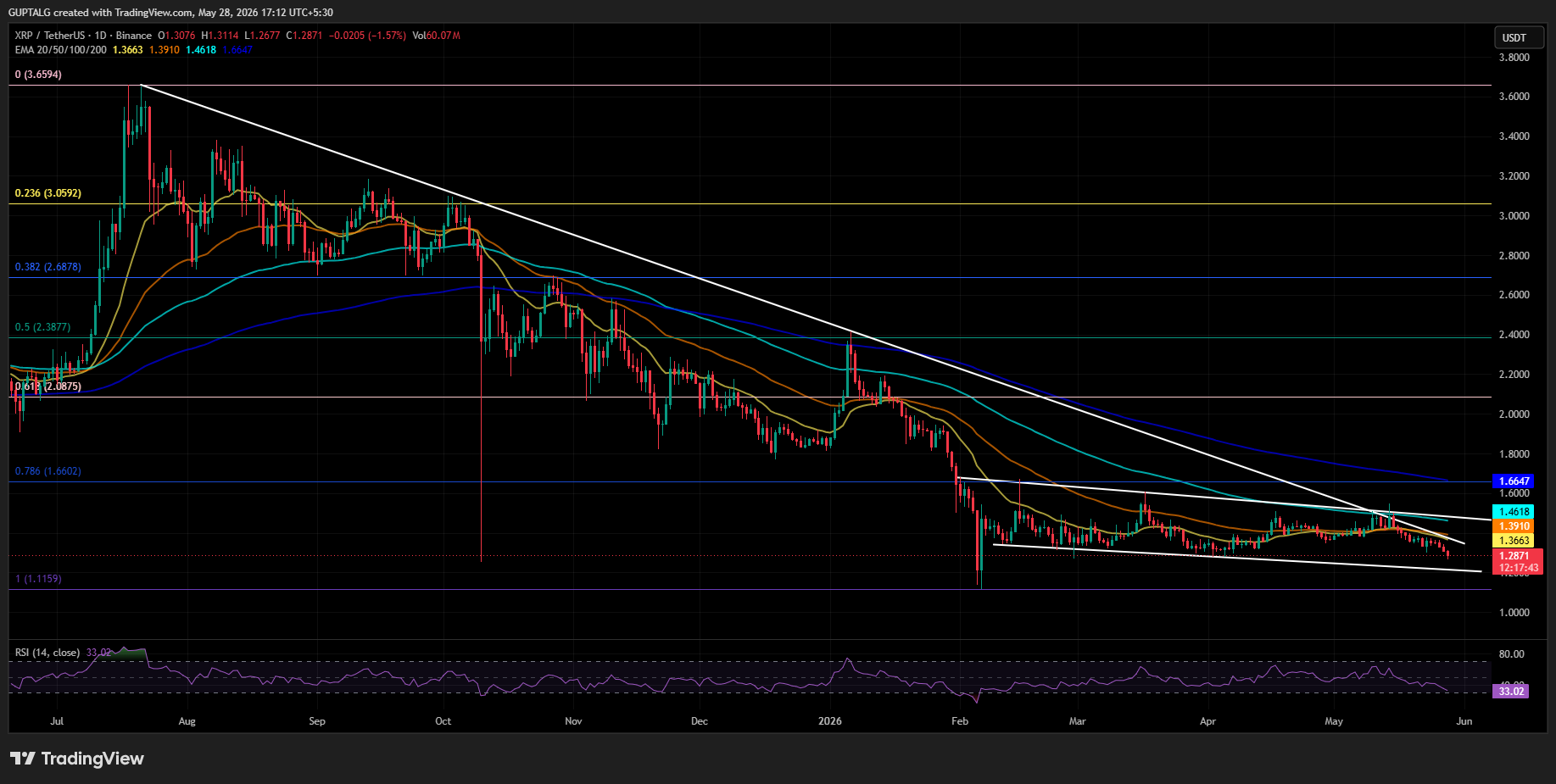
Is This Crypto Crash Over?
Why Is Crypto Crashing? Probably not on its own timeline. The conditions that caused this drop — institutional ETF outflows, overleveraged long positions, and geopolitical tension near a critical oil route — are not going to resolve themselves in a single session.
What could turn things around: a de-escalation between the U.S. and Iran, a slowdown in ETF outflows, or Bitcoin reclaiming the $75,000 level with conviction. Any one of those shifts the mood quickly.
Until then, the honest reality is that crypto's next direction will be determined more by events in the Middle East and decisions on Wall Street than by anything happening on-chain.
That is where the market stands today, and that is the bet every holder is currently making, whether they want to be or not.
Disclaimer: This article is for informational purposes only. It is not financial advice. Crypto markets are volatile and unpredictable. Always do your own research before investing.
Also read: