Top DeFi Tokens in September 2026: 5 Projects Worth Tracking

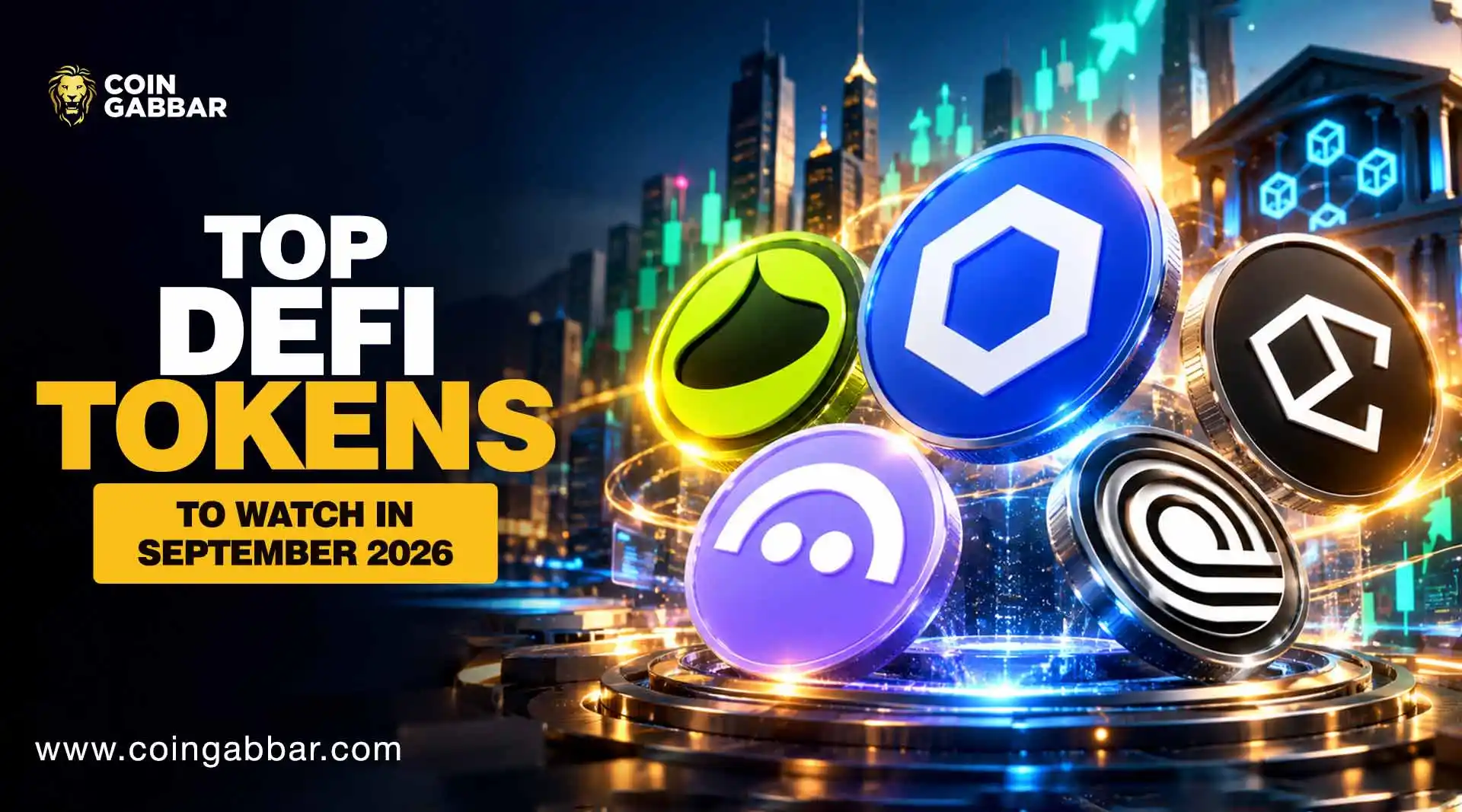
Top DeFi Tokens: 5 Projects With Different Use Cases and Risk Profiles
DeFi keeps growing every year. More people want to know which coins actually matter. This guide covers the top DeFi tokens worth knowing about right now. We look at real price data, real market caps, and real use cases. No hype. Just facts.
If you are searching for promising DeFi tokens to watch, this list is a good place to start.
Key Takeaways
DeFi tokens power real financial tools. Lending, trading, and yield all run through them.
Not all tokens are equal. Market cap, volume, and real use matter more than price alone.
Diversification matters. Spreading risk across a few strong projects beats betting on one coin.
What Are DeFi Tokens?
DeFi stands for decentralized finance. DeFi tokens power apps that let people lend, borrow, trade, and earn yield. All of this happens without a bank in the middle.
These tokens often do more than one job. Some let holders vote on project decisions. Some pay for network fees. Some tokens do both. This is what separates DeFi crypto from basic meme coins.
How We Selected the Top DeFi Tokens
Market cap: We looked at how large and established each project is within the DeFi space.
24-hour trading volume: High volume signals real, active interest, not just idle holding.
7-day price trend: This shows short-term momentum and how the market is currently reacting to the project.
Real-world use case: Each token needed a clear job, like lending, data delivery, or asset tokenization.
Track record: Older, tested protocols were weighed alongside newer, higher-risk projects for balance.
This approach helps highlight DeFi tokens with strong fundamentals, not just trending names that spike and fade.
Top DeFi Tokens to Watch in 2026
1. Chainlink (LINK)
Chainlink is not a typical DeFi app you open and use directly. It works quietly in the background instead. It is the infrastructure that many DeFi apps depend on to function correctly. Chainlink connects blockchains to real-world data, like asset prices, weather updates, and even sports results.
This matters because blockchains cannot access outside information on their own. They need a trusted bridge to the real world, and that is exactly what Chainlink provides. Lending platforms, trading apps, and insurance protocols all rely on this kind of data to work properly.
Price: ~$13.94
Market Cap: ~$10.42 billion
24-Hour Volume: ~$882 million
7-Day Change: +17.5%
Source: CoinGecko official
Investor Note: Chainlink's size and role as core infrastructure make it one of the more established top decentralized finance tokens in the market today. Because so many other projects rely on its data feeds, Chainlink's health often mirrors the health of DeFi as a whole. Some investors treat it less like a single bet and more like broad exposure to the entire DeFi sector.
2. Ondo (ONDO)
Ondo takes a different approach from most DeFi projects. Instead of building purely crypto-native products, it focuses on bringing real-world assets onto the blockchain. This includes things like tokenized U.S. treasury bonds and other traditional finance products.
The goal is simple: let everyday users access yield-bearing assets that were once limited mostly to large institutions and wealthy investors. By turning these assets into blockchain tokens, Ondo makes them easier to buy, hold, and trade around the clock.
Price: ~$0.5568
Market Cap: ~$2.71 billion
24-Hour Volume: ~$1.37 billion
7-Day Change: +47.0%
Investor Note: Ondo's 7-day gain stands out sharply from the rest of this list. Its focus on real-world assets positions it as one of the more promising DeFi tokens to watch for 2026, especially as more traditional institutions explore blockchain-based finance. The high trading volume relative to its market cap also suggests active, growing interest rather than a quiet, stagnant token.
3. Ethena (ENA)
Ethena is built around a synthetic dollar product. In simple terms, it aims to create a stable, dollar-like asset that also generates yield, without depending on a traditional bank account or a centralized custodian holding the funds.
This kind of product appeals to users who want the stability of a dollar-pegged asset, but also want their holdings to earn a return over time. It sits somewhere between a stablecoin and a yield-generating investment product.
Price: ~$0.2215
Market Cap: ~$2.23 billion
24-Hour Volume: ~$570.8 million
7-Day Change: +31.4%
Investor Note: Ethena's strong weekly gain shows real investor interest in yield-based DeFi products right now. As more users look for alternatives to low-yield savings accounts, synthetic dollar projects like this one could keep attracting fresh capital through 2026. Still, yield-generating products like this often carry more complexity, so it's worth understanding how the yield is actually generated before investing.
4. Aave (AAVE)
Aave is one of the most established lending protocols in the entire DeFi space. Users can lend their crypto to earn interest, or borrow crypto directly against collateral, all without a bank or any other middleman involved.
The platform has been through multiple full market cycles since its early days, including sharp downturns. That kind of history is rare in DeFi, where many projects don't survive their first major crash.
Price: ~$144.70
Market Cap: ~$2.23 billion
24-Hour Volume: ~$304 million
7-Day Change: +8.6%
Investor Note: Aave's steady weekly growth reflects consistent, real usage rather than short-term hype. This kind of gradual, repeatable growth is often seen as a healthier long-term sign than sudden, unexplained price spikes. For investors who value a proven track record over flashy short-term gains, Aave remains a common core holding within DeFi portfolios.
5. Rain (RAIN)
Rain is a smaller, newer name compared to the other tokens on this list. It has a much smaller market cap, which places it in a very different risk category from established names like Chainlink or Aave.
Smaller projects like Rain are often earlier in their development, with less market history and a smaller user base to draw on. This can mean more upside potential, but also considerably more uncertainty.
Price: ~$0.01185
Market Cap: ~$8.41 million
24-Hour Volume: ~$15.4 million
7-Day Change: -8.8%
Investor Note: Rain's decline over the past week makes it a higher-risk, smaller-cap option compared to more established DeFi projects 2026 investors tend to favor. Smaller tokens like this can move fast in either direction on relatively low trading volume. Any position here is better treated as a smaller, more speculative slice of a portfolio, not a core holding.
What Makes a DeFi Token Valuable?
Real usage matters most. A token used daily for lending, trading, or payments has more staying power than one used only for speculation.
Strong trading volume also matters. It shows that people are actually buying and selling, not just holding.
Finally, a clear purpose matters. Chainlink connects data. Aave enables lending. Ondo tokenizes assets. Each has a defined job. That job is what gives the token lasting value.
DeFi Token vs DeFi Protocol: What's the Difference?
A DeFi protocol is the actual platform or system. Aave, as a lending platform, is a protocol. It is the software and rules that let people lend and borrow.
A DeFi token is what you hold and trade. AAVE, the token, represents value and voting rights within that protocol.
In short, the protocol is the engine. The token is your ticket to use it, or your stake in how it runs.
How to Evaluate a DeFi Token Before Buying
Start with market cap and volume. A healthy volume relative to market cap shows real trading interest.
Next, check what the token actually does. Does it power a working product? Or is it mostly speculation?
Finally, look at price trends over different periods. A token with steady growth across days and weeks often signals more stability than one with sudden, unexplained spikes.
DeFi Tokens by Category
Category | Example Tokens |
Oracle / Infrastructure | Chainlink (LINK) |
Real-World Asset Tokenization | Ondo (ONDO) |
Synthetic Assets / Stable Yield | Ethena (ENA) |
Lending and Borrowing | Aave (AAVE) |
Emerging / Smaller-Cap | Rain (RAIN) |
Biggest Risks of Investing in DeFi Tokens
Smart contract risk. Bugs or exploits in the underlying code can lead to real losses.
Market volatility. Even large DeFi tokens can swing sharply within days.
Regulatory uncertainty. Rules around DeFi are still evolving in many countries.
Liquidity risk. Smaller tokens, like Rain, can be harder to buy or sell without moving the price.
No guaranteed value. Utility helps, but it does not remove risk entirely.
Future DeFi Trends to Watch
Real-world asset tokenization will keep growing. Projects like Ondo show how traditional finance products, like bonds, are slowly moving onto blockchains for wider access.
Synthetic and yield-based products will gain more attention. Tokens like Ethena offer new ways to earn returns without relying on traditional banks or savings accounts.
Infrastructure tokens will stay essential. As more apps need real-world data, demand for reliable oracle networks like Chainlink is likely to keep rising.
Institutional interest will likely increase. As tokenized real-world assets mature, more traditional investors may start allocating funds into DeFi products.
Smaller, newer projects will keep emerging. Tokens like Rain show that new, higher-risk opportunities will continue to appear alongside established names.
Final Thoughts
Choosing the best DeFi coins is not about chasing the biggest weekly gain. It is about understanding what each token actually does. Chainlink offers infrastructure. Ondo bridges real-world assets. Ethena offers yield. Aave offers lending. Rain offers early-stage risk and reward.
Whether you are new to this space or looking for best DeFi tokens for beginners, always start with research. Understand the project. Check the numbers. Only then decide if it fits your own DeFi investment goals.
Disclaimer: This article is for informational and educational purposes only. It is not financial advice. DeFi tokens carry real risk, including smart contract and market risk. Always do your own research and speak with a licensed financial advisor before investing.