XRP News Today: XRP Crashes Nearly 8% After Senate Vote Shock

XRP News Today: What Really Triggered the Sudden 8% Crash?
One moment this token was holding above $1.40, and the next it was bleeding red across every timeframe. This edition of XRP News Today walks through exactly what triggered the sudden collapse, what the whale data was hinting at days before it happened, and the two very different pieces of news, one bad, one good, that landed on the same chaotic day.
The Price Right Now: A Sharp, Fast Fall
According to CoinMarketCap's live data, the token was trading at $1.29, down 7.72% over the past 24 hours.
| Metric | Value |
| Price | $1.29 |
| 24h Change | -7.72% |
| Market Cap | $81.48B |
| FDV | $129.58B |
| 24h Volume | $6.67B (+42.26%) |
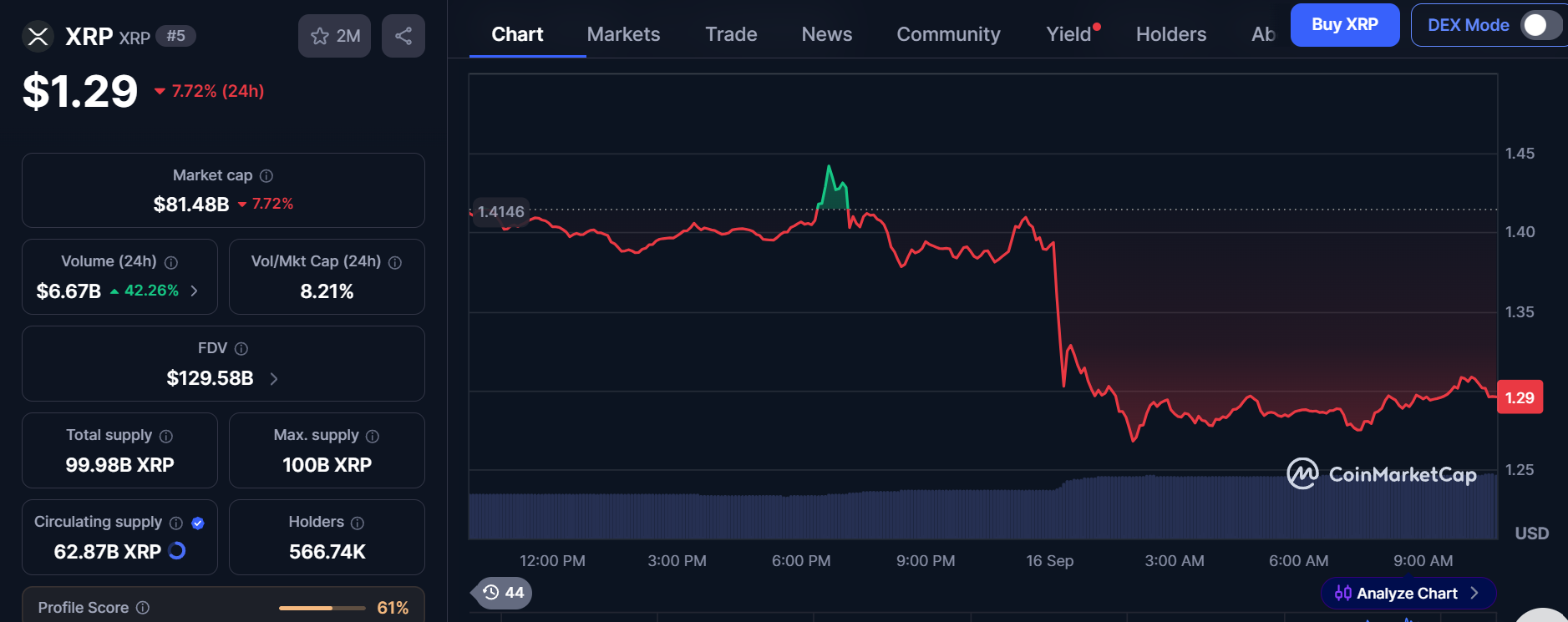
Note: Cryptocurrency prices can change rapidly. Price data may differ from the latest market value, so always verify the current price through an official or reliable market source before making any financial decision. This price data is based on the market conditions as of September 16, 2026, at 10:45 AM IST.
Source: CoinMarketCap live data
That kind of volume spike alongside a near-8% drop is the signature of forced, high-conviction selling rather than a slow drift lower, and the timeline behind it explains exactly why.
The Real Trigger: A Senate Vote That Didn't Go This Token's Way
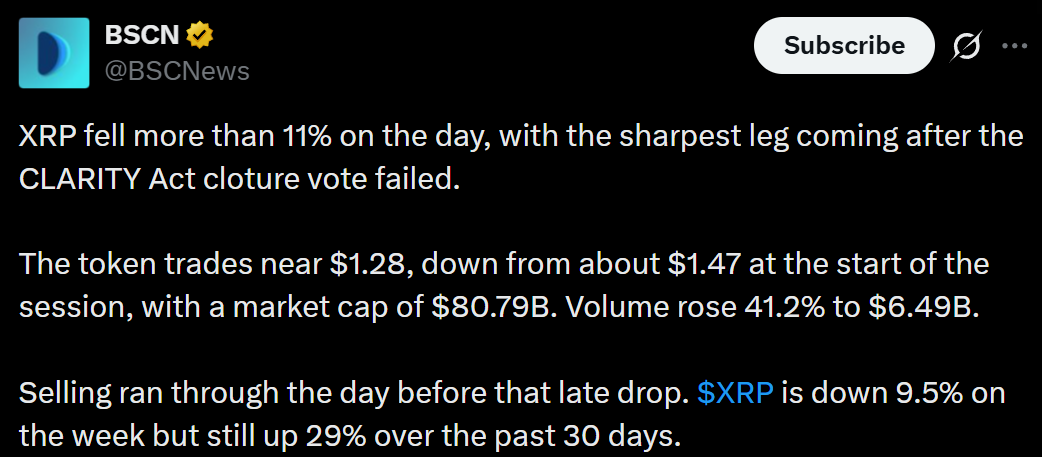
The single biggest driver behind this crash traces back to Washington. This token fell more than 11% on the day, with the sharpest leg of the drop landing right after the CLARITY Act's Senate cloture vote failed.
Source: BSCNews Post
The token traded near $1.28, down from about $1.47 at the start of the session, as trading volume rose 41.2% to $6.49 billion.
Selling had already been building through the day before that late, sharper drop, and the token is now down 9.5% for the week, though it remains up 29% over the past 30 days.
Here's why one Senate procedure hit this specific asset so hard:
-
Cloture is the Senate mechanism used to end debate and let a bill move to the floor, and it needed 60 of 100 votes to succeed.
-
Republicans hold 53 Senate seats, meaning several Democrats needed to cross over, and not enough did.
-
This bill mattered specifically to this token because it aimed to draw clear statutory lines between SEC and CFTC oversight of digital assets, the exact kind of durable clarity this asset's backers have pushed for since its own legal fight with the SEC.
-
A failed cloture vote doesn't undo any of that prior legal progress, but it does mean the broader market-structure debate stretches on without a fresh law behind it.
Ripple's Own Response: "Ripple and XRP Stand on Settled Ground"
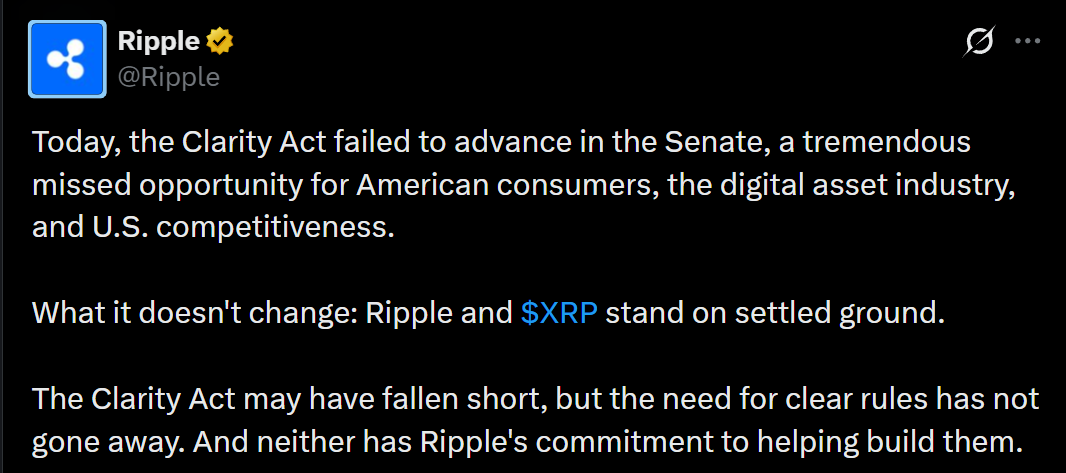
Ripple addressed the outcome directly rather than staying quiet. The company called the failed vote "a tremendous missed opportunity for American consumers, the digital asset industry, and U.S. competitiveness," while stressing that the loss doesn't change the company's underlying legal standing.
Source: Ripple Post
Ripple added that while the CLARITY Act fell short, the need for clear rules hasn't gone away, and neither has its commitment to helping build them.
That framing matters because it separates two different things that got blurred in the panic: the bill failing is a real setback for the industry's push toward comprehensive federal rules, but it is not a reversal of the specific legal outcomes Ripple had already secured in its own case.
The Whale Data That Hinted at Volatility Days in Advance
Interestingly, this stretch of XRP News Today coverage had already been flagged by on-chain data before this week's chaos, tied to a completely different move.
Roughly 85 new wallets holding more than 1 million tokens each appeared just two days before this asset's 67% breakout between August 17 and August 21, according to on-chain analytics from Santiment.
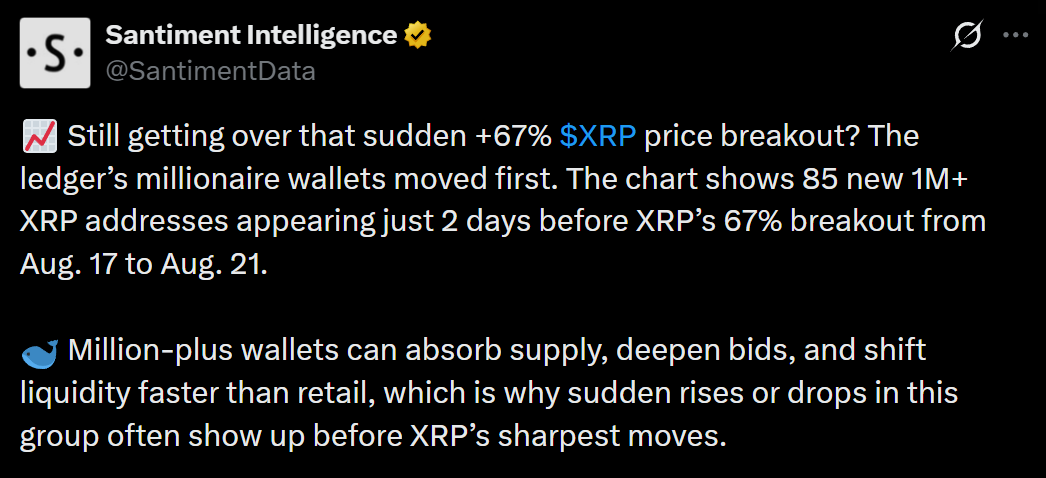
Because wallets that large can absorb supply and shift liquidity faster than retail traders, sudden shifts in this group have tended to show up right before this token's sharpest moves in either direction.
That same analysis pointed to a few reasons the broader setup still looks constructive heading into the rest of the year:
-
Ripple has backed an RLUSD credit fund aimed at fintech and payments lending built on this ledger.
-
Separate investments from ZILO and Licuido have added tokenization, transfer-agency, and collateral-mobility infrastructure to the ledger's stack.
-
Whale wallet counts have stayed elevated, and RLUSD continues strengthening the network's settlement utility.
Even on ETFs, the Story Wasn't All Negative This Week
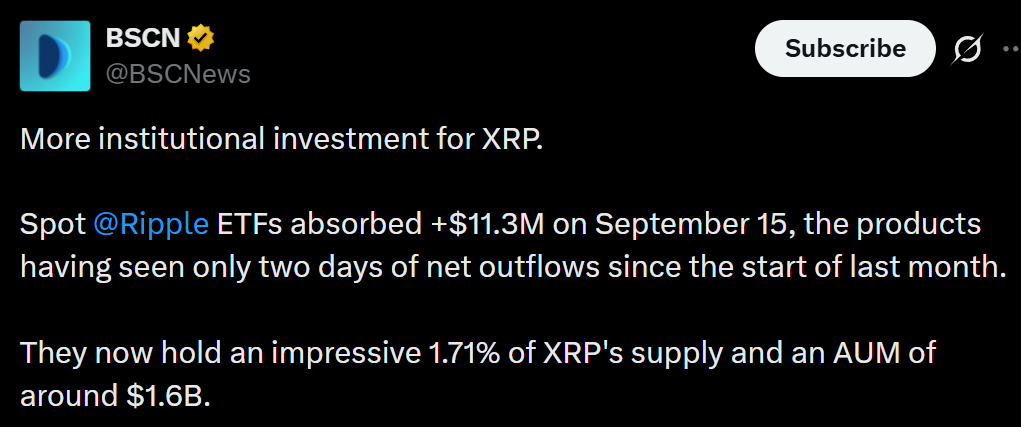
Away from the crash itself, the fund side of the market actually held up. Spot ETFs tracking this token absorbed $11.3 million on September 15, with these products having recorded only two days of net outflows since the start of the previous month.
Source: BSCNews Post in X
They now hold roughly 1.71% of the token's total supply, worth about $1.6 billion in assets under management.
That kind of continued buying, arriving on the very day the price cratered, suggests at least some institutional allocators treated the drop as an entry point rather than a reason to exit.
A Bright Spot Landed the Same Day: XRP's Logo Heads to College Basketball
The same 24-hour window also brought a notable piece of good news having nothing to do with legislation or trading.
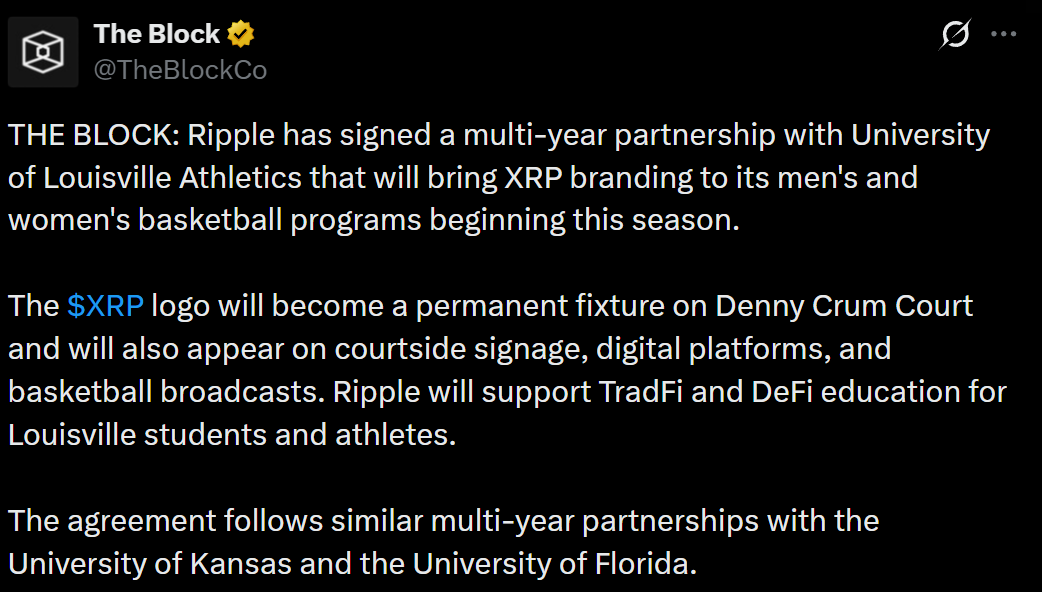
Ripple signed a multi-year partnership with the University of Louisville's athletics program, bringing this token's branding to Denny Crum Court for every men's and women's basketball home game starting this season.
Source: The Block
The logo will also appear on courtside signage, digital platforms, and basketball broadcasts, and Ripple will support financial and digital-asset education for Louisville's students and athletes.
This follows similar multi-year arrangements the company has already struck with the University of Kansas and the University of Florida.
So What Actually Happened Here?
Putting it together, this wasn't a mystery crash; it was a single, identifiable political event landing on a market that had already run up sharply in the prior month, with elevated volume amplifying the move down.
The ETF buying didn't stop, the college sports partnership landed regardless, and the underlying legal ground Ripple has already won remains unchanged. What changed is the timeline for broader federal clarity, and that's what the market repriced in a matter of hours.
Conclusion
Today's XRP News Today story boils down to one Senate vote falling short by ten votes and a token that had rallied hard in the prior month giving a meaningful chunk of that gain back in response.
The fund inflows, the Louisville partnership, and Ripple's own statement all suggest the longer-term story hasn't actually changed, even if today's chart looks dramatic. Whether this settles into a base or extends further is the question worth watching from here.
Disclaimer
This article is for educational and informational purposes only and should not be considered financial or investment advice. Always conduct your own research before making investment decisions.










