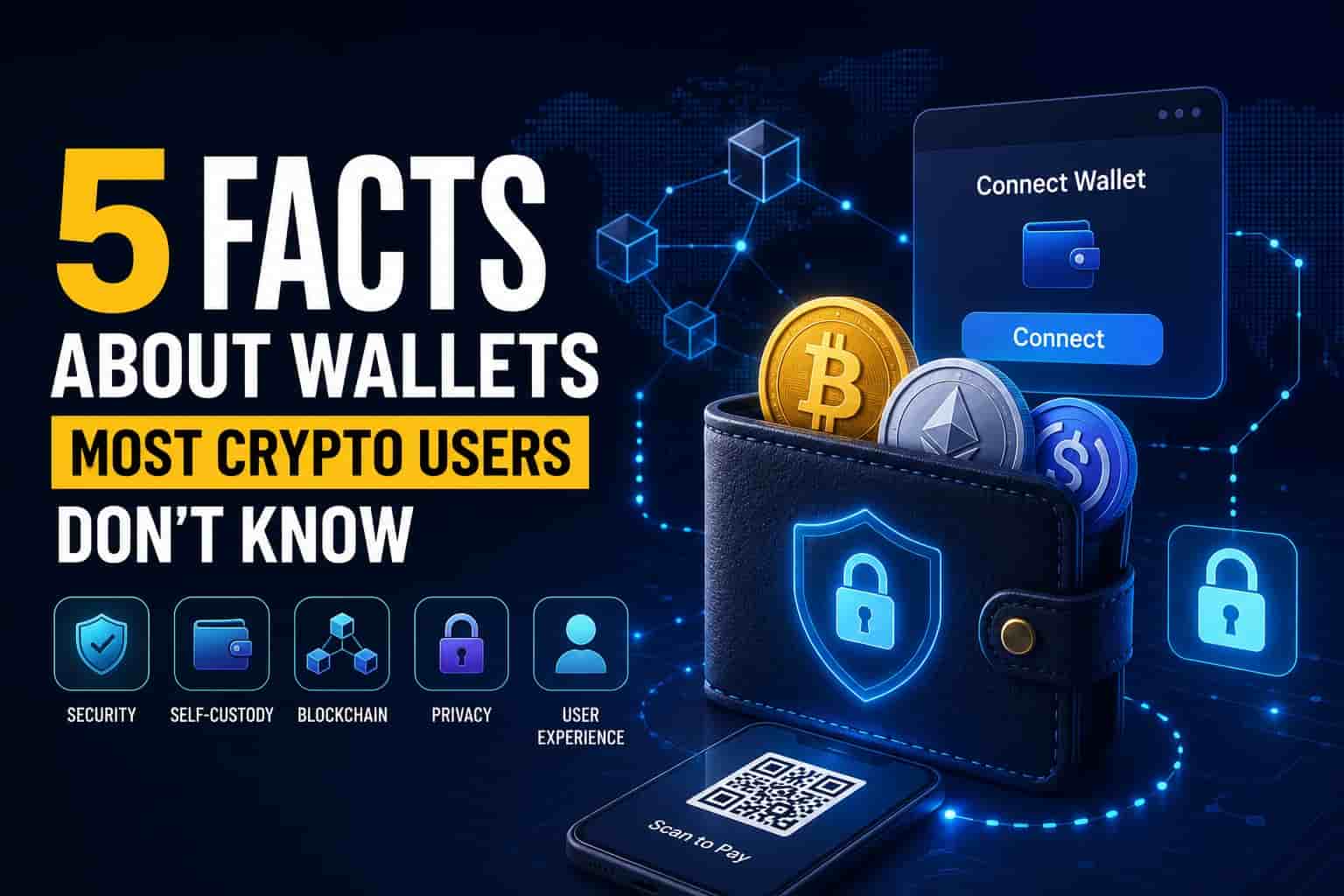
5 Facts About Wallets Most Crypto Users Don't Know

Why a Wallet Connection Isn't Required for Blockchain Transactions
Many crypto users believe connecting a wallet is a given. From swapping tokens, providing liquidity or interacting with a decentralized application, the process almost always begins the same way by clicking "Connect Wallet." Few stop to ask if that step is necessary.
Many crypto holders may be surprised to hear that wallet connections are a user interface convention rather than a technical requirement of blockchain. But the risk of phishing attacks continues to target wallet approvals and malicious signature requests, and some protocols are rethinking if users should have to connect their wallets at all.
Here are five things many crypto users don't realize about wallet connections and how they can take a different approach:
1. A Wallet Connection Isn't Actually Required to Make a Blockchain Transaction
A blockchain doesn't care whether you've connected your wallet to a website. It only requires a valid, signed transaction.
Most decentralized applications ask users to connect their wallets because it creates a smoother interface for interacting with smart contracts. Platforms like Uniswap and Aave helped make wallet connections the industry standard, allowing users to trade, lend and stake assets directly from self-custody wallets. But technically, a blockchain transaction only requires a signed transaction broadcast to the network, not an ongoing connection between a wallet and a website.
That distinction is important as the industry searches for ways to simplify self-custody without compromising decentralization.
2. Connecting Your Wallet Has Become One of DeFi's Biggest Friction Points
Wallet connections are so common that most users barely think about them anymore. Yet every additional signature request, approval prompt and browser connection introduces another step where users can make mistakes or where attackers can attempt to exploit them.
According to CertiK's 2026 Hack3D Report, wallet compromises are the most costly attack vector in the first half of this year, with over $444M stolen! Wallet connections themselves aren't inherently dangerous, but the industry's growing wallet compromise problem has prompted many developers to rethink if users need to connect their wallets.
3. There’s A Way to Trade Without Connecting Your Wallet at All
One protocol is actually allowing users to trader without a wallet. It’s pretty groundbreaking, because instead of requiring users to connect their wallet to a website, THORChain allows anyone using virtually any self-custody wallet to trade natively without establishing a wallet connection.
The process is straightforward. Users visit swap.thorchain.org, choose the assets they want to swap and receive a QR code or transaction details. Rather than approving a wallet connection, they scan the QR code from their wallet, or manually send the exact transaction from their wallet, to the protocol. Once confirmed on-chain, the purchased asset is delivered directly to the destination address they specified.
For users who prefer the traditional experience, connecting a wallet remains an option. It just isn't a requirement.
4. Not Every "Decentralized" Bitcoin Trade Uses Real Bitcoin
One of the biggest misconceptions in crypto is that decentralized exchanges handle Bitcoin in the same way.
Protocols such as Uniswap and many Ethereum-based DeFi applications typically rely on wrapped Bitcoin (WBTC) or other tokenized representations because they operate within a single blockchain ecosystem. While those assets have become widely used across DeFi, they are still representations of Bitcoin rather than native BTC.
The protocol THORChain also made a radical change in this regard, as it swaps native Layer-1 Bitcoin directly, without wrapping assets or relying on blockchain bridges. For users who prioritize holding actual Bitcoin rather than a wrapped version, that's important.
5. The Future of Crypto UX Is Removing Steps, Not Adding Features
Crypto has spent years competing on faster blockchains, lower fees and higher transaction throughput. Increasingly, however, the next frontier appears to be user experience.
Coinbase has invested heavily in making onboarding feel more like a traditional fintech app. Wallet providers like MetaMask continue simplifying self-custody through better interfaces. Meanwhile, smart protocols are asking the fundamental question “what if users never needed to connect their wallet in the first place?”
If the next billion crypto users arrive over the coming decade, the winning products will not be the fastest or cheapest. They will be the ones that remove unnecessary steps altogether.
Disclaimer: The information provided in this article is for educational and informational purposes only and should not be considered financial, investment, or trading advice. Readers should conduct their own research and exercise caution when interacting with cryptocurrency wallets, blockchain protocols, and digital assets.
Also read: