Binance Exchange Review: Products, Fees, and Security in 2026

Binance Exchange Review: Products, Fees, and Security in 2026
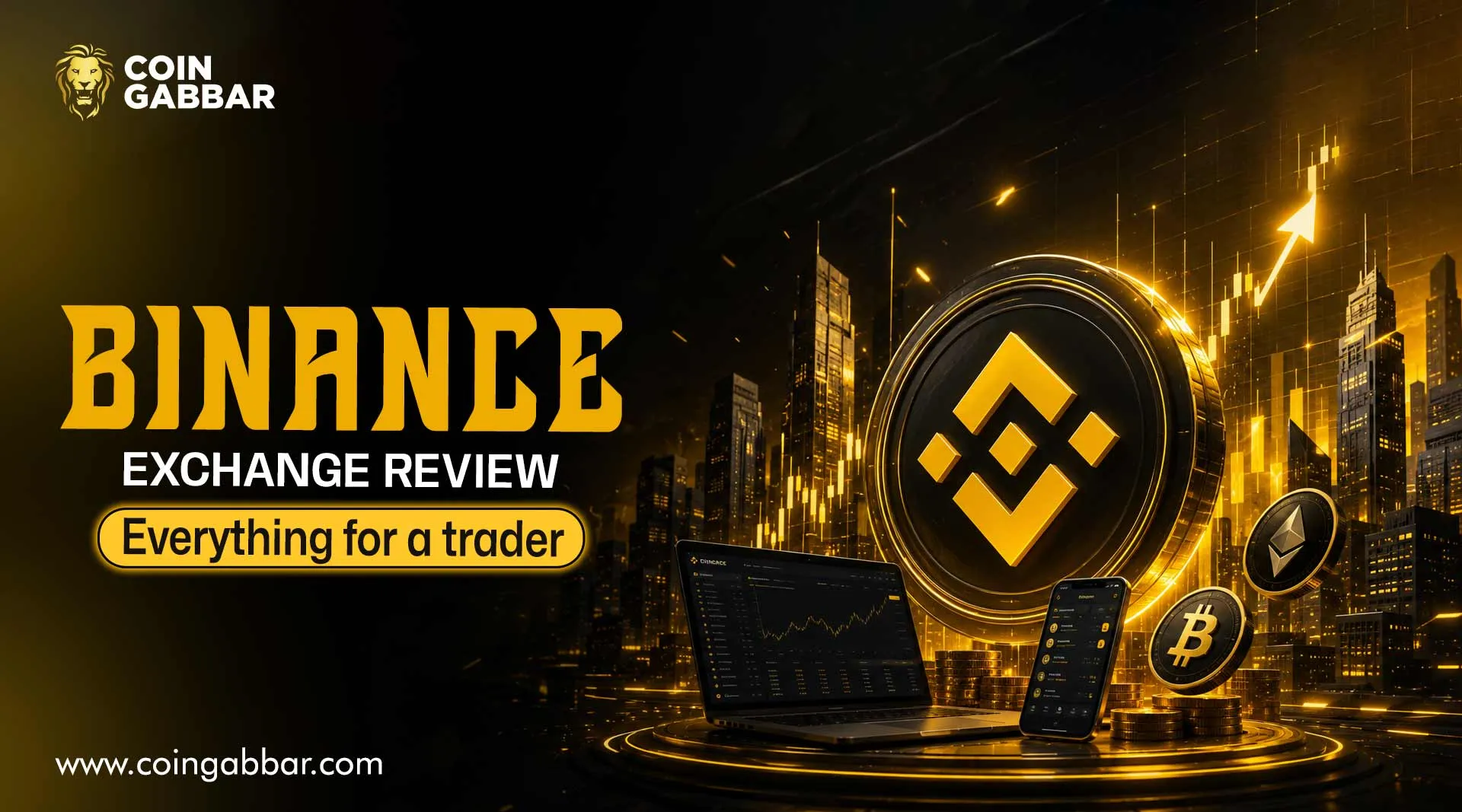
Binance has spent nearly a decade as the name most crypto traders default to first. This Binance Exchange Review breaks down what the platform actually offers in 2026, from its trading products and fee structure to its security track record and where it stands with regulators so you can judge for yourself whether it fits how you trade.
Binance Exchange Review: Company Overview
Changpeng Zhao, widely known as CZ, founded Binance in 2017. Within about two years it had already climbed from a startup to the largest crypto exchange in the world by trading volume, a position it still holds.
Leadership and Regulatory History
The company's leadership changed in a big way in November 2023. CZ stepped down as CEO and pleaded guilty to violating the US Bank Secrecy Act, part of a $4.3 billion settlement with American authorities, confirmed in the US Department of Justice's release, that included admissions Binance had failed to run adequate anti-money laundering checks.
He served a four-month sentence. Richard Teng, who had led Binance's regional and regulatory affairs teams, took over as CEO and has held the role since.
A few structural facts worth knowing:
Binance operates through separate regional entities rather than one single global company. Binance.US serves American customers under independent oversight, Binance France SAS answers to France's AMF, and Binance FZE operates under Dubai's VARA
The company's primary regulatory home is now the Abu Dhabi Global Market, through its Financial Services Regulatory Authority
Binance holds more than 20 regulatory approvals or registrations across different jurisdictions, and is currently working through MiCA licensing in the European Union, a process expected to give the exchange a unified regulatory passport across EU member states once complete
The overall picture is a company that has clearly invested in looking more like a licensed financial institution over the past few years, a notable shift from its earlier, more loosely regulated startup years.
Trading Products and Features
Part of what makes this platform interesting is just how much sits under one roof. Binance is not just a spot exchange anymore.
Product | What It Offers |
Spot Trading | Buy and sell hundreds of cryptocurrencies directly |
Margin Trading | Trade with borrowed funds for leveraged positions |
Futures & Options | Derivatives trading with leverage on major assets |
Copy Trading | Automatically mirror trades from selected experienced traders |
P2P Trading | Buy and sell crypto directly with other users using local payment methods |
Crypto Loans | Borrow against crypto holdings, with rates based on collateral and term |
Launchpad | Access to new token sales before general listing |
Buy, sell, and mint NFTs, with a 1 percent fee on sales | |
Binance Web3 Wallet | A self-custody wallet built into the app, using key-sharding for recovery |
Binance Academy sits alongside all of this as a free education hub, covering everything from basic blockchain concepts to more advanced trading strategy content.
Liquidity is one area where the platform's scale actually shows up in practice. Order books for major pairs like BTC/USDT and ETH/USDT stay deep enough that large orders rarely cause the kind of slippage smaller exchanges struggle with.
The coin selection runs into the hundreds, spanning established large-cap assets down to newer tokens added through the Launchpad and Launchpool programs, though newer or smaller-cap listings naturally carry thinner order books than the majors.
Binance Exchange Review: Fees and Costs
Fees are usually the first thing traders compare, and Binance runs on a fairly standard maker-taker model with volume-based discounts layered on top. The exact numbers below are drawn from Binance's official fee schedule, which is worth checking directly since rates do shift periodically.
Standard spot trading fees sit at 0.10 percent for both makers and takers
Paying fees in BNB, Binance's native token, drops that rate to around 0.075 percent
Futures fees run lower, typically around 0.02 percent for makers and 0.05 percent for takers
A nine-tier VIP program reduces fees further as trading volume or BNB holdings increase
Crypto deposits are free, but card deposits carry a fee in the 1.8 to 2 percent range
Staking products take a 10 percent cut of earned rewards
None of this is the absolute cheapest in the industry, but it lands solidly in the competitive range once BNB discounts and VIP tiers get factored in.
The VIP program illustrates how much fees can shift with volume. A rough sense of the tiering:
Tier | 30-Day Trading Volume (approx.) | Spot Maker/Taker Fee |
Regular User | Below $1 million | 0.10% / 0.10% |
VIP 1 | $1 million+ | 0.09% / 0.10% |
VIP 5 | $150 million+ | 0.06% / 0.075% |
VIP 9 (highest) | $4 billion+ | 0.012% / 0.03% |
Very few individual traders reach the top tiers, but the structure shows Binance clearly courting high-frequency and institutional volume alongside everyday retail users.
Casual traders who never touch six-figure monthly volume will mostly interact with the standard rate and whatever discount BNB provides, which is still enough to matter over dozens of trades a month.
Security and Regulatory Standing
Any honest look at this exchange has to cover its track record here, both the good and the rough patches.
Secure Asset Fund for Users (SAFU). Set up in 2018, this emergency insurance pool is funded by 10 percent of trading fees and specifically meant to cover users if a security incident occurs. It has held a balance in the billions of dollars in recent years.
Risk Sniper. A real-time monitoring tool that flags high-risk addresses and links before users interact with them.
2019 breach. Attackers made off with 7,000 BTC, worth roughly $40 million at the time.
February 2026 Fortune report. Fortune reported that Binance had dismissed at least five compliance staff who had flagged over a billion dollars in Tether transactions tied to Iranian entities between March 2024 and August 2025. CEO Richard Teng publicly called the report misleading and denied any sanctions violations or that the firings were retaliatory.
Current status. As of the most recent reporting, no regulatory action has followed from that specific report, and Binance continues operating normally
Getting Started on Binance
Signing up follows a fairly standard process across most regions:
Create an account with an email or phone number
Complete identity verification (KYC), which is required before most deposit and withdrawal limits open up
Fund the account through a bank transfer, card payment, or by depositing existing crypto
Choose a product, spot, future, or otherwise, and place a trade
Enable two-factor authentication before moving any meaningful balance onto the platform
Availability varies by country. US users are routed to the separate Binance. US platform, some jurisdictions have restrictions or licensed local entities, and a few regions are blocked entirely. Withdrawal limits start low until identity verification clears, which usually takes a few minutes to a couple of days.
How Listing and Delisting Works on Binance
Binance reviews every token before it goes live and keeps reviewing it after. A few key points on how that process works:
Listing a token:
Projects submit an application covering the whitepaper, tokenomics, team background, and smart contract details
Binance's internal team runs due diligence on the project's utility, community activity, and trading demand before approval
Legal and compliance checks assess whether the token could be treated as a security in different jurisdictions
Once approved, the token goes through technical integration and testing before trading opens to the public
Binance also runs community voting rounds for some listings, letting BNB holders weigh in on which projects get added
Delisting a token:
Binance periodically reviews all listed tokens against criteria like trading volume, liquidity, team responsiveness, and regulatory risk
Tokens with thin trading volume, abandoned development, or security concerns are flagged first
When a delisting is confirmed, Binance publishes an announcement naming the token and the exact date trading will stop
Users get a withdrawal window, typically a few weeks, to move their tokens off the exchange before the listing is fully removed
Balances left behind after the deadline may be converted or, in rare cases, forfeited
Conclusion
This Binance Exchange Review comes down to a platform that earned its size honestly, through deep liquidity, a wide product range, and competitive fees once BNB discounts kick in. It also carries real baggage, a major US settlement, a past breach, and unresolved 2026 compliance questions.
Traders comfortable doing their own regulatory due diligence will find one of the more capable platforms available; anyone prioritizing a spotless compliance history should weigh that record carefully first.
Disclaimer
This article is for educational and informational purposes only and should not be considered financial or investment advice. Always do your own research before choosing any crypto exchange or making investment decisions.
Also read: