What Is Byzanlink? BYZAN Token: Features and Tokenomics Explained

Byzanlink Overview
Real-world asset tokenization is one of the more active categories in crypto right now, and most new entrants describe themselves the same way: institutional grade, compliant, and built for real yield.
Byzanlink is one such platform, and its native BYZAN Token now backs that ecosystem. This guide covers what Byzanlink does, how $BYZAN works, and what its tokenomics look like, based on the company's own website, whitepaper, and tokenomics document.
What Is Byzanlink
According to its official site, Byzanlink is institutional infrastructure for compliant tokenization and on-chain asset operations.
It provides regulated institutions, fund administrators, and asset managers with the technology stack to bring real-world assets on-chain with security, compliance, and operational scale.
The company's stated mission is to enable structured financial products, such as tokenized funds, private credit, and treasury-backed instruments, to move onto programmable rails without weakening the controls that make them investable. The company is based in Dubai and lists Anbu Kannappan as founder and chief executive.
How the Platform Works
The platform organizes its infrastructure into three layers, according to its whitepaper:
Tokenization Infrastructure Layer: handles issuance, transfers, and redemptions for structured products.
On-chain Compatibility Layer: uses standardized vault and wrapper frameworks so tokenized products can interact with on-chain systems where permitted.
Distribution and Access Layer: lets issuers define who can hold, subscribe to, or transfer a given product, rather than assuming open access.
On the product side, the company describes a three-step workflow for institutions: onboarding and verification, tokenizing the underlying asset, and then launching and managing it on-chain.
Its access product, RWA Markets, is described as a curated endpoint where eligible participants can reach issuer-defined products through standardized interfaces.
Key Product Features
Feature | What It Covers |
End-to-End Tokenisation | Tokenises funds, credit, and structured assets with smart-contract automation |
Compliance Layer | Built-in compliance and whitelisting for regulated asset environments |
Modular Integrations | APIs designed to let institutions embed tokenisation into existing systems |
Real-Time Reporting | Dashboards and APIs for holdings, transactions, proof of reserves, and NAV data |
Byzanlink Presale
Byzanlink is currently running a public sale for the BYZAN token through Gems Launchpad, which opened on 27 July 2026. Round 1 is priced at $0.03 per token and is scheduled to close on 10 August 2026.
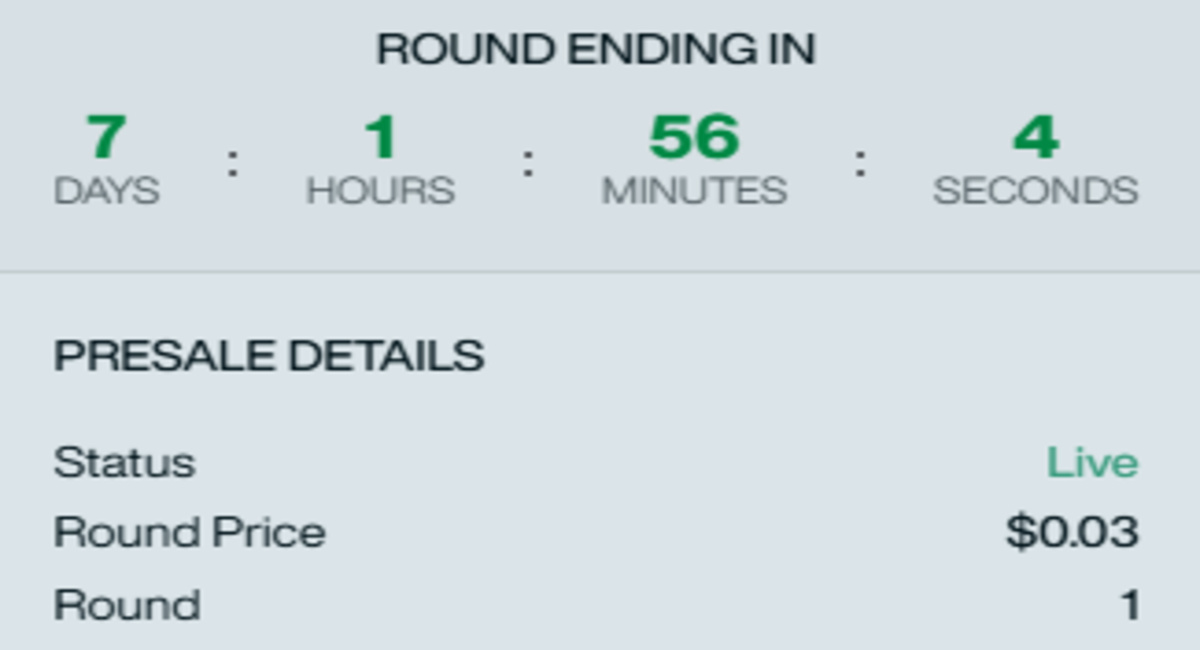
Source: Official Launchpad
An access code is required to join through the official link at gems.vip/byzanlink. For the full breakdown of sale terms, dates, and how to participate, see the complete Byzanlink presale guide.
Note: Participation in the presale does not guarantee future exchange listings or token performance.
BYZAN Token Tokenomics
The company published a dedicated tokenomics document, version 1.1.0, alongside its whitepaper. It sets a fixed total supply of 1,000,000,000 BYZAN, with no additional minting planned after the token generation event and no inflation by default.
Category | Allocation | Amount | TGE Unlock | Vesting | Cliff |
Strategic Investors | 10.00% | 100,000,000 | 0% | 24 months | 12 months |
Public Launch and Distribution | 7.00% | 70,000,000 | 20% of category | 12 months | 0 months |
Core Contributors and Advisors | 20.00% | 200,000,000 | 0% | 33 months | 15 months |
Ecosystem and Community Incentives | 31.00% | 310,000,000 | 4% of category | 48 months | 0 months |
Foundation and Protocol Growth | 25.00% | 250,000,000 | 0% | 48 months | 0 months |
Liquidity and Market Operations | 7.00% | 70,000,000 | 40% of category | 3 months | 0 months |
Source: Official Tokenomics
The Core Contributors and Strategic Advisors category carries the longest cliff, at 15 months, which the document frames as a deliberate design so the team unlocks after external investors rather than before them.
BYZAN Token Utility
The tokenomics document lists five main uses for the BYZAN token:
Governance: holders can weigh in on treasury allocation, incentive pacing, staking frameworks, and new product integrations.
Staking: $BYZAN can be staked for stBYZAN, which represents staked participation and may carry governance weight.
Rewards: a program called Byzanlink Pulse accrues points based on deposit amount, duration, and participation across eligible products.
Ecosystem incentives: It funds staking rewards, liquidity programs, and broader ecosystem initiatives.
Access benefits: holders may get priority access to selected vaults or product launches.
The document also outlines a revenue-linked buyback plan. Once RWA Markets reaches sustained protocol revenue, the Foundation states it will direct a defined share of that revenue toward buybacks, executed through preannounced transactions and reported quarterly.
The exact activation thresholds for this mechanism have not been disclosed yet.
Advantages and Risks
This project's disclosure is a genuine strength at this stage. A published whitepaper, a detailed tokenomics document with a fixed supply and clear vesting schedule, and a named leadership team give buyers more to evaluate than many early-stage projects offer.
The platform also points to live activity through RWA Markets and a stated partnership with the Hedera network, along with a security review from Sherlock for that product.
The buyback mechanism depends on protocol revenue that is not yet established, and several allocations, including the team and ecosystem categories, vest over as long as 48 months, which means most of the supply stays locked for years.
Anyone researching this project should read the full official documents rather than relying on secondary summaries, including this one, before forming a view.
Expert Opinion
Byzanlink has published more documentation than many early-stage RWA projects, including a whitepaper, tokenomics, and a named leadership team.
However, investors should remember that documentation alone does not guarantee execution. The project's long-term success will depend on adoption, protocol revenue, and delivery of its roadmap.
Conclusion
The platform positions itself as infrastructure for bringing institutional financial products on-chain, and BYZAN Token backs that ecosystem through governance, staking, and reward mechanics defined in a public tokenomics document.
The fixed supply and multi-year vesting point toward a structured long-term design, though a dedicated smart contract audit and live protocol revenue are still pending, so treat any figures here as a starting point for further reading rather than a final word.
Disclaimer: This article is for informational purposes only and does not constitute financial advice. Cryptocurrency tokens carry high risk, including possible total loss. Readers should conduct independent research and consult a licensed financial advisor before making any investment decision.