Kraken Exchange Review 2026: History, Listings and Future

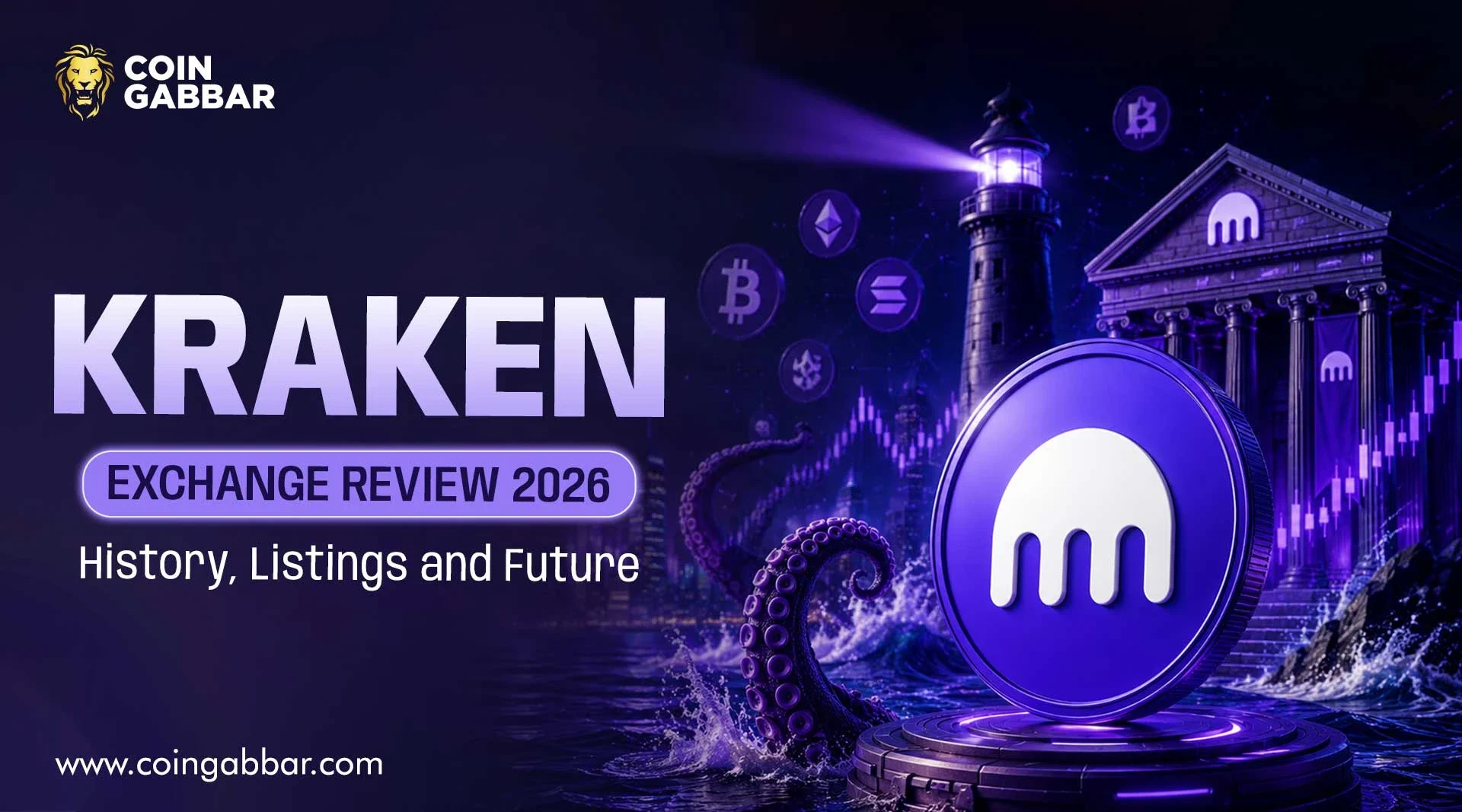
Kraken Exchange Review 2026: 15 Years, Listings, and What Comes Next
Crypto exchanges rarely last long. Many shut down, get hacked, or simply fade out within a few years. That backdrop makes Kraken's story stand out.
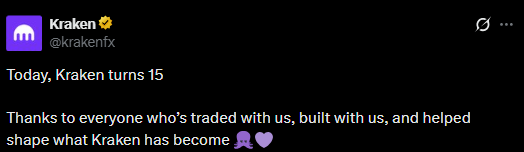
The exchange recently celebrated its Kraken 15-year anniversary and shared the milestone through its official X account. For anyone doing a Kraken exchange review, this milestone is a good moment to look at the full picture, not just the headline.
As a complete crypto exchange review 2026, this guide covers Kraken's history, current services, listing standards, financial performance, and future plans.
It is one of the oldest cryptocurrency trading platforms still active. It has survived the Mt. Gox collapse, multiple bear markets, and years of shifting regulation.
Most Kraken exchange review 2026 write-ups focus only on fees or app design. This one goes deeper into the founding story, listing standards, and how the exchange removes an asset from its platform.
What is Kraken
Payward, Inc. operates the centralized trading platform founded on July 28, 2011, in San Francisco. It was founded on July 28, 2011, in San Francisco.
According to the project's own blog, the founders started with one clear goal: build the most secure and reliable crypto exchange in the world.
The platform was co-founded by Jesse Powell and Thanh Luu. Powell had just returned from Tokyo, where he helped Mt. Gox recover from a major hack. That experience shaped Kraken's early and lasting focus on security.
Today, the platform serves millions of clients across more than 190 countries. It supports spot trading, staking, margin trading, and, more recently, stock and ETF trading for eligible US users. This range of services is part of why so many traders search for a Kraken exchange review 2026 before signing up.
Mission and Vision
The company's stated mission is simple. It aims to speed up the adoption of cryptocurrency worldwide. The company says it wants to give people financial freedom and access, not just a trading app.
This mission has stayed mostly the same since 2011. The company has added new products over time. But security and reliability remain its core focus, according to official statements.
The company often repeats one idea in its own blog posts: constancy and steady decisions matter more than chasing short-term hype.
Why Was It Created
The company exists because of a clear gap in the market. Mt. Gox, once the largest Bitcoin exchange in the world, was poorly run and eventually collapsed after repeated hacks. Jesse Powell saw this firsthand while volunteering to help fix the exchange in 2011.
He decided the crypto industry needed a professional, secure alternative built from the ground up. That decision led directly to Kraken's official launch on July 28, 2011.
The name itself was chosen to reflect strength and resilience, according to the company's own founding story.
How Does It Work
The platform runs primarily as a spot exchange. This means users buy and hold real crypto assets directly, not contracts or derivatives tied to a price. The platform also supports margin trading, staking, and, for eligible US users, stock and ETF trading in one account.
Trades happen through an order book system. Buyers and sellers are matched directly on the platform through a matching engine.
Kraken Pro, the platform's advanced interface, offers lower fees and more order types than the standard Kraken app, which is built for beginners.
This dual-app setup is a key detail in any thorough Kraken crypto exchange review, since it directly affects the fees a trader ends up paying.
Core Architecture
Its infrastructure focuses on shared systems, not separate silos. The company has built unified liquidity across products, centralized risk management, and a global compliance framework.
This design lets the platform support multiple asset types and client groups on one base system, according to the company's 2025 financial report.
Key Features
Spot Trading —The platform's core service , with over 500 cryptocurrencies and more than 1,200 trading pairs available through a standard order book.
Staking review: The platform supports staking on 20+ proof-of-stake assets. Flexible staking has no lock-up but carries a commission, while bonded staking offers higher rewards for longer commitment periods.
Proof of Reserves — Published every quarter, letting users check their own balance against the company's reported holdings.
Stocks and ETFs — Since 2025, eligible US clients can trade thousands of US stocks and ETFs from the same account.
Kraken Trading Fees
The platform uses a maker-taker fee model, meaning the fee depends on whether your order adds liquidity to the market (maker) or removes it (taker).
On Kraken Pro, fees start at 0.25% for makers and 0.40% for takers for users with lower 30-day trading volumes. As trading volume increases, these fees gradually decrease.
The standard Kraken app is designed for beginners and may include a spread or different pricing depending on the transaction type.
Users should review the fee schedule before placing trades, especially when using instant buy or recurring purchase features.
It also charges network withdrawal fees, which vary by cryptocurrency, while crypto deposits are generally free except for applicable blockchain network costs.
Optional Fee Summary Table
Service | Typical Fee |
Spot Trading (Maker) | Starts at 0.25% |
Spot Trading (Taker) | Starts at 0.40% |
Crypto Deposits | Usually Free |
Crypto Withdrawals | Network-dependent |
Staking | Commission deducted from rewards |
Note: Fees may vary depending on the trading pair, payment method, region, and 30-day trading volume.
Technology Behind the Project
The project uses a matching engine to process trades, software that pairs a buy order with a sell order at the right price. Lower latency here means faster trade execution.
Cold storage, proof of reserves, and ongoing security monitoring are key reasons why Kraken exchange safety is often viewed as one of its strongest features.
Kraken Listing Process: How New Cryptocurrencies Get Listed
The platform follows a five-step process for evaluating new asset listings, based on its official Get Listed page.
Step | What Happens |
1. Application | The project submits details on mission, tech, and tokenomics |
2. Review | The company's listings and risk teams check security, compliance, and liquidity |
3. Legal Sign-Off | Legal team approves; engineers set up nodes and test deposits/withdrawals |
4. Co-Marketing | Project can opt into a marketing package |
5. Launch | Token goes live and is monitored for volume and market quality |
For projects in the European Economic Area, The platform also requires a MiCA-compliant whitepaper, in line with EU crypto-asset rules that took effect January 1, 2025.
Kraken Delisting Crypto Process Explained
Delisting works on a similar principle: standards must be maintained after listing, not just before it.
According to the Company’s official support pages, common delisting triggers include:
Sustained low liquidity
Repeated technical failures
Adverse regulatory action
Failure to disclose major tokenomic changes 30 days in advance
The company generally announces delistings in advance , giving users time to manage their holdings before trading and deposits are disabled.
When delisting does happen, it follows a set timeline: trading and deposits are disabled on a set date, a withdrawal window follows for several weeks, and any remaining balances are liquidated on a final date range.
This pattern has repeated across its scheduled delisting notices from November 2025 through June 2026.
Token Utility and Tokenomics
The company does not have a native exchange token, unlike some competitors. Its revenue instead comes from trading fees, staking commissions, and asset-based services.
Per the company's 2025 financial highlights, adjusted revenue reached $2.2 billion for the year, a 33% increase from the prior year. Trading made up about 47% of this, with asset-based revenue covering the rest.
Roadmap and Ecosystem
The company's near-term roadmap centers on a few confirmed moves. It closed its acquisition of Backed in January 2026, folding tokenized stock issuance and settlement into one system.
Earlier acquisitions include the Small Exchange, adding US derivatives infrastructure under CFTC oversight, and Capitalise.ai, bringing no-code trading automation to the platform.
It has also confirmed plans for a potential public stock market listing in 2026.
Advantages
Long operating history, no major hack since inception
Quarterly proof-of-reserve publishing
Wide asset selection and trading pair coverage
Regulated derivatives and banking charter status in the US
Challenges and Risks
Withdrawal holds can take longer than some competitor apps
Learning curve for beginners, especially on Kraken Pro
Staking access varies by US state due to regulatory limits
Past SEC action over its former US staking program
Future Outlook
The company's direction points toward broader financial infrastructure, not just a crypto exchange. Its move into stocks, ETFs, and tokenized assets suggests a longer-term shift.
Recent Kraken IPO news suggests the company is preparing for a potential public listing in 2026, a move that could increase transparency and regulatory oversight.
Final Thoughts
Fifteen years is a long run in crypto, an industry where many exchanges have failed, been hacked, or shut down entirely
Its official milestone gives a useful checkpoint to review its history, its current product range, and how it manages listings and delistings.
Is Kraken a safe crypto exchange in 2026? Based on its public track record and its published proof-of-reserve reports, it remains one of the more transparent options in the market.
Still, anyone comparing Kraken to other platforms should weigh its long security track record against its slower withdrawal process. A balanced Kraken exchange review should always look at both sides before drawing a conclusion.
Disclaimer: This article is for educational and informational purposes only and should not be considered financial or investment advice. Always conduct your own research before making investment decisions.



.jpg)