What Is XRP? Complete Guide to Ripple, XRPL, and Use Cases

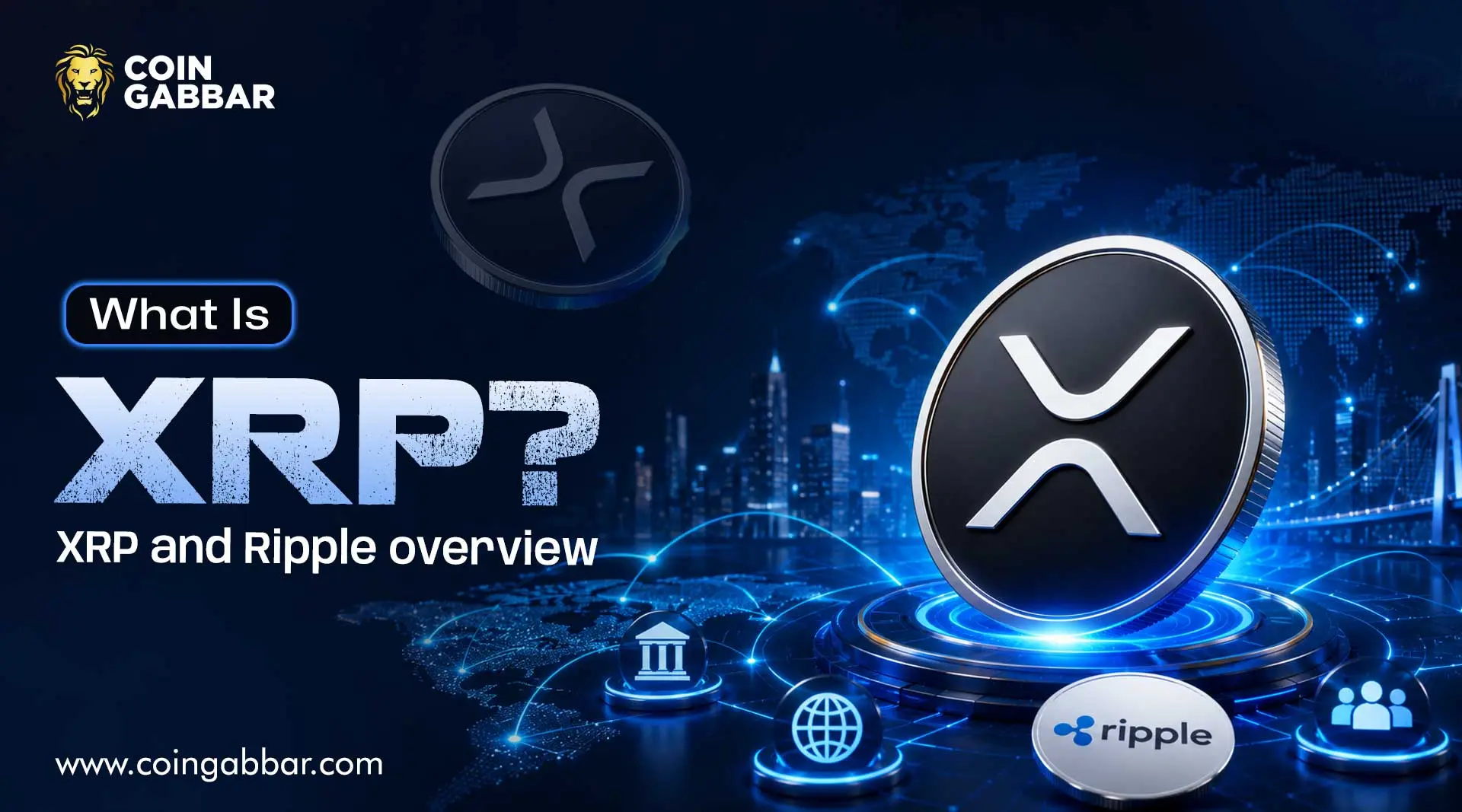
What Is XRP? Understanding XRP Meaning and Ripple vs XRP
Ask ten people what is XRP, and at least half will say Ripple. That mix-up is so common that even seasoned crypto traders slip into it. But $XRP and Ripple aren't the same thing, and understanding the difference actually helps explain why this asset works the way it does.
This guide breaks down what is XRP, what is Ripple, and everything in between, using only official sources.
What Is XRP? The Basics You Need to Knowa
It's a digital asset that lives on a blockchain called the XRP Ledger. It was created in 2012 specifically for payments, and it can settle a transaction in three to five seconds.
Per the XRP Ledger's own documentation, it was built to be a better Bitcoin: faster, cheaper, and greener than most other digital assets.
Here's the $XRP meaning in plain terms: think of it as a bridge asset. It can move value directly between two parties without needing a bank or a middleman to hold funds in between. That's genuinely different from how most traditional payment rails work.
A few quick facts worth knowing upfront:
-
Total supply: 100 billion units, created all at once in 2012
-
No mining involved, ever
-
Settlement time: 3-5 seconds
-
Native to the XRP Ledger ($XRPL)
What Is Ripple, and How Is It Different From XRP?
Here's where the confusion usually starts. Ripple is a technology company. It isn't the token, and it isn't the ledger either. According to Ripple's own site, the company builds crypto solutions for banks, businesses, governments, and developers using multiple digital assets, including this one and its own stablecoin, RLUSD.
Ripple describes its mission as building "breakthrough crypto solutions for a world without economic borders" and says it operates in 90-plus countries with over 1,000 employees.
The company's core solutions span cross-border payments, digital asset custody, stablecoin infrastructure, and prime brokerage, all built for financial institutions rather than everyday retail users directly.
That's an important distinction. Most people encounter the underlying token through an exchange, but Ripple's actual business customers are banks and enterprises looking to move money more efficiently across borders.
So what's the actual Ripple vs. $XRP difference? Here's a simple table to keep it straight:
| $XRP | Ripple | XRP Ledger | |
| What it is | A digital asset | A technology company | A public blockchain |
| Created | 2012, at genesis | Founded 2012 as OpenCoin | Launched June 2012 |
| Controlled by | No single entity | Private company | Independent validators |
| Role | Settlement and bridge asset | Builds products using the asset | Hosts the asset and its transactions |
Ripple holds a large amount of the asset and builds products around it, but it's a holder and developer, not the sole owner or controller.
Ripple itself has said it is "also a holder of and one of many developers building on and contributing to" this asset.
Who Created XRP, and What Is the XRP Ledger?
The people behind this project were David Schwartz, Jed McCaleb, and Arthur Britto. They began development in 2011, and the $XRP Ledger launched in June 2012.
Shortly after launch, the same group, along with Chris Larsen, went on to found the company that would eventually become Ripple, initially operating under a different name before settling on its current one.
The $XRP Ledger, often shortened to XRPL, is the actual blockchain everything runs on. It's open-source and decentralized, meaning no single company runs it.
Ripple didn't create the ledger alone and doesn't control it alone either, even though the company is closely associated with it and remains one of its most active contributors.
Once the ledger launched, its founders gifted 80 billion units to Ripple. The company then locked 55 billion of that, 55% of the total possible supply, into escrow directly on the ledger to give the market some predictability about future supply.
That escrow structure matters because it means Ripple can't simply release large amounts on a whim; the ledger's own rules govern how much can move each month.
How Does XRP Actually Work?
Unlike Bitcoin, there's no mining here at all. All 100 billion units were created in a single moment at genesis, and no new ones can ever be minted.
Instead of miners, the network relies on validators, independent servers that agree on which transactions are valid through something called the $XRP Ledger Consensus Protocol. This is genuinely different from Proof-of-Work.
Here's what that means practically:
-
A transaction gets submitted to the network.
-
Validators compare notes and reach agreement within seconds.
-
Once validated, the transaction is final and can't be reversed.
-
No mining reward is created in the process, ever.
There's also a small burn mechanism built in. Every transaction pays a tiny fee that gets permanently destroyed rather than paid to anyone, which helps prevent spam on the network.
What Is XRP Used For? Real Use Cases and Ecosystem
The core XRP use case is payments, especially the kind that cross borders. Because it settles quickly and cheaply, it can act as a bridge between two different currencies without either side needing to pre-fund an account overseas.
Traditional cross-border payments often require banks to hold reserves in the destination currency ahead of time, which ties up capital that could otherwise be put to work elsewhere.
Beyond basic payments, here's where it shows up across the broader ecosystem:
-
Settlement and liquidity: moving value between financial institutions quickly, without relying on pre-funded accounts
-
Exchange trading: available on major crypto exchanges worldwide, giving it deep liquidity
-
Bridge currency: connecting different currencies inside decentralized exchange functions built directly into the ledger itself
-
Network security: transaction fees paid in the asset help keep the network spam-resistant since every transaction costs something small
It's worth noting that Ripple's own stablecoin, RLUSD, is a separate asset entirely, issued on both the XRP Ledger and Ethereum. The two shouldn't be confused with each other, even though they share the same underlying blockchain in one case.
RLUSD is pegged to the US dollar, while the ledger's native asset floats freely on the open market.
Advantages and Limitations Worth Knowing
Every payment-focused digital asset comes with tradeoffs. Here's a balanced look, drawing on how the network is actually built rather than marketing claims.
Advantages:
-
Fast settlement, typically 3-5 seconds per transaction, compared to minutes or longer for many other networks
-
Low, predictable transaction costs, since fees are a small fraction of a cent
-
Minimal energy use compared to mined cryptocurrencies, since there's no computational competition involved
-
A fixed, transparent total supply that can't be inflated by new issuance down the line
Limitations:
-
A meaningful share of supply still sits with one company, which some critics see as a centralization concern worth watching
-
Its usefulness is closely tied to institutional and bank adoption, which takes time to build and depends on regulatory clarity in different countries
-
Price has historically been volatile, like most crypto assets, and past regulatory uncertainty has added to that volatility at times
Conclusion
So, what is XRP, really? It's a digital asset built for payments, running on its own independent ledger.
Ripple is different . It's the company that helped build the ecosystem around it and one of many entities that hold and develop on top of it. The XRP Ledger sits underneath both. It's the actual blockchain doing the work.
Mixing these three up is easy. But once the distinction clicks, the rest of how this ecosystem works starts making a lot more sense.
Disclaimer
This article is for educational and informational purposes only and should not be considered financial or investment advice. Always do your own research using official sources before making any decisions.



.jpg)