Zaviron Audit Check: Is the CertiK Report Public?

Zaviron Audit: What's Confirmed and What Isn't
Security review are one of the first things buyers check before trusting a token, since a real, third-party review is meant to catch problems before they become losses.
Zaviron makes a specific claim about having one, tied to a well-known name in the space. Here's a closer look at what that claim actually says, where it comes from, and what holds up when checked against it.
What Zaviron Claims About Its CertiK Audit
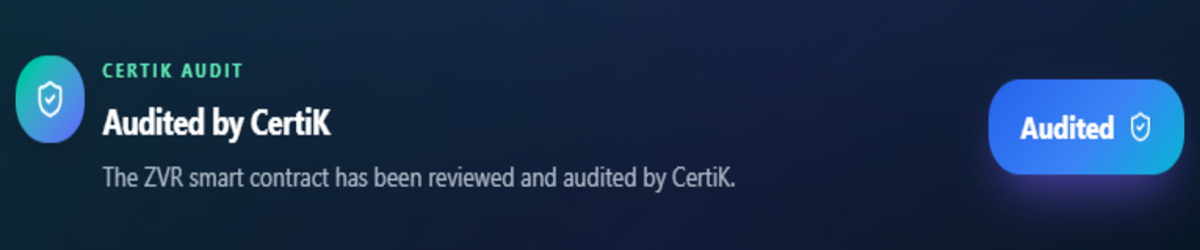
Zaviron's Security & Security page, hosted on zaviron.io, states plainly that the ZVR token code has been reviewed and verified by CertiK and displays an "Audited" badge next to CertiK's name.
The same page notes that the ZVR token code is published on Ethereum and was reviewed by an independent third-party verification. That's the entire claim as it stands on the official site.
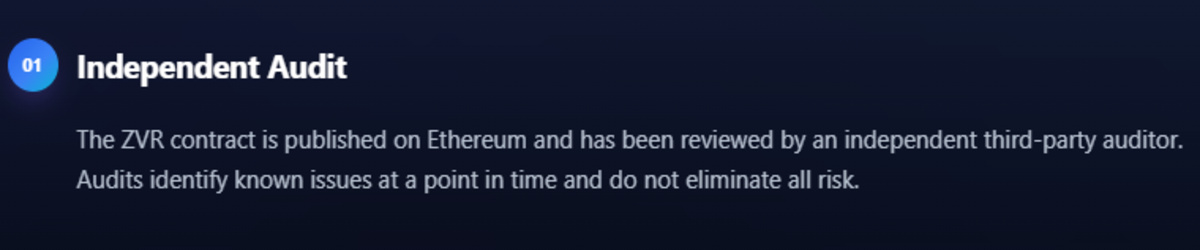
Source: Official Website
There is no linked PDF, no report ID, no contract address, and no reference to which version or commit of the contract was reviewed.
What a Genuine CertiK Audit Report Includes:
CertiK's own product page for its smart contract audit service is explicit about what a completed verif produces.
According to CertiK, Security review reports are comprehensive records that classify every finding by severity, from Critical to Informational, and pair each one with suggested remediation.
Projects that complete the process also earn a listing on CertiK's public Skynet Leaderboard, and CertiK states that its audit reports are freely available to the public as part of its transparency commitment.
That gives a clear checklist for what "audited by CertiK" should come with:
| Element | What CertiK's process normally provides |
| Report URL | A public report page hosted on CertiK's own site |
| Audited address | The specific smart contract address that was reviewed |
| Commit/version | The exact code version the verification covered |
| Findings | Vulnerabilities listed by severity, Critical to Informational |
| Remediation | Notes on which findings were fixed, and which were acknowledged but left open |
| Leaderboard listing | A public entry on CertiK's Skynet Leaderboard |
Checking the Zaviron Audit Claim Against the Evidence
Running the Zaviron audit claim against that checklist, the evidence for a confirmed Zaviron security review shows a consistent gap between what's stated and what's publicly verifiable.
| Element | Available for Zaviron? |
| Report URL | Not found on zaviron.io or on CertiK's site |
| Audited address | Not published; the security page confirms only that a on-chain code exists on Ethereum |
| Commit/version | Not stated anywhere |
| Findings | None published or referenced |
| Remediation | None to review, since no findings are public |
| Leaderboard listing | No Zaviron entry found on CertiK's Skynet Leaderboard |
This gap doesn't prove the claim is false. A report could exist privately or under a name that doesn't match the "Zaviron" branding.
But for a claim this specific, tying it to a named auditor like CertiK, public verification should be straightforward, and right now it isn't.
Admin Controls and Contract Scope
Because no report or audited contract address is public, there's no way to independently check whether the ZVR contract includes admin functions such as mint authority, pause controls, blacklist functions, or ownership permissions that could affect holders.
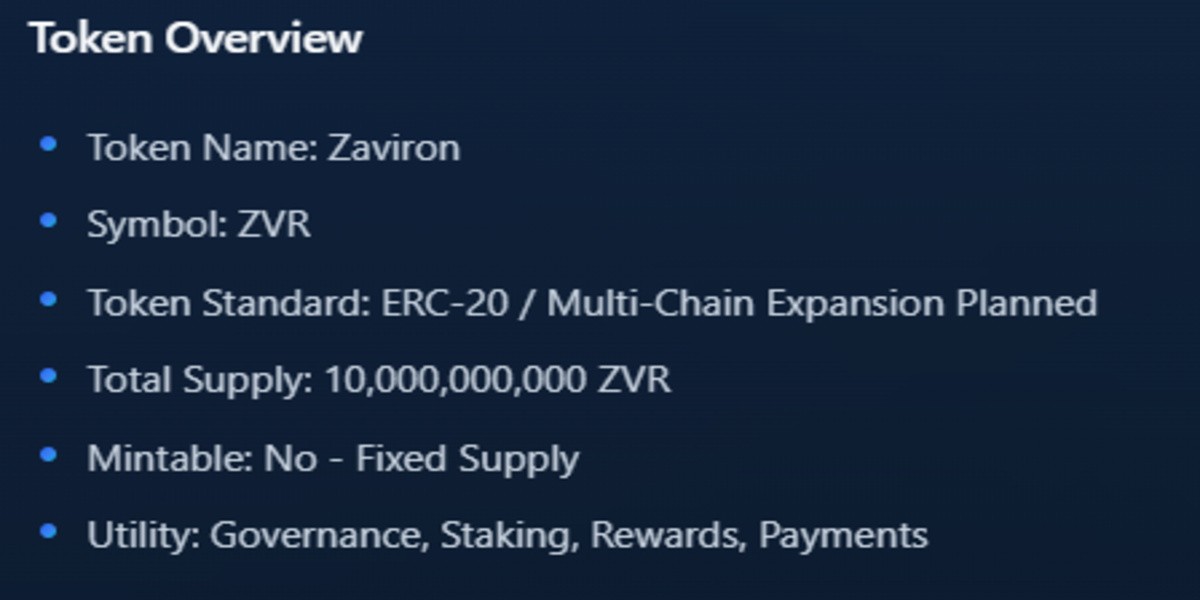
Zaviron's whitepaper states the token has a fixed, non-mintable total supply of 10,000,000,000 ZVR, which is a meaningful data point, but it's a project statement rather than an verified one.
Source: Official Whitepaper
Without the underlying report, admin-control risk on this token code remains unconfirmed either way.
Remediation Status
A completed CertiK audit report normally shows which issues were fixed before launch and which were acknowledged but left unresolved, along with the project's stated reasoning.
None of that is available for Zaviron. There's simply no findings list to check remediation against, so this category can't be assessed from public information at this time.
Verdict: Is the Zaviron Audit Public?
Based on what's currently available from official sources, the answer is no. Zaviron's own site asserts a CertiK audit, but the standard proof points, report URL, audited address, code version, findings, and leaderboard listing, aren't publicly visible on zaviron.io or on CertiK's own platforms.
Under a strict verification standard, a on-chain code shouldn't be called "audited" unless the auditor's own report is public and its scope matches the live contract.
That standard isn't met here yet, so the accurate framing is "audit claimed, not independently confirmed."
Glossary
-
Smart contract audit: An expert review of a contract's code intended to catch vulnerabilities before they can be exploited.
-
Audited address: The specific on-chain address that an verification report covers.
-
Commit/version: The exact snapshot of the code an audit was performed against; later code changes aren't automatically covered by an older security rewiew.
-
Admin controls: Functions built into a contract that let a privileged wallet change behavior, such as pausing transfers or minting new tokens.
-
Remediation: The process of fixing, or formally acknowledging, issues found during a verification.
Disclaimer: This article is for informational and educational purposes only and does not constitute financial, investment, legal, or tax advice. Security review status can change as projects publish new documentation. Always verify claims against official sources and consult a qualified professional before making any financial decision.





.jpg)