Autheo TGE Update: THEO Token Debuts on Hydrex on August 20, 2026

Autheo TGE Update: THEO TGE Confirmed for August 20
Autheo, the layer-0 operating system for Web3 and the agentic web, has confirmed the token generation event for its native utility asset.
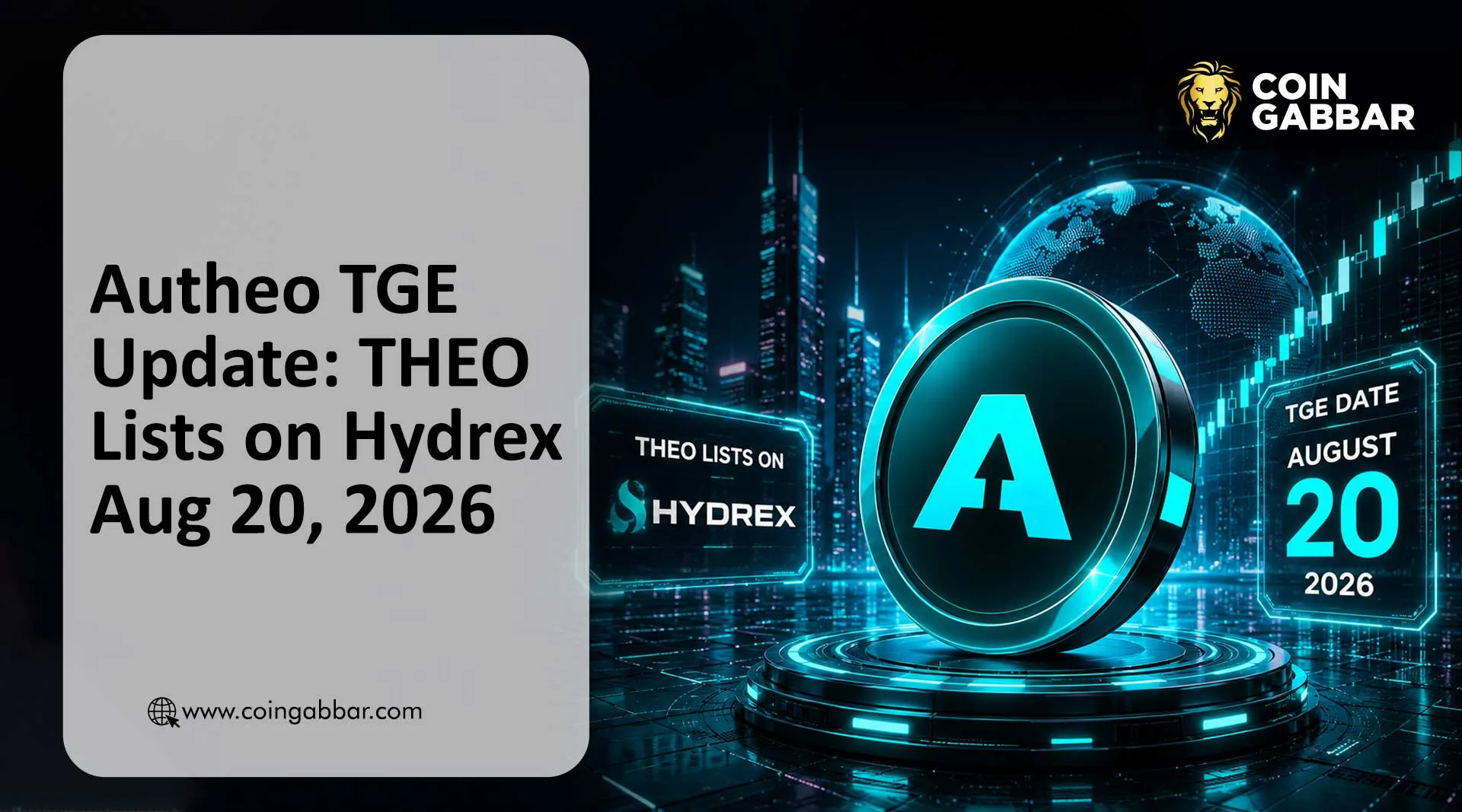
In this Autheo TGE update, the token is set to list on Hydrex, a Base-native Omni-Liquidity MetaDEX, this Thursday, August 20, 2026. The listing opens the public economic layer behind an operating system that has been in development for more than five years.
THEO Listing Confirmed for August 20
The official X account teased the news with a graphic that read "Token Generation Event $THEO, 20 August 2026," posted at 1:26 PM on August 18, 2026. Together, the two posts confirm the same date and give the community a clear countdown to the exchange debut.
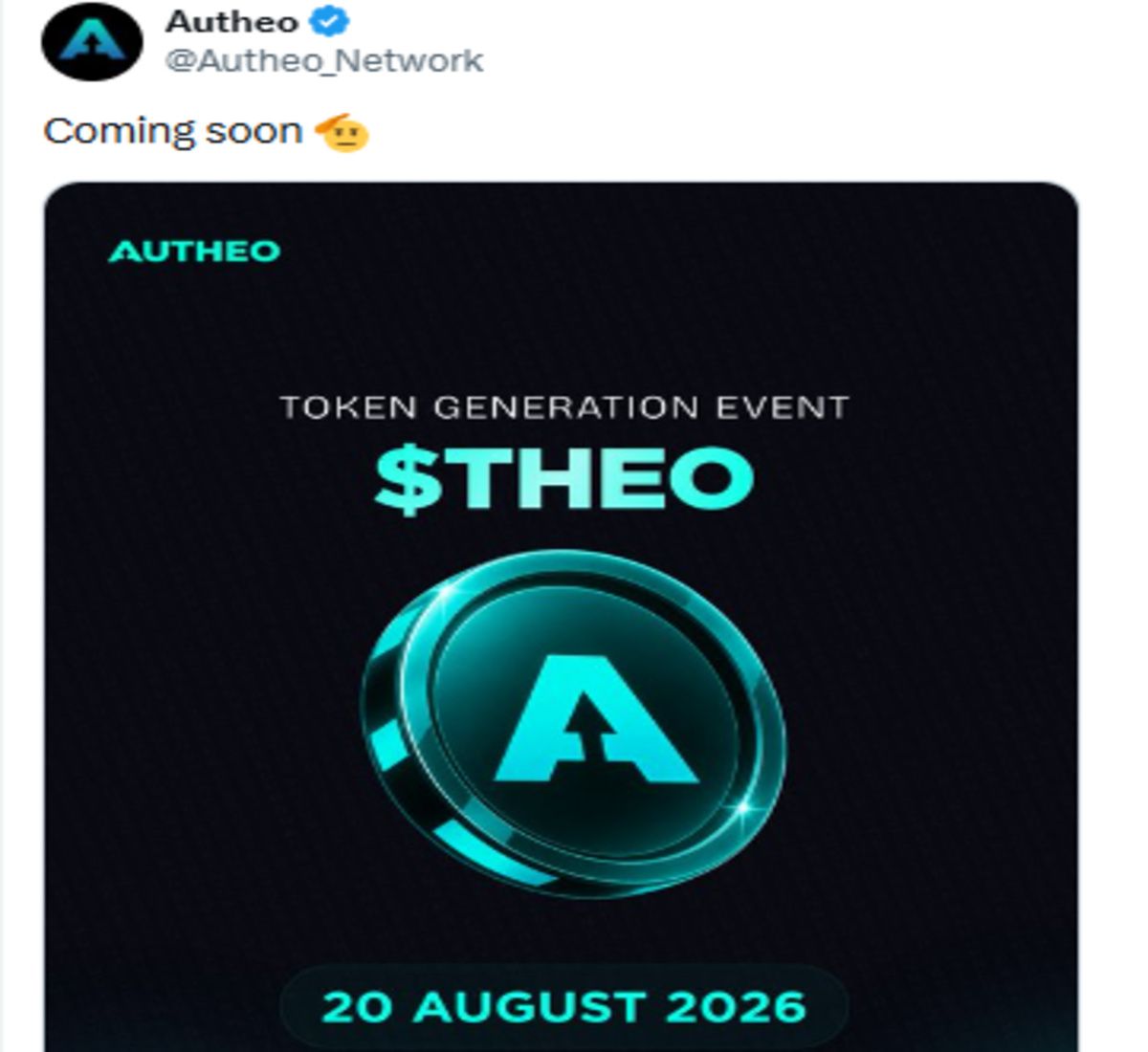
Source: Official X Post
This Autheo TGE update centers on the network's native asset, described in official materials as the utility unit powering the broader Internet operating system.
It does not function as a governance instrument. Instead, it is designed to pay for resources that applications consume, including transaction fees. validator staking, decentralized compute usage, storage provisioning, and AI inference calls.
Official Launch Details
The following details have been confirmed for the listing:
Detail | Information |
Listing venue | Hydrex, a Base-native Omni-Liquidity MetaDEX |
Listing date | Thursday, August 20, 2026 |
Liquidity support | ApeBond on-chain OTC bond program |
Hydrex aggregates and routes liquidity across multiple decentralized exchanges, which the team says supports non-custodial trading at launch.
ApeBond is expected to run an OTC bond program aimed at strengthening long-term liquidity rather than relying solely on early trading volume.
Reference Price and Supply Figures
In a post on its official X account on August 15, 2026, the company shared the pricing and supply figures that will apply at launch:
Metric | Figure |
Reference price | $0.05 |
Max supply | 7 billion |
Circulating supply at TGE | 5.33% |
Initial market cap | $18.66 million |
Fully diluted valuation | $350 million |
Note: Figures and details in this article are based on official Autheo announcements as of publication and are subject to change.
Inside the Operating System Model
Per the official technical documentation, the network is structured across three layers:
Layer 0 handles cross-chain settlement, state proof verification, and IBC relay coordination between connected networks.
Layer 1, the Autheo Chain, is an EVM-compatible, Cosmos SDK-based blockchain that runs consensus, NFT license-gated staking, and the native token economy on CometBFT with roughly five-second block times.
The application layer sits above both, covering decentralized compute, data marketplaces, developer tooling, and DeFi integrations.
Fees generated across the compute and data layers route through the Storage & Compute Fund, which redistributes value to validators, developers, and ecosystem pools.
Source: Official Docs
Why This Autheo TGE Update Matters
This news lands after a run of technical milestones. According to the company, its testnet, mainnet, and node deployment platform have surpassed two million wallets, ten million transactions, and 1.1 million smart contracts, alongside completed independent security audits.
The project is stewarded across four entities: an LLC handling operations, a labs entity covering development, a BVI-based issuer for the asset, and the nonprofit Foundation acting as protocol steward. That structure separates commercial development from issuance and community grant functions.
What Comes Next
The next phase of this Autheo TGE update centers on execution. Attention now shifts to how trading behaves once Hydrex goes live and how vesting or swap participation is structured for early holders.
The team has pointed users to its official launch page for swap widget access and vesting details ahead of August 20.
YMYL Disclaimer: This article is for informational purposes only and does not constitute financial or investment advice. Readers should conduct their own research before making any decisions related to cryptocurrency assets.






